Saturday, February 4, 2023

David Crosby - If I Could Only Remember My Name

David Crosby surpassed all expectations and lived until he was past eighty. He died on January 18th at the age of 81. His passing was not unexpected, but it was sad, nonetheless. While it is tempting to write about his famously irascible personality and his long-time dalliance with substance abuse, I’ll pass. Others have written about those things – I don’t need to go there. Usually when a musician I like [usually a guitar player] passes, I’ll put together what I would consider a career-spanning playlist and talk about the “hits and misses.” Not so today. I want to address the single work which I think defines David Crosby – his album If I Could Only Remember My Name, released in February 1971.

By the fall of 1970, David Crosby was still thunderstruck by the sudden death [in a traffic accident] of his girlfriend Christine Hinton [Author’s note: she was the subject of the Flying Burrito Brothers’ song Christine’s Tune (Devil in Disguise)]. His means of coping with tragedy involved living on his sailboat in Sausalito, drinking lots of alcohol, doing hard drugs and creating music in his “safe space,” the recording studio. The recording studio in question was Wally Heider Studio in San Francisco, where CSNY did the bulk of recording 1970’s Déjà Vu. By this time Crosby, Stills, Nash & Young had gone their separate ways. Stills, Nash and Young had each recorded solo albums [Stephen Stills, Songs for Beginners, and After the Gold Rush respectively]. Each album had the same radio-friendly accessibility as Déjà Vu. The album David Crosby would make, the only album under his own name for eighteen years, would be a different story.

In that fall of 1970, Wally Heider’s was a busy place. The Grateful Dead were recording American Beauty. Jefferson Airplane’s Paul Kantner was recording his first solo record, the science-fiction themed Blows Against the Empire. It featured musicians from the Grateful Dead, Santana and the Jefferson Airplane – when assembled it was the San Francisco musical collective known as the Planet Earth Rock and Roll Orchestra. These people were all friends, and these friends were all hitting their respective peaks of success at the same time. Not only did these musicians pool their resources for Blows Against the Empire, they also featured on If I Could Only Remember My Name. While Stills' and Nash's albums both produced enduring Top 40 hits ("Love the One You're With" and "Chicago," respectively) and After the Gold Rush became a “stone cold classic,” Crosby’s album would become, to borrow a phrase, a stoner classic.

David Crosby’s music had always been different. He would use alternate tuning to great effect on songs like Everybody’s Been Burned, Guinnevere, and Déjà Vu. The somewhat exotic qualities of each of these songs made the albums from whence they came a bit more interesting. With this album, Crosby got to indulge himself for an entire album. From start to finish, Jerry Garcia was the album’s midwife. He helped Crosby arrange and produce the record. Whether it was his transcendent guitar solos or his keening steel guitar, Jerry had a sense for what each song needed. This period saw Jerry Garcia at his absolute best as a musician and as a creator of music. Jerry was a true musical foil for David Crosby. Croz would later say this about Jerry - He’s a decent human being with a nice heart, and he’s funny and stoned and good and can play like God on a good day. Every time he sits down with a guitar and I sit down on a guitar with him, magic happens. Magic. Not bullshit. Magic.

As much as I don’t care for Graham Nash as a singer, songwriter, or as a person, I have to give the devil his due on this album. His harmonies with David Crosby throughout this album are exquisite. He and Crosby are consistently in a vocal sweet spot. This album is a masterclass in harmony singing. Sometimes the voices are Crosby and Nash in harmony. When Nash isn’t singing, Crosby harmonizes with himself, recording stacks of harmonies that are simply breathtaking. It isn’t for nothing that Crosby’s voice was considered one of the very best of his generation. Sometimes, Joni Mitchell’s voice is thrown in the mix. If that wasn’t enough, Grace Slick and Paul Kantner would also chime in. There are no vocal missteps on this album.

To call each of the individual tracks on this album “songs” is a bit of a misnomer. A “song” would imply lyrics with a verse- bridge [maybe]-chorus-verse structure. That structure does not apply here. It was this lack of song structure that would baffle some, including me. I didn’t “get it” until roughly fifteen years ago, then suddenly the light went on. Without sounding too cliché, this music is cosmic. It has a “CSNY meets the Dead” vibe. The opener Music Is Love is a folky communal hippie campfire singalong. Two of the songs have wordless vocals - Tamalpais High (At About 3) and Song with No Words (Tree With No Leaves). Imagine CSNY harmonies matched with acid-drenched music from the Grateful Dead. Laughing has one of those alternate tunings [DGDDAD] with lyrics written for George Harrison where Croz cautions Beatle George to take the Maharishi with a large grain of salt. Jerry Garcia’s otherworldly steel guitar takes the song into the stratosphere.

Cowboy Movie is my absolute favorite David Crosby song. It’s the only song on the album with any kind of narrative, but still no verse-chorus-verse structure. Clocking in at just over eight minutes, this “CSNY meets the Dead” epic is Crosby’s narration of the first breakup of CSNY, told as if it was an Old West story. The four members of the outlaw gang in the song were celebrating a train robbery [CSNY’s last tour before their implosion] that is complicated by a love triangle which began when an Indian girl named Raven appeared at their camp.  The characters of the story:

Fat Albert – the story’s narrator with a twelve-gauge shotgun (a 12-string guitar) – [Crosby]

Eli - the gang’s “fastest gunner [guitarist], kinda young and mean, from the South” [Stills]

The Duke – the gang’s dynamiter [Nash]

Young Billy – the gang’s sentry with a sixth sense of impending doom [Young]

Raven – the Indian girl [Rita Coolidge]

After Raven wandered into their camp, Eli and the Duke each wanted Raven for himself. Fat Albert cautions them about her, saying “she might be the law.” A fight broke out between Eli and the Duke, with Fat Albert being the only gang survivor. As he lay dying in Albuquerque, Fat Albert confirmed that Raven really was “the law.” If you know the history of CSNY, they really did bust up because Stills and Nash fought over Rita Coolidge. A clever bit of storytelling this one.

On Traction in the Rain [a song about loss], Croz puts the listener in a trance without a band, just his voice and acoustic guitar [with some autoharp for coloring]. He injects politics once with What Are Their Names. If Neil Young’s Ohio has a cousin, it’s this song:

I wonder who they are
The men who really run this land
And I wonder why they run it
With such a thoughtless hand
What are their names and on what streets do they live?
I’d like to ride right over this afternoon and give
Them a piece of my mind about peace for mankind
Peace is not an awful lot to ask

The album concludes with two short pieces, the first of which is a traditional French song – Orleans. Croz layered many vocal parts, all in French, with only two acoustic guitars for accompaniment. At less than two minutes, it’s over almost as soon as it begins. The final piece, I'd Swear There Was Somebody Here, is Croz singing a cappella. This was David Crosby experimenting with the studio’s echo booth. As Croz told it many years after the album’s creation:

I don't know where that came from. It was a hallucination. I've always been drawn to strange vocal works. I overdubbed six tracks a cappella, with echo. Later I was left with a persistent feeling it was about Christine Hinton, my girlfriend who was killed. I was very much in love with her, and she went away very suddenly. I was not equipped to deal with the loss. This piece was a sudden, improvised, overwhelming requiem.

If I Could Only Remember My Name can be described with many adjectives, all of which are equally valid – psychedelic, ethereal, hazy, hallucinatory, ghostly, dreamy, floating, and loosely coherent. David Crosby suffered for his art on this album. He wouldn’t pull out of his downward spiral until he was a guest of the Texas prison system. This album is like John Lennon’s John Lennon/Plastic Ono Band in that it is one an artist can make only once. David Crosby would later make records with Graham Nash that were listenable, but they were nowhere near as this creative, or interesting. In the last eight years of his life, David Crosby would finally rediscover his muse and make some of the best music of his life.

Wednesday, January 11, 2023

Jeff Beck - RIP

I didn't see this coming. I don't think anyone else did either. Jeff Beck died yesterday. He didn’t sing. His guitar sang for him. Once you heard the first two notes of any Jeff Beck song, you knew it was him. I can describe his playing in one word – otherworldly. Many years ago Billy Gibbons expressed a similar sentiment when asked how he would describe Jeff Beck – “a true Martian.” I can count on two fingers the number of guitarists about whom the question most asked is “how did he do that?” Jimi Hendrix is one – Jeff Beck is the other. In his hands, a Fender Stratocaster could laugh, cry, sing, moan, wail – it could express any emotion a human voice can express. He got so much out of a Stratocaster with a deft touch on the tremolo, string bending, and volume control. One never got the feeling he was out of control. He was precise. Totally unique and inventive, he was fearless…and uncopiable. He was an alchemist. Some would describe him as the best guitarist not named Hendrix. Others would describe him as just “the best.” Such distinctions are a matter of taste. I always got the feeling that Jeff Beck was a guitarist in search of a direction. He certainly had a much larger and more eclectic body of work than Hendrix. His "lack of direction" could be one of two things – either he was trying to find a niche of his own, or he just did whatever he felt like doing. Since he liked working on cars more than he liked making music, I’ll go with the latter. He is a guitar hero’s guitar hero. The proof is in my Facebook feed, where the tributes are coming in hard and fast - Jimmy Page, Eric Clapton, Robbie Krieger, Billy Gibbons, David Gilmour, Joe Bonamassa, Mike Campbell, Tony Iommi, Bernie Marsden, Warren Haynes, Joe Perry, Stephen Stills and counting…

There were three guitarists who passed through the Yardbirds, THE guitar band of the 1960s. Eric Clapton came before while Jimmy Page came after. It is Jeff Beck’s work with that band that is the most memorable [Heart Full of Soul, Over Under Sideways Down, Shapes of Things, Stroll On (aka Train Kept A’ Rollin’), just to name a few]. When he left the Yardbirds [he said they fired him], he formed his own Jeff Beck Group with Rod Stewart and Ron Wood. The two albums they recorded [Truth, Beck-Ola] before they imploded were enough to give Led Zeppelin a blueprint for the future of blues rock [their respective debut albums shared You Shook Me]. Songs from this period [Let Me Love You, Plynth [Water Down the Drain], Rice Pudding, Rock My Plimsoul, Spanish Boots, Blues Deluxe] provided inspiration to a young blues guitarist from Utica, New York named Joe Bonamassa. I am certain they inspired many others.

His next Jeff Beck Group [Rough and Ready (1971) and Jeff Beck Group (1972)] went in an entirely different direction from the blues rock of the first two albums. These albums were hard rock with jazz, Memphis soul, and funk overtones.  I didn’t think much of them when I was younger, but they grew on me over the years. Underrated, they did give a glimpse into the future with the instrumentals I Can't Give Back the Love I Feel for You and Max’s Tune.  Beck did the arena rock power trio thing with Tim Bogert and Carmine Appice [Beck, Bogert & Appice (1973)]. Your mileage may vary with the results of the single album they recorded, but they did give us a blistering version of Stevie Wonder’s Superstition, and for that alone it’s worth the purchase [SRV did it better, though…].

My favorite era for Jeff Beck was 1975-80, when Beck decided to dispense with vocalists and play to his instrumental strengths. He recorded Blow by Blow [1975], Wired [1976], and There and Back [1980]. Blow by Blow was the melodic “jazz fusion” masterpiece. Wired saw him join with Jan Hammer. There and Back had the best bits of both. The version of Curtis Mayfield’s People Get Ready [Flash (1985)] that he recorded with Rod Stewart is definitive. If you want to hear Jeff Beck’s guitar-as-voice, look no further than this song. Jeff Beck's Guitar Shop (1989) was a “no bass” trio with keyboardist Tony Hymas and drummer Terry Bozzio. It was a return to instrumental music after the ill-advised dance music of Flash. Every bit as good as Wired, Beck throws a lot into his blender - jazz, blues, funk, pop, balladeering, reggae, even punk – and creates something indescribably impressive.

Jeff Beck’s early influences were Les Paul and Cliff Gallup. He did tributes to both [Crazy Legs (1993) – Gallup; Rock n’ Roll Party [Honoring Les Paul] (2010)], both of which stayed true to the originals. When you listen to Imelda May sing How High the Moon, close your eyes and transport back to the 1950s – it’s a dead ringer for Les Paul and Mary Ford. The live albums from this century - Live at B.B. King Blues Club [2003], Performing This Week... Live At Ronnie Scott's [2008] Live at the Hollywood Bowl [2017] – provide one excellent contemporary overviews of Beck’s entire body of work.

Emotion & Commotion [2010] is something I’ve written about before [http://tonysmusicroom.blogspot.com/2011/04/jeff-beck-emotion-commotion.html] so I won’t rehash here. Bottom line – it’s his best since Blow by Blow. Buy it.

He recorded three exercises in electronica [You Had It Coming, Who Else! and Jeff]. Some of the songs were good, some of the songs not so much [especially the hip-hop ones], but all had dazzling displays of technique that were simply jaw-dropping. Joe Satriani and Steve Vai have nothing on this guy. Loud Hailer [2016] is a mixed bag. The good news is that Beck showed at 72 that he was still capable of ripping your face off. The bad news is you have to sit through political rants of British vocalist Rosie Bones set to electronic beats. His final record was with Johnny Depp (!) – 18. On the surface this seems like an odd pairing, but somehow it works. Not all of the songs have vocals. Imagine instrumental versions of Caroline, No and What’s Going On. The vocals on John Lennon’s Isolation and the Velvet Underground’s Venus In Furs work, but Johnny Depp should stop trying to sing falsetto [Ooh Baby Baby]. Beck’s guitar runs the gamut from face-melting viciousness to being incredibly tender.

My friend Alan reminded me of the many good times we had doing student activity production work in college with Jeff Beck’s music as part of our soundtrack. Star Cycle and The Pump immediately come to mind. There are guitar players, and then there’s Jeff Beck. Guitarists whom I respect are all doing a collective “we’re not worthy!” And well they should…

Tuesday, December 20, 2022

Tony's Picks - 2022

It’s that time of year when every music/movie/book critic puts out his/her favorites for the year. I’ve done only one of these in the past few years because I simply didn’t have the time or energy to do it. This year I have plenty of time. I'm not so much a critic as I am a fan. Last year’s list was fairly eclectic with progressive rock, metal, English pop, some Americana, and a chick singer. For the most part, this year’s list has a bluish tint.

Bonnie Raitt - Just Like That... [2022] – Death casts a shadow over this collection of songs, and since it was recorded while the pandemic was raging, why not? There’s a convicted murder who seeks redemption as a prison hospice worker in Down the Hall. In the title track there’s the stranger who shows up unannounced on a woman’s doorstep after he received her dead son’s heart via transplant. Bonnie alludes to those no longer with us in Livin’ for the Ones, when she proclaims “If you ever start to bitch and moan, just remember the ones who won’t ever feel the sun on their faces again.” For the rest of the album, you get what one comes to expect with a Bonnie Raitt release ever since Nick of Time [1989], and we’re better off for it.

Buddy Guy - The Blues Don't Lie [2022] – The last of the blues giants is finally slowing down. His tour to support The Blues Don't Lie has been billed as the farewell tour. Unlike others who’ve had farewell tours only to come back [The Who, Kiss, Ozzy], I’ve got a feeling that at age 86, this one will stick. Since 2008, Tom Hambridge has been Buddy Guy’s producer, and since 2008 there’s been a formula. Guest musicians? Check. Songs written by Hambridge, Gary Nicholson, and/or Richard Fleming? Check. Playing like the assassin that Jimi Hendrix wanted to be? Check. For the most part Buddy has been recording the same album for over thirty years, not that there’s anything wrong with that. The only thing that doesn’t work here is “I’ve Got a Feeling.” Buddy Guy and the Beatles are mutually exclusive, and they should remain that way.

Eric Gales – Crown [2022] – “My name is Eric Gales – any questions?” So begins this superb album. Once upon a time, Eric Gales was a blues prodigy. He released his first album when he was sixteen. Eighteen albums, descent into drug addiction and some jail time later, Gales releases a flawless album. Produced by fellow blues prodigy Joe Bonamassa and his partner in crime Josh Smith, Crown has the blues, rock, soul, rhythm & blues, funk, a little bit of swing, a healthy dose of horns, and guitar heroics – lots of guitar heroics. Most of the songs are written by Gales, Bonamassa and Smith, Gales sings about race, jail, getting knocked down and getting back up, his wife [who sings backup and takes lead vocals for Take Me Just As I Am]. Check out Gales’ guitar duel with Joe Bonamassa on the title track. Somewhere Jimi Hendrix and Stevie Ray Vaughan are smiling. I have one question, Eric – why has it taken this long for me to find you?

Larry McCray - Blues Without You [2022] – Like Eric Gales’ Crown, this too was produced by Joe Bonamassa and Josh Smith. Those two are getting pretty good at the record production thing. The lead-off song Arkansas is a smoking autobiographical, horn-laden, funky statement of intent. Without Love It Doesn’t Matter changes things up immediately thereafter with a Fats Domino groove. Breaking News, with a 1970s sound of horns and strings, draws inspiration from the steady drumbeat of bad news heard every night. Roadhouse Blues [not to be confused with the Doors song of the same name] is Albert King territory. Drinkin’ Liquor and Chasin’ Women is back to the Fats Domino vibe [thanks to Reese Wynans]. Down to the Bottom is a big ballad with Warren Haynes. Mr. Easy is a slower, funkier tune with exceptional horns and the guitar talents of Joe Bonamassa. The album closes with a solo acoustic blues called I Play the Blues. I’m not sure which is the better album – Crown or Blues Without You – but both would be worthy additions to your blues collection.

Los Lobos - Native Sons [2021] – This came out last year, but I didn’t buy it until this year. Musicians had lots of time on their hands when COVID hit, many of whom recorded new music with imaginative titles including the word “lockdown.” Los Lobos put some thought into what they would call their collection of songs recorded under similar conditions. This is a covers album [except for one original song, the title track], but this one has a theme – it features a dozen songs originally written and recorded by artists from Los Angeles. Their choice of songs reflects the melting pot that is LA music. They cover the Chicano side with Thee Midniters, Lalo Guerrero, and Willie Bobo. I admit to being ignorant of their music, but as luck would have it, the one song I did recognize was Lalo Guerrero’s Los Chucos Suaves, which I heard him sing on Ry Cooder’s Chavez Ravine album [on which David Hidalgo played]. They venture to the black side with War’s The World Is a Ghetto. Their clever medley of Buffalo Springfield’s Bluebird and For What It’s Worth brilliantly captures the interplay of the guitar parts as done by Stephen Stills, Neil Young and Richie Furay. They keep the original arrangements but add their own Los Lobos spin. One band I never imagined Los Lobos would cover is the Beach Boys, but they chose wisely which song to cover – Sail On Sailor. The other knuckleball they threw me was when they ventured into singer/songwriter territory with Jackson Browne’s Jamaica Say You Will.  Only once did they pay tribute to one of their contemporaries – The Blasters [Flat Top Joint].  This eclectic set of songs is a good companion piece to The Ride/Ride This [2004], which included performances from a couple of the artists covered here [The Blasters’ Dave Alvin and Thee Midniters Little Willie G.]. Covers albums are ok for a stopgap, but I would love to hear original music from this great band.

Tears for Fears - The Tipping Point [2022] – Here’s something that is completely unlike anything on this list. I have always been a sucker for good English pop, and this one’s pretty good. Eighteen years had passed since TFF’s last album [Everybody Loves a Happy Ending]. They wanted to record another album shortly after that last album, but Roland Orzabal’s wife got sick. She died in 2017, then Orzabal had his own bouts with ill health. He turned to his TFF partner Curt Smith to create something new. What resulted was a collection of songs dealing with loss, grief, and reconciliation. Given my own circumstance, this hit home, and it spoke to me – I knew the feeling all too well. That is reason enough for me to include this on my list.

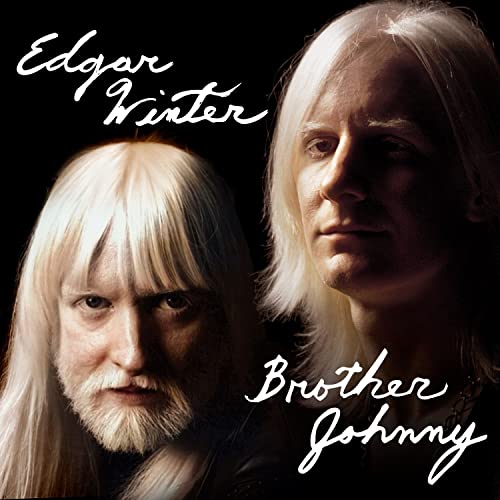
Edgar Winter – Brother Johnny [2022] – Johnny Winter has been gone since 2014, when he passed away in Zurich while on tour. His brother Edgar resisted doing a tribute album. He felt like doing so soon after his brother’s death would be exploitative. Eight years have passed, and Edgar reconsidered – the time was finally right. For this album he gathered many guitarists - Kenny Wayne Shepherd, Joe Bonamassa, Warren Haynes, Derek Trucks [without his wife for once], Billy Gibbons, David Grissom, Joe Walsh, Steve Lukather [yeah, the Toto guy], Doyle Bramhall II, and Keb’ ‘Mo. Oddly enough Rick Derringer is nowhere to be found here. Edgar sings some but not all of the songs. His voice has gotten gravelly over the years, but this is the blues, so it works. Rather than go song-by-song because they’re almost all good, I’ll single out one as being great – Mean Town Blues. Edgar sings, Joe Bonamassa plays. I single this one out because, if you close your eyes while you listen, you can hear Johnny Winter. Joe B nails Johnny’s tone. This is an Edgar Winter CD, but it’s his brother’s music, and it’s wonderful.

Gov’t Mule - Heavy Load Blues [2022] – Ever since the Allman Brothers Band called it a day in 2014 [and Gregg Allman’s subsequent death two and a half years later], Gov’t Mule has been the next best thing for me.  I have followed the Mule since the beginning, when Warren Haynes and Allen Woody were still in the Allman Brothers and Gov’t Mule was still a side gig.  In those 28 years hence, Heavy Load Blues is the first [and hopefully not last] “all-blues” album. Of the twenty-one songs that make up the two-disk version, thirteen of them are songs by Little Milton, Bobby ‘Blue’ Bland, Junior Wells, Howlin’ Wolf, Elmore James, and Muddy Waters among others. The remaining songs have the blues vibe but have the hard rock ethos we’ve come to expect from Gov’t Mule. One foot in the blues, indeed. I saw Gov’t Mule twice this year, and the “new” songs were fabulous. Eleven years ago, Warren Haynes recorded an R&B/soul album under his own name, Man In Motion. It’s the blues side of soul [the “B” in R&B is “blues," after all]. I think of Heavy Load Blues and Man In Motion as companion pieces. Buy both of them.

Walter Trout – Ride [2022] – Walter Trout is one of the best blues guitarists nobody has heard of. I saw him open for Gregg Allman in Sacramento in 1998. I loved what I heard and have been a fan ever since. Ride is his 30th [!] album, a superb follow-up to his equally superb Ordinary Madness [2020] album. Trout’s music is joyous, or at least as joyous as the blues can be. He can step on the gas and go full throttle, or he can ease back and play a slow, minor-chord blues that would make Gary Moore or Peter Green proud. A ferocious soloist, this 71-year-old blues man shows no signs of fading into “adult contemporary Hell,” unlike a British guitarist of renown I could mention.

Mike Campbell & The Dirty Knobs - External Combustion [2022] – I never saw Tom Petty live. This year I saw the next best thing, Mike Campbell and his band The Dirty Knobs. I saw them open for Gov’t Mule in October. Wouldn’t you know they played a fairly Tom Petty-centric set, but I digress. External Combustion is this unit’s second album [Wreckless Abandon (2020) being their first]. During his life as a Heartbreaker, Mike Campbell never had to write an entire album’s worth of material himself. With a songwriter as great as Tom Petty he never had to. Now he’s done it twice, and he’s made the transition from being Tom Petty’s co-pilot to front man look easy. It can’t be easy to start your career over when you’re seventy, but Mike Campbell has done it. In addition to the hard-hitting rock one comes to expect from the Dirty Knobs, they cover more stylistic bases - rockabilly [Bridget Bardot], “country”-ish rock [Electric Gypsy], ballads [State of Mind, In This Lifetime], boogie [Lightning Boogie], and ELO/Revolver-era Beatles [Cheap Talk]. With External Combustion, Mike Campbell & the Dirty Knobs have avoided the sophomore slump.

Sunday, December 4, 2022

Jethro Tull - Tony's Picks

Jethro Tull has been one of my top ten favorite bands since I was a college freshman. KILO 94 used to have quite a few Tull songs in heavy rotation.  Throughout its existence, Jethro Tull has been a lot of bands.  Since its inception, the band has had more than twenty different members, the only constant being Ian Anderson.  The band embraced the blues, jazz, English folk, medieval, classical, hard rock and electronic music.  My first two Tull records were of the “greatest hits” variety – M.U. - The Best of Jethro Tull [1976] and Repeat - The Best Of Jethro Tull - Vol. II [1977]. It wasn’t until after I saw them on their Broadsword and the Beast tour in 1982 that I started buying their music in earnest.  My favorite era of the band is from the early days and the albums Stand Up [1969], Benefit [1970], and [of course] Aqualung [1971].

Their first album is This Was [1968]. It sounds nothing like anything else in their catalog. Guitarist Mick Abrahams shared songwriting duties with Ian Anderson. It was Abrahams’ influence that steered Tull’s music in the direction of the blues and jazz.  Of the album’s ten songs, four of the songs are instrumentals, two of which are covers [Cat’s Squirrel and Roland Kirk’s Serenade to a Cuckoo].  The vocal tracks of note from the album are Beggar's Farm and A Song for Jeffrey. As good as they are, they just don’t sound like Jethro Tull, not as we know them anyway.  This band sounded more like The Graham Bond Organization than the progressive outfit that it became, and This Was is an anomaly in the Tull catalog.  By the time of This Was’ release in October 1968, Mick Abrahams was on his way out of the band.  Abrahams wanted to continue in the blues direction, while Ian Anderson wanted to branch out into other musical forms.  This Was is a good album, just not representative of the rest of Tull’s recorded output.  In my opinion it is for completists only.

My playlist of early Tull starts with a single recorded with Mick Abrahams.  Love Story is an A-side for a non-album single that was released in the US after This Was. A straightforward guitar rocker that sounds like nothing on This Was, it includes some flute and mandolin segments that foreshadows the folk sound that would come later.  Released in November 1968, it was the last Tull recording Mick Abrahams would contribute to before leaving Tull to form Blodwyn Pig [his last Tull gig was November 30, 1968].  The 50th anniversary release of This Was includes both the single and the version recorded for the BBC.  I prefer the BBC version since it has more of a “live” feel.

When Tull needed a new guitarist they hired Tony Iommi.  The inventor of heavy metal was in the band two weeks before he realized he didn’t fit in with Tull. He stuck around long enough to appear with the band in the Rolling Stones’ Rock and Roll Circus [only Ian Anderson performed live, the rest of the band mimed]. After Iommi’s departure Tull hired guitarist Martin Barre in December 1968.  Barre had to learn This Was quickly, as the band resumed touring. In addition to performing songs from This Was the band also road-tested songs that would appear on the next album, Stand Up [1969].

Stand Up [1969]. With Mick Abrahams gone, Ian Anderson had full control over the music and the lyrics. He also had a guitarist who was more sympathetic to exploring different musical avenues – Martin Barre.  Gone was the blues puritanism, and with that came more eclecticism, and “the riff.”  Martin Barre played a Les Paul Junior, a guitar described by his main influence Leslie West [also a LP Junior player] as “a tree with a microphone.” Barre’s guitar tones were thicker, darker, and louder than those of Mick Abrahams.  Martin Barre was also an exceptional acoustic player. The first song Martin Barre recorded with Jethro Tull was Living In The Past - its 5/4 time was definitely NOT the blues. On Stand Up, Tull still had one foot in the blues with A New Day Yesterday. But this isn’t really the blues, it was more “blues rock,” and it has a great riff. Tull did a jazzy re-working of Bach’s Bourrée in E minor BWV 996 (Fifth Movement) [Ian Anderson would refer to it as “cocktail jazz], and English folk elements entered into the mix [Jeffery Goes to Leicester Square]. Back to the Family is Ian Anderson being annoyed with his parents. Side One ends with Look into the Sun, a sad acoustic ballad about a girl. Side Two is where I think the meat of Stand Up is.  It begins and ends with furious rockers [Nothing Is Easy and For a Thousand Mothers, respectively].  Nothing Is Easy has always been a personal favorite of mine from Tull. Fat Man is a mandolin/balalaika excursion into Eastern-sounding music which pokes fun at Mick Abrahams. We Used to Know is a depressing turn toward psychedelia.  Reasons for Waiting is a well-done ballad with Ian Anderson playing the acoustic guitar and Hammond organ, while Martin Barre plays the flute [his first instrument]. Adding to the song is wonderful orchestration from David/Dee Palmer. Ian Anderson is annoyed with his parents again on For a Thousand Mothers.  After the pastoral beauty that is Reasons for Waiting, For a Thousand Mothers is a manic closer for Stand Up. Sweet Dream was a single cut after Stand Up’s release. It’s a heavy and somewhat experimental tune (for them, anyway) with horns and strings. Martin Barre played the horn parts on guitar in concert [an example of which can be found on the 20 Years Of Jethro Tull box set (1988)].  With Stand Up, Martin Barre the “guitar hero” is born.

Benefit [1970] isn’t as great stylistic leap from Stand Up as Stand Up was from This Was.  Martin Barre’s guitar heroics continue here. Benefit featured the same core line-up as Stand Up [Ian Anderson, Martin Barre, Glenn Cornick (bass), and Clive Bunker (drums)].  John Evan [piano, organ], a pre-Tull bandmate of Anderson’s, joined the core line-up on a “temporary” basis and ended up staying for eight years. Benefit has a darker, moodier feel than its immediate predecessor. Ian Anderson’s flute is less prevalent, the music is less folky, but there’s still plenty of English folk to be heard. The opener With You There to Help Me is a great piece of melancholy that features guitar chords that switch between gentle acoustic and jarring electric, punctuated by Anderson’s smooth yet unnerving flute.  It has a two-minute finale that is a bit of a freak-out, with backwards-recorded flute. Nothing To Say has an intriguing folk melody and a strong, hard rock chorus. Alive and Well and Living In has a jazz vibe, thanks to Evan's piano.  The folky For Michael Collins, Jeffrey and Me - the third and final tribute to Jeffrey Hammond - has a very nice melody and a catchy chorus. Son is pure hard rock where Ian Anderson is annoyed with his parents yet again. It is one of Jethro Tull’s strangest songs. It clocks in at under three minutes, but it wildly vacillates between melodic hard rock and strange folk rock led by plinking piano and acoustic guitar.  To Cry You A Song has an endlessly repetitive Martin Barre riff, with Ian Anderson’s vocals sounding like they’re coming through a Leslie speaker, giving the song a bit of a psychedelic feel. The stand-alone single from the same period, The Witch’s Promise, has a medieval tint that foreshadows the band’s future folk direction [Songs From the Wood, Heavy Horses, Minstrel in the Gallery, Stormwatch]. It’s one of a very few Jethro Tull songs to feature a mellotron. Teacher is the flip side of The Witch’s Promise. It has a simple yet addictive riff from Martin Barre that earned extensive FM radio airplay. Bassist Glenn Cornick left the band after the tour for this album was completed.

Aqualung [1971].  Some would have you believe Aqualung is a concept album – it isn’t.  Tull would hit their listening public with the real thing a year later with Thick as a BrickAqualung has themes running throughout.  Side One looks at urban characters – the lecherous homeless bum from the title song, the schoolyard slut in Cross-Eyed Mary.  It has a couple of short acoustic reflections on love and life – Cheap Day Return and Wond’ring Aloud. Mother Goose is a wonderful acoustic number with multi-tracked flutes. The usual suspects from this album – the title song, Cross-Eyed Mary, and Locomotive Breath – populate my playlist.  In the minds of classic rock radio programmers, these are the only three songs on the album.  Side Two is Ian Anderson ranting against organized religion in general, and the Church of England in particular.  My God is the most progressive thing on the album [and probably the song on the album I like the most] with tons of heavy guitar work and an extended flute solo. It starts off at a slower pace and sort of brooding, then introduces the electric guitar and eventually flute and things start getting crazy. It ranges from the brooding acoustic guitar [courtesy of Ian Anderson], a solemn piano to another savage riff from Barre and an unexpected medieval choral breakdown [Gregorian chants?].  Hymn 43 focuses on how people will use God's word to explain their actions and mocks American pop culture in the process. The piano serves a more leading role here, which offers a nice change of pace, and the guitar serves well in a supportive role. It has a guitar riff that sticks in your head for days. Drummer Clive Bunker left the band after touring for Aqualung so he could get married.

Life Is a Long Song [1971] is another exercise in folk acoustic bliss from Ian Anderson.  Anderson said he took up the flute because he realized he was never going to be as good a guitarist as Eric Clapton. He sells himself short as he is very good at the folk acoustic thing as this song attests. Tull recorded an EP of the same name that appeared six months after Aqualung.

The playlist

This somewhat resembles a “best of” with quite a few well-known songs, but I have enough deep tracks to make it interesting.  Of note, I like to sequence the songs from the second side of Stand Up [minus We Used to Know] and the first side of Benefit in order like one would hear the vinyl albums played on an old-style turntable with a record changer.  I like the flow.

Love Story [BBC Sessions] – 1968
Nothing Is Easy [Stand Up, 1969]
Fat Man [Stand Up, 1969]
Reasons for Waiting [Stand Up, 1969]
For a Thousand Mothers [Stand Up, 1969]
With You There To Help Me [Benefit, 1970]
Nothing To Say [Benefit, 1970]
Alive And Well And Living In [Benefit, 1970]
For Michael Collins, Jeffrey And Me [Benefit, 1970]
Son [Benefit, 1970]
To Cry You A Song [Benefit, 1970]
The Witch's Promise [Single, 1970]
Teacher [Single, 1970]
Aqualung [Aqualung, 1971]
Cross-Eyed Mary [Aqualung, 1971]
Cheap Day Return [Aqualung, 1971]
Mother Goose [Aqualung, 1971]
Wond'ring Aloud [Aqualung, 1971]
My God [Aqualung, 1971]
Hymn 43 [Aqualung, 1971]
Locomotive Breath [Aqualung, 1971]
Life Is a Long Song [Life Is a Long Song EP, 1971]
Sweet Dream [Single, 1970]
Living in the Past [Single, 1969]
A New Day Yesterday [Stand Up, 1969]

Sunday, October 30, 2022

Revolver - Bigger and Better

On the occasion of the 50th anniversary of its release in 2016, I wrote a piece about what I consider the Beatles best album, Revolver. Rather than rehash what I wrote before, you can read about it at this link: https://tonysmusicroom.blogspot.com/2011/05/beatles-revolver.html.  On October 28th, Apple Records released the Revolver edition in the series of Beatles remixes. Creating new stereo mixes for Sgt. Pepper’s Lonely Hearts Club Band, the White Album, Abbey Road, and Let It Be was relatively easy for Giles Martin [original producer George Martin’s son] to produce because he had eight tracks to play with.  Not so Revolver

The recording technology of 1966, compared to today, was rather primitive. Even though EMI’s studios at Abbey Road were then considered “state-of-the-art,” the Beatles were limited to recording with four tracks. Basic tracks [rhythm guitar, bass, drums] were recorded at the same time and mixed down to a single track. This allowed for the remaining three tracks to have vocals and overdubs. That works fine for mono recordings, which were fine for listening to music on devices that had only one speaker. Up until and including the White Album in 1968, the Beatles and their producer George Martin focused their energy on mono recordings. Stereo mixes were an afterthought. George Harrison had this to say about stereo – “When they invented stereo, I remember thinking ‘what do you want two speakers for?’ because it ruined the sound from our point of view…” When stereo mixes were created from the mono recordings, you would hear all the instruments in one stereo channel and the vocals in the other. This set-up becomes very frustrating if one of your stereo speakers blows out and you’re left with half a recording to listen to.

In 2009 the Beatles remastered their entire catalog. I thought these were the best these songs would sound and couldn’t be improved upon. The songs had a new shine to them. But in 2017 we started seeing 50th anniversary remix releases beginning with Sgt. Pepper and culminating with Let It Be. Giles Martin explained the difference between remastering and remixing – “The best analogy I can give is like when you have a car and if you want it to look nice, you might polish it, you might have to do some body work – that’s remastering. If you’re remixing, you tear the car completely to pieces again, and you rebuild it, and then you polish it.”  Giles Martin took all of the multitracks for those albums, tore apart the songs and then reassembled them. Instead of the vocals being isolated on one side or another, they are front and center. One can hear the bass and the drums together as they should be. All of the sounds have been rebalanced to give the listener a feeling of being immersed in the music.

Revolver was recorded using four tracks. EMI Studios then had two four-track machines that allowed them to mix down groups of instruments into a single track and then “bounce” that single track onto another tape, giving the Beatles more tracks to work with. Giles Martin had loads of multitrack recordings to work with between Sgt. Pepper and Let It Be but taking the Revolver recordings apart and reassembling them would require a different method. It wasn’t until Peter Jackson reimagined the Beatles film Let It Be as The Beatles Get Back that it was possible to isolate different sounds on a single track. Jackson’s challenge to improve upon the sounds of the Get Back tapes, much of it being spoken words being drowned out by instruments. A team of audio engineers led by a guy named Emile de la Rey developed a machine-learning tool that would learn what each of the Beatles’ voices sound like and be able to separate those voices from other sounds on a given piece of tape. Giles Martin took that step further by having this tool learn what each of the instruments sounds like. This is how he could disassemble all of the album tracks, give the instruments and the voices their own space, and then reassembled them to rebalance all of the sounds when put back together.

The contents [Deluxe edition]
Disc 1 – The complete album remixed in stereo
Disc 2 – The complete album in mono
Disc 3 – An extended play of the single recorded during the Revolver sessions, Paperback Writer [A-Side] and Rain [B-side], presented here in remixed stereo and in the original mono mix
Discs 4 and 5 – Session material and demos

For those who don’t want to part with a lot of money, there is a two-disc version. The first disc is the same as the deluxe version. The second disc has the stereo remixes of Paperback Writer and Rain, and selections from the session materials presented in the deluxe version.

If you don’t want the two-disc version you can get a single CD that is just the 2022 stereo remixes.

The sound
The vocals are front and center in all the mixes. You no longer have to tolerate them being heard in only one ear. All of the instruments are crisper, sharper, and clearer. The drums get the most benefit from the remixing. They no longer sound like they were recorded inside a cardboard box. The sounds are louder and fuller, but they aren’t louder in the “loudness war” sense. There is still plenty of dynamism in the sounds that don’t overwhelm the listener.

Taxman – George Harrison’s rhythm guitar tone is nasty, befitting the subject matter. Paul McCartney has said that he felt his guitar solo from Taxman sounded too “polite.” Giles Martin fixed that.

Eleanor Rigby – String instruments had never been closed-mic’d as they were on this song, which gave the strings more “bite.”  Not only that, you can hear the violins and violas on one channel, while you can hear the cellos in the other.

Love You Too – George’s first mini raga was said to have just a sitar and electric guitar, but also an acoustic guitar. I could not hear the acoustic guitar until now [it’s in the right stereo channel]. The sitar is shimmering. The tabla used to be buried in the mix, but no longer.

Here, There and Everywhere – Still not one of my favorites, but those of whom love this song will be thrilled at how the harmonies sound.

She Said She Said – This one is the first bum note of the stereo remix. The drums are almost too loud on the remix. The original stereo mix sounded better to these ears precisely because the instruments were blended together. While the vocals are placed perfectly on the remix, there are some empty spaces on the left stereo channel where instruments should be. The mono remaster, however, is the gem here.

And Your Bird Can Sing -  Despite all the hooky pop songs that came before, this is a rock band at work with the sound to match [finally].

I Want To Tell You – George’s guitar starts in the right channel and slowly pans all the way to the left. At the end of the song as the riff is played for the third and final time, the guitar slowly pans right, all the way back to where it started.

Got To Get You Into My Life – The horn section is “beefier” – it has more punch.

Tomorrow Never Knows – John Lennon’s acid test. When I got the box set, this was the first song I listened to. This is the song that I felt would be the benchmark of whether the rest of the album would be a good remix because I figured it would be the hardest song to remix. I didn’t think it possible, but the new mix makes John’s meditation on the Tibetan Book of the Dead sound even more trippy. When it was recorded, all the various tape loops that made the sound effects were all rolling at the same time, with the Beatles themselves playing the mixing desk as if it were its own instrument, bringing up the sounds and lowering them in the mix as the tapes were rolling. It was, in effect, a performance which can never be duplicated. Given that all the sounds from the tapes loops were captured on the same track, I had no idea how Giles Martin would be able to separate them so they could be given their own individual spaces, but he did it. This is magical.

Rain – This song has always been best when heard in mono – until now. This mix is immaculate.

Paperback Writer – What I said about Taxman also applies here. This mix smokes!

Revelations from the sessions
Sessions previously released – Tomorrow Never Knows [Take 1], Got To Get You Into My Life (First Version) - Take 5, And Your Bird Can Sing (First Version - Take 2), Taxman (Take 11). I'm Only Sleeping (Rehearsal Fragment). These appeared on Anthology 2 [1996]. Yellow Submarine (Highlighted Sound Effects) appeared on the CD single for the song Real Love [1996].

Yellow Submarine (Songwriting Work Tape - Part 1)– Until now I thought Yellow Submarine was a ditty written by Paul McCartney for Ringo to sing. To my surprise, there is a home demo of John Lennon singing about the town where he was born that no one cared about. The melody for the finished song came from John. Paul added the Yellow Submarine chorus. This is just as much a Lennon-McCartney creation as A Day in the Life.

Rain – When the Beatles recorded Rain it was played very fast. This version is presented here, which sounds like they were amped on caffeine. They made the right choice is slowing down the recording so that it sounds a bit “murky.”

Eleanor Rigby – Take 2 is presented here. This is the session where the string players make their first attempt at recording George Martin’s score for Paul McCartney’s song. That music had not been heard until this take, at which point the score was still “dots on a page.”  There’s a two-minute discussion between George Martin and the musicians about how the score should be played.

Love You To (Unnumbered Rehearsal) – George Harrison alone with his sitar. For a novice, he was pretty good. The working title was Granny Smith.

I Want To Tell You (Speech And Take 4) – The working title of this was Laxton’s Superb. Apparently George liked apples.

Got To Get You Into My Life (Second Version) - Take 8 – Where the finished song had a horn section and a little guitar at the end, this take has both horns and guitars throughout. I like it - the guitars work – I don’t know why they were cut.

I like this deluxe edition of Revolver. I finally got the mono mixes, and they were every bit as good as other Beatlemaniacs had made them out to be. Rubber Soul could also use the stereo remix treatment given to Revolver. Should that happen, I’ll gladly part with more money, sucker that I am.

Monday, March 14, 2022

Lords of Chaos - a synopsis

It was Friday night, and I was zoning out watching videos on YouTube.  It’s my version of going to the “nothing box” region of my brain.  I forget which video I was watching but I noticed on the side where they have links to other videos on the side, and there was something about the band Mayhem. The name rang a bell and then it occurred to me that I wrote about them before [https://tonysmusicroom.blogspot.com/2011/08/strange-things-in-norway.html]. 

Eleven years ago I saw a documentary about anti-Christian activity in Norway called Until the Light Takes Us. The topic was Norwegian Black Metal, and within the story were tales of extreme aesthetics, church burnings, and murder. The film focused on two men - Gylve Nagell [aka Fenriz] of the band Darkthrone, and Varg Vikernes of Burzum, who was also the bassist for Mayhem. While Nagell’s interest was only in the music, Vikernes had an extreme Norwegian nativist political and religious [pagan] agenda.  The interviews with Vikernes for this film were conducted while he was serving his prison sentence for the murder of Øystein Aarseth.  Lords of Chaos is the dramatization of Aarseth’s life.

Aarseth narrates the entire film.  He starts in 1987, where he describes Norway as a very rich and religious country in Northern Europe, which is grey, boring, and has a high suicide rate.  He shows his own life with his typical Norwegian family, complete with a Volvo parked in the driveway. He doesn’t see himself as a typical teenager. Rather, he was born into the world to bring chaos, suffering and death.  The film is his story, which he says “will end badly.” But first we see him and two other boys playing music in his parents basement. He assumed the name Euronymous. The bass player was Necrobutcher, and the drummer was Manheim. Together they were Mayhem. Life was easy – having fun, getting drunk, and playing loud and hard music. This starts off as a typical rebellious teenager story. Mayhem was “world-famous, all-over Oslo.” Then Manheim quit – enter the new drummer Jan Axel, who went by the name “Hellhammer” [isn’t that a great name for a drummer?]. Mayhem had the best drummer in Norway, a mad, kick-ass bass player, and Euronymous had a “new guitar sound that would change the world forever.” Euronymous called his creation Norwegian Black Metal. But they needed a singer.  Enter Pelle Ohlin, aka Dead.

The package Dead sent to Mayhem included not only his audition tape, but a dead rat that he had crucified. The band listened to the tape and were overwhelmed by what they heard. Dead would be the perfect singer for Mayhem. After Dead moved to Norway the band relocated to a farmhouse in Kraktorp. They worked on their music for a year, but something was wrong.  Dead was a very dark and depressed guy.  As a child he had been beaten up so badly by a bully that he “died for a moment,” a moment that came to define his existence [hence the name “Dead”]. He introduced Euronymous to “corpse paint.” He would bury his stage clothes for a day before he would wear them. He would cut himself on-stage. That band displayed severed pig heads on sticks next to their stage.  At some point during the shows, Dead would throw a pig’s head into the audience.  After one show they were eating at a local kabob, where a kid from Bergen named Kristian Vikernes introduced himself to Euronymous.  Euronymous noticed a Scorpions patch on his denim jacket and dismissed Kristian as a “poser.”

One day Dead was at home alone. He was sitting upstairs alone with his thoughts. The he got up, found a knife and cut his arms as if to kill himself. He didn’t slit his wrists – he cut very deep gouges into both arms. As he saw the blood squirting out both arms he cut his own throat. While he bled to death, he heard a phone message from his dad that he was accepted to university, and he began to write a suicide note-

“Excuse all the blood
Let the party begin”

When he finished writing, he found a shotgun, put it to his head and finished what he started. Bleeding out from the gouges on both arms and his neck weren’t quick enough for him. This is very graphic stuff. Euronymous arrived and found the front door locked, so he found a ladder. He climbed on the roof and broke in through a window, where he found Dead’s lifeless body. At first Euronymous didn’t appear to be the least bit startled about what he found, but after he went downstairs he questioned why Dead killed himself. He called the emergency number, and after the operator asked him the nature of the emergency, he hung up the phone, got into his dad’s Volvo and drove to a nearby gas station. We purchased a disposable camera, went back to the house and started taking pictures. When he finished he called Necrobutcher to tell him “Pelle’s not home.”  Necrobutcher asked if he went back to Sweden, Euronymous responded “he blew his head off.” 

“This is the one. This will make us famous. Mayhem will be the band with the singer who blew his head off. We should say I ate a piece of his brain, too.”  He reached into his pocket and pulled out necklaces for his bandmates. From then on, every member of Mayhem was supposed to wear them. When Euronymous told his bandmates that the necklaces’ charms were bone fragments from Dead, Necrobutcher threw his back at Euronymous [Note - Euronymous later reveled they were chicken bones]. That was just a little too “sick.”  Euronymous told Necrobutcher it was supposed to let people know how disturbed they are, how “hardcore” they are. Euronymous said that if he didn’t do what he said, he was fired. Necrobutcher refused, Euronymous fired him, and Necrobutcher walked away. Euronymous had “gone too far.”  Later, Euronymous confessed he had to move out of the house because he couldn’t “deal with it.”

The next chapter of Euronymous life began with the opening of his record store, Helvete [Norwegian for “Hell”]. Helvete was to be a place for him and “the Black Circle” a “temple for evil, chaos and black metal.” Helvete was the clubhouse.  The Black Circle included not only members of Mayhem, but also Bård Guldvik "Faust" Eithun of the band Emperor and  Fenriz of Darkthrone.  It was at Helvete that Kristian Vikernes, no longer a Scorpions fan, reintroduced himself to Euronymous.  He handed him a demo tape of his own “band,” Burzum [Vikernes played all the instruments]. Vikernes joined the Black Circle and went by the name Varg because he didn’t want to associate himself with Christianity. He, like Euronymous professed to be, was anti-Christian because he saw Norway as a dictatorship of “the church.”  To prove his point, Varg burned down a Stave church.  While the Black Circle talked about doing such things, Varg was actually doing them. 

Euronymous lamented after that church fire, everything within the Black Circle became a competition.  One night while visiting his parents in Lillehammer, Faust went to a bar. Faust made eye contact with someone. That someone followed him out of the bar and propositioned him for sex. Faust stabbed him to death. After telling the rest of the Black Circle what he did, he, Euronymous and Varg celebrated by torching another church.  Things were spiraling out of control.  Euronymous got nervous –

All of this became bigger than we expected. Our fucked-up fantasies have turned  into an even more fucked-up reality. This is not what I signed up for. I wanted out but I couldn’t find the fucking door.  All this evil and dark crap was supposed to be
fun. I was sick and tired of everything going to shit.”

Nervousness turned into paranoia when Varg went to the press to brag about what he and the Black Circle had done.  Euronymous wasn’t keen on Varg’s idea to go public.  Varg told him the police would have to let him go because they couldn’t prove anything to which Varg confessed. He was right. The police arrested him but had to let him go because of lack of evidence. Euronymous felt his grip on the Black Circle slipping away.  To compound things, Euronymous lost Helvete.  His dad stopped paying the rent. He vowed he would torture Varg and then kill him, perhaps make a snuff film of him doing it.  That was a big mistake because that word got back to Varg.

Varg told Euronymous he wanted out of the Black Circle. Euronymous drew up a contract to make it all legal and mailed it to Varg in Bergen.  Instead of signing the contract and mailing it back to Varg, Varg traveled back to Oslo to finish his business with Euronymous in person. That wasn’t his motivation – he wanted to kill Euronymous before Euronymous could do the same to him.  After he shows up at Euronymous’s apartment, Varg stabs Euronymous.  Euronymous escaped the apartment, but Varg followed him to the stairwell outside the apartment and finished the job. Before he died, Euronymous asked Varg why he’s doing this.  Varg said “because you were going to kill me.”  Euronymous said “you’re my friend. I just talk. You know I just talk,” to which Varg responded “exactly. You’re an embarrassment. That’s all you do is talk. That’s why you’re going to die.” Varg stabbed him thirty-five times [yeah, I counted]. Euronymous did say at the very beginning that the story would end badly.

 The movie ends with scenes from the aftermath of Euronymous’s murder.  Cops collecting evidence from the crime scene.  Faust is arrested, Varg is arrested, there’s pictures of Euronymous’s sobbing girlfriend, of makeshift memorials outside Euronymous’s apartment, then suddenly there’s Euronymous’s disembodied voice for one last narration -

No! Fuck! Stop this sentimental shit. Stop! There’s nothing sad about my death or my life. I’m Euronymous, founder of Mayhem, the most infamous Black Metal band in the world. I had my own record store. I had my own record label. I created a whole musical genre, true Norwegian Black Metal, and I created Mayhem. What the fuck have you done lately? Poser.”

Here’s the Joe Bob Briggs review of Lords of Chaos - 3 dead bodies, four gallons blood, eight naked breasts, three burned-out churches, shotgun fu, knife fu, one dead guy narrating the film.

A bit of the movie was sensationalized for dramatic effect, but more or less this film was accurate.


Monday, March 7, 2022

Joe Bonamassa - Road Warrior

Between Allen Woody’s death in 2000 and the Allman Brothers Band’s final show in 2014, I often referred to Warren Haynes as the hardest working man in the music business [apologies to the late James Brown]. During that time, Warren was in Gov’t Mule, had returned to the Allman Brothers after Dickey Betts departed, and began a solo career.  When he wasn’t doing any of those three gigs, he slummed with Phil Lesh & Friends.  The Allman Brothers are no more, and Phil Lesh is semi-retired [he’s 81 now].  Warren still has the Mule and his solo gig, but he isn’t as busy as he once was. It seems there is a new “hardest working man in the music business.”  Who would that be?  Joe Bonamassa.

Joe Bonamassa has been releasing albums since he was 23 [he’s 44 now].  He’s been quite prolific.  His recorded output includes:

  • 15 studio albums of blues/blues rock under his own name [I have them all];
  • 3 studio albums [also blues/blues rock] with American songstress Beth Hart;
  • 4 studio albums of hard rock with Glenn Hughes under the name Black Country Communion;
  • 1 album with Australian singer Mahalia Barnes;
  • 3 studio albums of “jazz” with a group called Rock Candy Funk Party;
  • 1 instrumental album with a group he dubs “The Sleep Eazys” [it’s really his road band…].

In addition to all this studio work he also has 18 [!] live albums.  Recording artists like to release albums recorded on their various tours as live souvenirs for their fans, but not all of Joe B’s live albums fit that description.  A good number of his live sets have a specific theme/concept, to wit:

An Acoustic Evening at the Vienna Opera House, 2013 & Live at Carnegie Hall: An Acoustic Evening, 2017
After the first time that Joe B had played London’s Royal Albert Hall in 2009, his producer Kevin Shirley had conversations with Joe B about embracing and incorporating world music into the blues. Shirley found a studio on the Greek island of Santorini.  This was an “and now for something completely different” moment.  Joe B and Shirley invited musicians from Athens to record with them.  The album from whence theses sessions came was Black Rock.  Claude Nobs [“Funky Claude” from Smoke on the Water fame] heard the record, liked what he heard and invited Joe B to play the Montreux Jazz Festival.  From this experience came the idea to go “all acoustic.”  Black Rock had its share of electric blues, but Joe B hadn’t done anything that was entirely acoustic before.   He had done some acoustic numbers on his albums previously, but the new challenge was an acoustic show with world musicians from start to finish.  The thought of doing an acoustic live show at the Vienna Opera House had a nice ring to it.  The thought was “maybe we’ll fall on our face, maybe this will be a complete and utter disaster from the first note, or it could be one of the coolest things we ever did.”  As it turns out, the latter was the case.

The date was June 3, 2012; the venue was the Vienna Opera House, the same place where works of Beethoven, Mozart, and Brahms were first heard.  Accompanying Joe B [who was surrounded by ten acoustic guitars and a Dobro] was traditional Irish fiddler Gerry O'Connor, who also plays mandolin and banjo; Swedish multi-instrumentalist Mats Wester on the nyckelharpa, a keyed fiddle; Los Angeles-based keyboardist Arlan Schierbaum playing the celeste, accordions, toy pianos, and other instruments; and renowned Puerto Rican percussionist Lenny Castro.  It’s good to hear Joe B’s music with a different twist.  In January 2016, Joe B did it again at Carnegie Hall, only this time with a different mix of acoustic instruments [cello, ehru (a bowed, two-stringed Chinese vertical fiddle), saxophone, Egyptian percussion, hurdy gurdy] in addition to the banjo and mandolin.  Joe B also brought three Australian singers with him.  Both albums from the Vienna Opera House and Carnegie Hall are superb.

Tour de Force: Live in London, 2014

The Borderline
Shepherd's Bush Empire
Hammersmith Apollo
Royal Albert Hall

Joe B’s manager Roy Weisman had booked four shows in London for Joe B, each show at a different venue [see above].  As Joe B, Roy Weisman and Kevin Shirley were having lunch before the Vienna acoustic show, Shirley asked Joe B what he had in mind for the four London shows.  In his mind, only the hardcore fanatics would go to all four shows.  Shirley suggested a twist – how about four different bands [one for each venue], each playing a unique setlist?  Like a retrospective of his career up to that point.  It’s only sixty-some songs, what could possibly go wrong?  Shirley hit him with this idea as he was trying to remember the words to all the songs he hadn’t sung in public before that he was going to play later that evening with the acoustic band.  No pressure…

The Borderline was a club show with a power trio.  The stage was just big enough for three musicians.  Shepherd's Bush Empire was a “big band” show of Chicago-style blues with horns.  The Hammersmith Apollo show was the “rock” show.  The Royal Albert Hall put a nice bow on the whole thing, with an acoustic first half, Vienna Opera House-style.  The second half of the show was for guitar geeks – Rory Gallagher’s Strat, Gary Moore’s ’59 Les Paul, and the music to match.  The whole week-long event was well done. It was a good way to celebrate the music – old/new, electric/acoustic.

Muddy Wolf at Red Rocks, 2015
This one is an easy tell – almost two hours of music from blues giants Muddy Waters and Howlin’ Wolf recorded at the world’s best outdoor music venue [and my favorite], Red Rocks.  Joe B knows he can’t sing Spoonful like Howlin’ Wolf or Jack Bruce, so he aims for the performance with conviction, and that’s good enough for me.  It’s his way of “keeping the blues alive.”

Live at the Greek Theatre, 2016
This is a tribute to the Three Kings of the blues – BB, Albert, and Freddie.  When Joe B was a kid, BB King was a mentor to him.  Joe B first opened for BB King when he was 12 years old. BB took a liking to him and had him open more shows.

British Blues Explosion Live, 2018
American blues had its Three Kings – British blues had three kings of its own – Clapton, Beck, and Page.  He referred to the three Yardbirds as the students of the Three Kings, and he describes himself as a “student of the students.”  The British guitar gods were Joe B’s gateway to the blues.  This show was recorded in July 2016 at the Old Royal Naval College in Greenwich, London.  He opened with a blast from the Jeff Beck Group [Becks’ Bolero/Rice Pudding], absolutely nailed Clapton [Mainline Florida, Motherless Children, SWLABR, Pretending], and was spellbinding with readings of How Many More Times and a mashup of Tea For One/I Can’t Quit You.  The most pleasant surprises was Boogie With Stu and John Mayall’s Double-Crossing Time.  It takes balls of steel to pay tribute to British artists in Britain.  Audiences there aren’t known for their charity, but this audience loved it.  I wonder if he’ll get around to paying tribute to the likes of Rory Gallagher, Peter Green, and Gary Moore.  Knowing Joe B it could happen.

Tony’s pick - Plynth (Water Down the Drain)/Spanish Boots

Now Serving: Royal Tea Live from the Ryman, 2021
COVID halted touring for everybody, which affected musicians and road crews alike.  As a musician who tours a lot, Joe B was frustrated he couldn’t hit the road to support his album Royal Tea.  Knowing firsthand the problems presented by COVID, Joe B set up a gig at Nashville’s Ryman Auditorium.  He and his band played his then-unreleased album almost in its entirety to an empty house, but he streamed the show worldwide.  Proceeds from the show [roughly $500,000] went to Joe B’s Fueling Musicians charity to help musicians and their support crews.  I didn’t see the show, but I happily bought the album anyway, knowing that I already had a copy of Royal Tea.