Showing posts with label Joe Bonamassa. Show all posts

Tuesday, December 20, 2022

Tony's Picks - 2022

It’s that time of year when every music/movie/book critic puts out his/her favorites for the year. I’ve done only one of these in the past few years because I simply didn’t have the time or energy to do it. This year I have plenty of time. I'm not so much a critic as I am a fan. Last year’s list was fairly eclectic with progressive rock, metal, English pop, some Americana, and a chick singer. For the most part, this year’s list has a bluish tint.

Bonnie Raitt - Just Like That... [2022] – Death casts a shadow over this collection of songs, and since it was recorded while the pandemic was raging, why not? There’s a convicted murder who seeks redemption as a prison hospice worker in Down the Hall. In the title track there’s the stranger who shows up unannounced on a woman’s doorstep after he received her dead son’s heart via transplant. Bonnie alludes to those no longer with us in Livin’ for the Ones, when she proclaims “If you ever start to bitch and moan, just remember the ones who won’t ever feel the sun on their faces again.” For the rest of the album, you get what one comes to expect with a Bonnie Raitt release ever since Nick of Time [1989], and we’re better off for it.

Buddy Guy - The Blues Don't Lie [2022] – The last of the blues giants is finally slowing down. His tour to support The Blues Don't Lie has been billed as the farewell tour. Unlike others who’ve had farewell tours only to come back [The Who, Kiss, Ozzy], I’ve got a feeling that at age 86, this one will stick. Since 2008, Tom Hambridge has been Buddy Guy’s producer, and since 2008 there’s been a formula. Guest musicians? Check. Songs written by Hambridge, Gary Nicholson, and/or Richard Fleming? Check. Playing like the assassin that Jimi Hendrix wanted to be? Check. For the most part Buddy has been recording the same album for over thirty years, not that there’s anything wrong with that. The only thing that doesn’t work here is “I’ve Got a Feeling.” Buddy Guy and the Beatles are mutually exclusive, and they should remain that way.

Eric Gales – Crown [2022] – “My name is Eric Gales – any questions?” So begins this superb album. Once upon a time, Eric Gales was a blues prodigy. He released his first album when he was sixteen. Eighteen albums, descent into drug addiction and some jail time later, Gales releases a flawless album. Produced by fellow blues prodigy Joe Bonamassa and his partner in crime Josh Smith, Crown has the blues, rock, soul, rhythm & blues, funk, a little bit of swing, a healthy dose of horns, and guitar heroics – lots of guitar heroics. Most of the songs are written by Gales, Bonamassa and Smith, Gales sings about race, jail, getting knocked down and getting back up, his wife [who sings backup and takes lead vocals for Take Me Just As I Am]. Check out Gales’ guitar duel with Joe Bonamassa on the title track. Somewhere Jimi Hendrix and Stevie Ray Vaughan are smiling. I have one question, Eric – why has it taken this long for me to find you?

Larry McCray - Blues Without You [2022] – Like Eric Gales’ Crown, this too was produced by Joe Bonamassa and Josh Smith. Those two are getting pretty good at the record production thing. The lead-off song Arkansas is a smoking autobiographical, horn-laden, funky statement of intent. Without Love It Doesn’t Matter changes things up immediately thereafter with a Fats Domino groove. Breaking News, with a 1970s sound of horns and strings, draws inspiration from the steady drumbeat of bad news heard every night. Roadhouse Blues [not to be confused with the Doors song of the same name] is Albert King territory. Drinkin’ Liquor and Chasin’ Women is back to the Fats Domino vibe [thanks to Reese Wynans]. Down to the Bottom is a big ballad with Warren Haynes. Mr. Easy is a slower, funkier tune with exceptional horns and the guitar talents of Joe Bonamassa. The album closes with a solo acoustic blues called I Play the Blues. I’m not sure which is the better album – Crown or Blues Without You – but both would be worthy additions to your blues collection.

Los Lobos - Native Sons [2021] – This came out last year, but I didn’t buy it until this year. Musicians had lots of time on their hands when COVID hit, many of whom recorded new music with imaginative titles including the word “lockdown.” Los Lobos put some thought into what they would call their collection of songs recorded under similar conditions. This is a covers album [except for one original song, the title track], but this one has a theme – it features a dozen songs originally written and recorded by artists from Los Angeles. Their choice of songs reflects the melting pot that is LA music. They cover the Chicano side with Thee Midniters, Lalo Guerrero, and Willie Bobo. I admit to being ignorant of their music, but as luck would have it, the one song I did recognize was Lalo Guerrero’s Los Chucos Suaves, which I heard him sing on Ry Cooder’s Chavez Ravine album [on which David Hidalgo played]. They venture to the black side with War’s The World Is a Ghetto. Their clever medley of Buffalo Springfield’s Bluebird and For What It’s Worth brilliantly captures the interplay of the guitar parts as done by Stephen Stills, Neil Young and Richie Furay. They keep the original arrangements but add their own Los Lobos spin. One band I never imagined Los Lobos would cover is the Beach Boys, but they chose wisely which song to cover – Sail On Sailor. The other knuckleball they threw me was when they ventured into singer/songwriter territory with Jackson Browne’s Jamaica Say You Will.  Only once did they pay tribute to one of their contemporaries – The Blasters [Flat Top Joint].  This eclectic set of songs is a good companion piece to The Ride/Ride This [2004], which included performances from a couple of the artists covered here [The Blasters’ Dave Alvin and Thee Midniters Little Willie G.]. Covers albums are ok for a stopgap, but I would love to hear original music from this great band.

Tears for Fears - The Tipping Point [2022] – Here’s something that is completely unlike anything on this list. I have always been a sucker for good English pop, and this one’s pretty good. Eighteen years had passed since TFF’s last album [Everybody Loves a Happy Ending]. They wanted to record another album shortly after that last album, but Roland Orzabal’s wife got sick. She died in 2017, then Orzabal had his own bouts with ill health. He turned to his TFF partner Curt Smith to create something new. What resulted was a collection of songs dealing with loss, grief, and reconciliation. Given my own circumstance, this hit home, and it spoke to me – I knew the feeling all too well. That is reason enough for me to include this on my list.

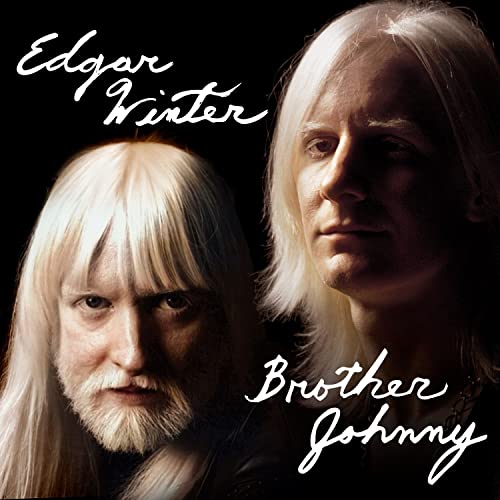
Edgar Winter – Brother Johnny [2022] – Johnny Winter has been gone since 2014, when he passed away in Zurich while on tour. His brother Edgar resisted doing a tribute album. He felt like doing so soon after his brother’s death would be exploitative. Eight years have passed, and Edgar reconsidered – the time was finally right. For this album he gathered many guitarists - Kenny Wayne Shepherd, Joe Bonamassa, Warren Haynes, Derek Trucks [without his wife for once], Billy Gibbons, David Grissom, Joe Walsh, Steve Lukather [yeah, the Toto guy], Doyle Bramhall II, and Keb’ ‘Mo. Oddly enough Rick Derringer is nowhere to be found here. Edgar sings some but not all of the songs. His voice has gotten gravelly over the years, but this is the blues, so it works. Rather than go song-by-song because they’re almost all good, I’ll single out one as being great – Mean Town Blues. Edgar sings, Joe Bonamassa plays. I single this one out because, if you close your eyes while you listen, you can hear Johnny Winter. Joe B nails Johnny’s tone. This is an Edgar Winter CD, but it’s his brother’s music, and it’s wonderful.

Gov’t Mule - Heavy Load Blues [2022] – Ever since the Allman Brothers Band called it a day in 2014 [and Gregg Allman’s subsequent death two and a half years later], Gov’t Mule has been the next best thing for me.  I have followed the Mule since the beginning, when Warren Haynes and Allen Woody were still in the Allman Brothers and Gov’t Mule was still a side gig.  In those 28 years hence, Heavy Load Blues is the first [and hopefully not last] “all-blues” album. Of the twenty-one songs that make up the two-disk version, thirteen of them are songs by Little Milton, Bobby ‘Blue’ Bland, Junior Wells, Howlin’ Wolf, Elmore James, and Muddy Waters among others. The remaining songs have the blues vibe but have the hard rock ethos we’ve come to expect from Gov’t Mule. One foot in the blues, indeed. I saw Gov’t Mule twice this year, and the “new” songs were fabulous. Eleven years ago, Warren Haynes recorded an R&B/soul album under his own name, Man In Motion. It’s the blues side of soul [the “B” in R&B is “blues," after all]. I think of Heavy Load Blues and Man In Motion as companion pieces. Buy both of them.

Walter Trout – Ride [2022] – Walter Trout is one of the best blues guitarists nobody has heard of. I saw him open for Gregg Allman in Sacramento in 1998. I loved what I heard and have been a fan ever since. Ride is his 30th [!] album, a superb follow-up to his equally superb Ordinary Madness [2020] album. Trout’s music is joyous, or at least as joyous as the blues can be. He can step on the gas and go full throttle, or he can ease back and play a slow, minor-chord blues that would make Gary Moore or Peter Green proud. A ferocious soloist, this 71-year-old blues man shows no signs of fading into “adult contemporary Hell,” unlike a British guitarist of renown I could mention.

Mike Campbell & The Dirty Knobs - External Combustion [2022] – I never saw Tom Petty live. This year I saw the next best thing, Mike Campbell and his band The Dirty Knobs. I saw them open for Gov’t Mule in October. Wouldn’t you know they played a fairly Tom Petty-centric set, but I digress. External Combustion is this unit’s second album [Wreckless Abandon (2020) being their first]. During his life as a Heartbreaker, Mike Campbell never had to write an entire album’s worth of material himself. With a songwriter as great as Tom Petty he never had to. Now he’s done it twice, and he’s made the transition from being Tom Petty’s co-pilot to front man look easy. It can’t be easy to start your career over when you’re seventy, but Mike Campbell has done it. In addition to the hard-hitting rock one comes to expect from the Dirty Knobs, they cover more stylistic bases - rockabilly [Bridget Bardot], “country”-ish rock [Electric Gypsy], ballads [State of Mind, In This Lifetime], boogie [Lightning Boogie], and ELO/Revolver-era Beatles [Cheap Talk]. With External Combustion, Mike Campbell & the Dirty Knobs have avoided the sophomore slump.

Monday, March 7, 2022

Joe Bonamassa - Road Warrior

Between Allen Woody’s death in 2000 and the Allman Brothers Band’s final show in 2014, I often referred to Warren Haynes as the hardest working man in the music business [apologies to the late James Brown]. During that time, Warren was in Gov’t Mule, had returned to the Allman Brothers after Dickey Betts departed, and began a solo career.  When he wasn’t doing any of those three gigs, he slummed with Phil Lesh & Friends.  The Allman Brothers are no more, and Phil Lesh is semi-retired [he’s 81 now].  Warren still has the Mule and his solo gig, but he isn’t as busy as he once was. It seems there is a new “hardest working man in the music business.”  Who would that be?  Joe Bonamassa.

Joe Bonamassa has been releasing albums since he was 23 [he’s 44 now].  He’s been quite prolific.  His recorded output includes:

  • 15 studio albums of blues/blues rock under his own name [I have them all];
  • 3 studio albums [also blues/blues rock] with American songstress Beth Hart;
  • 4 studio albums of hard rock with Glenn Hughes under the name Black Country Communion;
  • 1 album with Australian singer Mahalia Barnes;
  • 3 studio albums of “jazz” with a group called Rock Candy Funk Party;
  • 1 instrumental album with a group he dubs “The Sleep Eazys” [it’s really his road band…].

In addition to all this studio work he also has 18 [!] live albums.  Recording artists like to release albums recorded on their various tours as live souvenirs for their fans, but not all of Joe B’s live albums fit that description.  A good number of his live sets have a specific theme/concept, to wit:

An Acoustic Evening at the Vienna Opera House, 2013 & Live at Carnegie Hall: An Acoustic Evening, 2017
After the first time that Joe B had played London’s Royal Albert Hall in 2009, his producer Kevin Shirley had conversations with Joe B about embracing and incorporating world music into the blues. Shirley found a studio on the Greek island of Santorini.  This was an “and now for something completely different” moment.  Joe B and Shirley invited musicians from Athens to record with them.  The album from whence theses sessions came was Black Rock.  Claude Nobs [“Funky Claude” from Smoke on the Water fame] heard the record, liked what he heard and invited Joe B to play the Montreux Jazz Festival.  From this experience came the idea to go “all acoustic.”  Black Rock had its share of electric blues, but Joe B hadn’t done anything that was entirely acoustic before.   He had done some acoustic numbers on his albums previously, but the new challenge was an acoustic show with world musicians from start to finish.  The thought of doing an acoustic live show at the Vienna Opera House had a nice ring to it.  The thought was “maybe we’ll fall on our face, maybe this will be a complete and utter disaster from the first note, or it could be one of the coolest things we ever did.”  As it turns out, the latter was the case.

The date was June 3, 2012; the venue was the Vienna Opera House, the same place where works of Beethoven, Mozart, and Brahms were first heard.  Accompanying Joe B [who was surrounded by ten acoustic guitars and a Dobro] was traditional Irish fiddler Gerry O'Connor, who also plays mandolin and banjo; Swedish multi-instrumentalist Mats Wester on the nyckelharpa, a keyed fiddle; Los Angeles-based keyboardist Arlan Schierbaum playing the celeste, accordions, toy pianos, and other instruments; and renowned Puerto Rican percussionist Lenny Castro.  It’s good to hear Joe B’s music with a different twist.  In January 2016, Joe B did it again at Carnegie Hall, only this time with a different mix of acoustic instruments [cello, ehru (a bowed, two-stringed Chinese vertical fiddle), saxophone, Egyptian percussion, hurdy gurdy] in addition to the banjo and mandolin.  Joe B also brought three Australian singers with him.  Both albums from the Vienna Opera House and Carnegie Hall are superb.

Tour de Force: Live in London, 2014

The Borderline
Shepherd's Bush Empire
Hammersmith Apollo
Royal Albert Hall

Joe B’s manager Roy Weisman had booked four shows in London for Joe B, each show at a different venue [see above].  As Joe B, Roy Weisman and Kevin Shirley were having lunch before the Vienna acoustic show, Shirley asked Joe B what he had in mind for the four London shows.  In his mind, only the hardcore fanatics would go to all four shows.  Shirley suggested a twist – how about four different bands [one for each venue], each playing a unique setlist?  Like a retrospective of his career up to that point.  It’s only sixty-some songs, what could possibly go wrong?  Shirley hit him with this idea as he was trying to remember the words to all the songs he hadn’t sung in public before that he was going to play later that evening with the acoustic band.  No pressure…

The Borderline was a club show with a power trio.  The stage was just big enough for three musicians.  Shepherd's Bush Empire was a “big band” show of Chicago-style blues with horns.  The Hammersmith Apollo show was the “rock” show.  The Royal Albert Hall put a nice bow on the whole thing, with an acoustic first half, Vienna Opera House-style.  The second half of the show was for guitar geeks – Rory Gallagher’s Strat, Gary Moore’s ’59 Les Paul, and the music to match.  The whole week-long event was well done. It was a good way to celebrate the music – old/new, electric/acoustic.

Muddy Wolf at Red Rocks, 2015
This one is an easy tell – almost two hours of music from blues giants Muddy Waters and Howlin’ Wolf recorded at the world’s best outdoor music venue [and my favorite], Red Rocks.  Joe B knows he can’t sing Spoonful like Howlin’ Wolf or Jack Bruce, so he aims for the performance with conviction, and that’s good enough for me.  It’s his way of “keeping the blues alive.”

Live at the Greek Theatre, 2016
This is a tribute to the Three Kings of the blues – BB, Albert, and Freddie.  When Joe B was a kid, BB King was a mentor to him.  Joe B first opened for BB King when he was 12 years old. BB took a liking to him and had him open more shows.

British Blues Explosion Live, 2018
American blues had its Three Kings – British blues had three kings of its own – Clapton, Beck, and Page.  He referred to the three Yardbirds as the students of the Three Kings, and he describes himself as a “student of the students.”  The British guitar gods were Joe B’s gateway to the blues.  This show was recorded in July 2016 at the Old Royal Naval College in Greenwich, London.  He opened with a blast from the Jeff Beck Group [Becks’ Bolero/Rice Pudding], absolutely nailed Clapton [Mainline Florida, Motherless Children, SWLABR, Pretending], and was spellbinding with readings of How Many More Times and a mashup of Tea For One/I Can’t Quit You.  The most pleasant surprises was Boogie With Stu and John Mayall’s Double-Crossing Time.  It takes balls of steel to pay tribute to British artists in Britain.  Audiences there aren’t known for their charity, but this audience loved it.  I wonder if he’ll get around to paying tribute to the likes of Rory Gallagher, Peter Green, and Gary Moore.  Knowing Joe B it could happen.

Tony’s pick - Plynth (Water Down the Drain)/Spanish Boots

Now Serving: Royal Tea Live from the Ryman, 2021
COVID halted touring for everybody, which affected musicians and road crews alike.  As a musician who tours a lot, Joe B was frustrated he couldn’t hit the road to support his album Royal Tea.  Knowing firsthand the problems presented by COVID, Joe B set up a gig at Nashville’s Ryman Auditorium.  He and his band played his then-unreleased album almost in its entirety to an empty house, but he streamed the show worldwide.  Proceeds from the show [roughly $500,000] went to Joe B’s Fueling Musicians charity to help musicians and their support crews.  I didn’t see the show, but I happily bought the album anyway, knowing that I already had a copy of Royal Tea.

Wednesday, August 7, 2013

Joe Bonamassa - Beacon Theatre & Vienna Opera House


Joe Bonamassa is trying to displace Warren Haynes as the hardest working man in the music business.   He’s done two duet albums with Beth Hart, three studio albums and one live with Black Country Communion [now defunct], and he recorded guitar parts for Jon Lord’s Concerto for Group and Orchestra.  He puts out a studio album under his own name almost every year [10 between 2000-2012], and he tours constantly [documented by 4 live albums].  In the space of 6 months [September 2012-March 2013] he’s released two more live albums.  The first was recorded at New York’s famed Beacon Theatre on November 5th, 2011 [Beacon Theatre: Live from New York].  It was an electric show like what he usually presents.  The second album is a different kettle of fish.  An Acoustic Evening at the Vienna Opera House was recorded July 3rd, 2012.  As the name implies, it’s a totally acoustic show, something he hadn’t done before.  First, a look at the electric set from the Beacon.


Interesting song choices.  There are reverential tributes to two Irish blues rock legends – Rory Gallagher and Gary Moore.  Joe does more than justice to Rory’s Cradle Rock and Gary Moore’s Midnight Blues.  Somewhere those two Irish guitar giants are smiling… J He covers Leonard Cohen’s Bird on a Wire [?!?].  He pulled out his own rarely-played Blue and Evil from his Black Rock album.  At the end of the show he launches into Young Man Blues.  A valiant attempt, but The Who owns this song – they always have, they always will.  Other than the tunes I just mentioned he stuck with songs from Dust Bowl and Black Rock, with a couple of exceptions.


The guests.  Joe has three guests, the first of whom is Beth Hart.  Beth and Joe did two songs from their first album together, Don’t Explain.  Her performance of I’ll Take Care of You is smoldering.  But her take on Lowell Fulson’s Sinner’s Prayer is simply jaw-dropping.  This is simply the best version I’ve heard by anybody.  She’s sassy, brassy, ballsy, and bluesy.  Susan Tedeschi, call your office!  This is how women sing the blues!  Next comes John Hiatt, who performs two of his songs [Down Around My Place and I Know a Place].  Paul Rodgers is saved for last.  He and Joe’s band take a trip back to the Seventies and perform two songs from Free [Walk In My Shadows and Fire and Water].  Joe channels his inner Paul Kossoff very well, especially on Fire and Water.  Paul Rodgers performs as expected – perfectly.  It’s all good with all three guests.


The setlist:

72nd St. Subway Blues

Slow Train [Dust Bowl]

Cradle Rock [A New Day Yesterday]

When the Fire Hits the Sea [Black Rock]

Midnight Blues [G. Moore]

Dust Bowl [Dust Bowl]

The River [Had To Cry Today]

I’ll Take Care of You [Don’t Explain]

Sinner’s Prayer [Don’t Explain]

You Better Watch Yourself [Dust Bowl]

Steal Your Heart Away [Black Rock]

Bird on a Wire [L. Cohen – Black Rock]

Down Around My Place [J. Hiatt]

I Know a Place [J. Hiatt – Black Rock]

Blue and Evil [Black Rock]

Walk in My Shadows [P. Rodgers – Free]

Fire and Water [P. Rodgers – Free]

Mountain Time [So, It’s Like That]

Young Man Blues

If Heartaches Were Nickels [A New Day Yesterday]


The band:

Joe Bonamassa: Guitar/vocals

Carmine Rojas: Bass

Rick Melick: Keyboards

Tal Bergman: Percussion


Tony’s take:  Joe Bonamassa’s singing is not his strong point [it’s solid but not great], but he more than makes up for it with his electric six-string work, which is incendiary.  Make no mistake – the dude can wail on guitar, and if his vocals are passable that’s good enough for me.  He doesn’t write many original songs himself, but I like his choice in other peoples’ material.  This live offering is a little better than his Live from the Royal Albert Hall release [2009], and that one was pretty damn good.  Buy it!


Favorites:  Sinner’s Prayer, Cradle Rock, Midnight Blues, Fire and Water, Blue and Evil


An Acoustic Evening at the Vienna Opera House.  He’s played at the Royal Albert Hall, New York’s Beacon Theatre, and now Vienna’s Opera House.  The likes of Mozart, Beethoven and Brahms presented some of their works here, so this is a prestigious music venue.  Who would think an American would play the blues here?


As Joe told an on-line publication:  “Originally, when I had the idea of doing an all-acoustic concert, I imagined doing it solo. I’d surround myself with a bunch of guitars, tell the background story of each song, and then play it. Kevin believed the show would be more exciting with a band and he got to work. All of a sudden, we had a five-piece group, and 72 hours to rehearse 20 or so songs. It was amazing, different than anything I’d ever done before.”  Instead of his regular electric band, producer Kevin Shirley assembled an acoustic band of all-stars to include Gerry O'Connor, on Irish banjo and fiddle; Mats Wester, on nyckelharpa and mandola; Arlan Schierbaum, on harmonium, accordion, baby piano and glockenspiel; and Lenny Castro, on percussion.  What the hell is a nyckelharpa [aka “key fiddle”]?  It’s a traditional Swedish stringed instrument that’s a cross-between a violin and a hurdy gurdy [see picture].  Instead of having a fingerboard like a violin, it has keys to press while bowing with the other hand.


Song choices:  Some of the songs presented here were originally recorded on acoustic guitars.  Others were originally don’t with electrics, so Joe had to take the same approach as Eric Clapton did on his Unplugged album.  Fortunately none of the electric songs were castrated like Clapton did with Layla.  Instead of loud guitars and drums we hear folky violins, banjos, mandolas, and different kinds of percussion that add to rather than subtract from the performances.


The setlist:

Arrival
Palm Trees, Helicopters and Gasoline [You & Me]
Jelly Roll [Sloe Gin]
Dust Bowl [Dust Bowl]
Around The Bend [Sloe Gin]
Slow Train [Dust Bowl]
Athens To Athens [Black Rock]
From The Valley [The Ballad of John Henry]
The Ballad of John Henry [The Ballad of John Henry]
Dislocated Boy [Driving Towards the Daylight]
Driving Towards the Daylight [Driving Towards the Daylight]
High Water Everywhere [You & Me]
Jockey Full of Bourbon [The Ballad of John Henry]
Richmond [Sloe Gin]
Stones In My Passway [Driving Towards the Daylight]
Ball Peen Hammer [Sloe Gin]
Black Lung Heartache [Dust Bowl]
Mountain Time [So, It’s Like That]
Woke Up Dreaming [Blues Deluxe]
Sloe Gin [Sloe Gin]
Seagull [Sloe Gin]


Tony’s take:  In the movie Amadeus, the Austrian emperor was asked to critique Mozart’s music.  His reply – “too many notes.”  On some [not all] of the acoustic songs presented here, Joe has the same problem as Mozart.  He’s naturally an electric guitar player, so playing with blazing speed is something that comes naturally to him.  That approach isn’t always appropriate for the acoustic guitar.  Can you picture Muddy Waters or Howlin’ Wolf playing acoustic guitars at Warp Factor Eight?  Me neither.  Acoustic blues is supposed to be slow [IMHO anyway…]. The songs where he does ease off the gas and takes it slow are outstanding.  That having been said, the songs with the different acoustic instruments from all over Europe have a more colorful, more exotic character that makes for great listening.  The recording is flawless. Bottom line:  buy it!


Favorites:  Dust Bowl, Slow Train, Black Lung Heartache, Ball Peen Hammer

Wednesday, December 26, 2012

Jon Lord - Concerto for Group and Orchestra

“Attempting to talk about a piece of music you have just written is difficult.  There is no retrospect.  So, without the benefits of hindsight, I will try to put into words what I hope will be apparent in the music...The problem of putting together two widely different field of music, ‘classical’ and beat (to label but a few) has interested me for a long time.  In fact, doing away with’ labels’ altogether has interested me for a long time.  The idea is, then, simply to present, in the First Movement, the group and the orchestra as antagonists, and in the Second and Third Movements, as unexpected allies…”
-          Jon Lord, 1969

Concerto for Group and Orchestra has a long and interesting history.  In June 1969, Deep Purple fired original vocalist Rod Evans and original bassist Nick Simper.  The remaining founders [Ritchie Blackmore, Jon Lord, and Ian Paice] all decided to take their music in a harder direction.  They replaced Evans and Simper with Ian Gillan and Roger Glover, respectively.  The new line-up began almost immediately to work up new material for their new direction.  However, the group’s management had seized upon a chance remark from Jon Lord that he’d like to “do something” with an orchestra.   When they asked him if he was serious about this, he told them yes, at which time they informed him they had booked the Royal Albert Hall for a September performance and that he’d better get to work.  So the keyboard player of a rock band who had no experience writing classical music had three months to come up with a score.   A new hard rock album from Deep Purple would have to wait.

One of Jon Lord’s influences was composer Sir Malcolm Arnold, who had written numerous symphonies and chamber works as well as movie scores [Bridge on the River Kwai anyone?].  Jon Lord asked Sir Malcolm to look over his work-in-progress.  Sir Malcolm not only liked what he saw, he offered to conduct the piece himself.   This support was most helpful because the band was apprehensive at best, and the London Philharmonic Orchestra was outright hostile.  After a half-hearted run-through of the piece with the LPO, Sir Malcolm gave them a good tongue lashing, telling the musicians they played “like a bunch of cunts.”  Ian Gillan waited until the last moment to write the lyrics, having done so the afternoon of the performance over a bottle or two of wine.  Sir Malcolm and Jon Lord managed to pull it off, with a stirring performance on September 24, 1969 that was recorded and released.  Deep Purple played the piece once more almost a year later [August 1970], this time with the LA Philharmonic at the Hollywood Bowl.  Their conductor wasn’t as supportive as Sir Malcolm.  He made changes to Jon Lord’s score.  After this performance, the original score vanished.

Conductor Paul Mann contacted Jon Lord about the possibility of performing the Concerto on the 25th anniversary of its debut.  Lord thought about trying to reconstruct his lost score, but given that Deep Purple toured heavily after Ritchie Blackmore left the band, he thought the task was too daunting and too time-consuming.  In 1998, the unthinkable happened.  While Deep Purple was on tour in the Netherlands, he was approached in Rotterdam by a Dutch composer named Marco de Goeij.  He told Lord “I think I’ve recreated your Concerto.”  On his own initiative, de Goeij spent the better part of the previous two years transcribing the original Royal Albert Hall performance.  He watched the performance as filmed by the BBC, and listened to the album over and over again.  He did it for free, for the love of the music.  It was a sheer act of musical altruism if there ever was one.  Lord and Paul Mann got together to look at de Goeji’s transcription.  The transcription wasn’t complete, but enough of it was there for Lord and Mann to fill in the blanks.  Once completed, Deep Purple and the London Symphony Orchestra [conducted by Mann] performed the Concerto on September 25th and 26th, 1999, just over thirty years to the day after its debut.  

In addition to performing the Concerto, the music program featured songs from each member’s solo careers.  Vocalists Miller Anderson and Sam Brown each performed one song from Jon Lord’s Pictured Within album.  Ronnie James Dio sang two songs from Roger Glover’s Butterfly Ball project. The Steve Morse Band performed the Dixie Dregs song Take It Off the Top.  Ian Gillan performed two songs from his solo catalog.  Ian Paice played the old Deep Purple instrumental Wring That Neck with a horn section.  After Wring That Neck the full band took the stage.  They played several Deep Purple songs with the orchestra.  The songs:  Pictures of Home [Machine Head], Ted the Mechanic [Purpendicular], Watching the Sky [Abandon], Sometimes I Feel Like Screaming [Purpendicular], and for the encore…Smoke on the Water, of which Dio sang the second verse.  It’s hard to imagine a version of Smoke on the Water with brass, but it’s entertaining.  Steve Morse sounded more comfortable playing this piece than did Ritchie Blackmore.  I think he was a lot more open to the idea than was Ritchie in 1969.  The entire performance was released on CD [Live at the Royal Albert Hall] and on DVD [In Concert with the London Symphony Orchestra].  Unlike the London Philharmonic in 1969, the LSO were very enthusiastic about performing with Deep Purple.  What a difference thirty years makes.  After these performances, Deep Purple did the unthinkable and took this show on the road.  They and the orchestra played the Concerto in over 30 cities around the world [in Argentina, Brazil, Mexico City, throughout Europe and later in Japan].  But the story of the Concerto doesn’t die here…

Roughly a year after this tour ended, Jon Lord retired from Deep Purple.  He was 61 at the time, there were other musical things he wanted to do with his life, and a heavy touring schedule left little if any room for pursuing such interests.  His classical composition and recording career began to flourish.  His classical works include:

Boom of the Tingling Strings [2004] – a piano concerto of four movements recorded in Odense, Denmark with pianist Nelson Goerner and the Odense Symfoniorkester [conducted by Paul Mann];

Durham Concerto [2008] – a concerto commissioned by Durham University to celebrate its 175th anniversary.  This concerto has soloists on cello, violin, Northumbrian pipes, and Hammond organ [played by Jon Lord himself].  This was recorded with the Royal Liverpool Philharmonic Orchestra [conducted by Mischa Damev];

To Notice Such Things [2010] – a six-movement suite for solo flute, piano and string orchestra.   Jon Lord created this work in memory of his close friend Sir John Mortimer, creator of Rumpole of the Bailey.  This was also recorded by the Royal Liverpool Philharmonic Orchestra [conducted by Clark Rundell].

But what about the Concerto for Group and Orchestra?  After leaving Deep Purple, Jon Lord took the Concerto on the road again and played it another seventeen times.  With more than forty public performances of the Concerto, Lord had the opportunity to fine-tune the score so it could receive a proper studio recording.  For this recording Jon Lord wanted to use different singers and guitarists for each of the Concerto’s three movements.  As with Durham Concerto and To Notice Such Things, the Royal Liverpool Philharmonic Orchestra [conducted by Paul Mann] played on the studio version of Concerto for Group and Orchestra.

Track Listing:
Movement One – Moderato-Allegro:  Darin Vasilev - guitar
Movement Two – Andante:  Joe Bonamassa – guitar; Bruce Dickinson, Steve Balsamo, Kasia Laska – vocals;
Movement Three – Vivace-Presto:  Steve Morse – guitar.

Guy Pratt – bass
Brett Morgan – drums
Jon Lord – Hammond organ

The First Movement features guitarist Darin Vasilev.  Vasilev is a Bulgarian guitarist from the band TE.  I wondered how Jon Lord came to invite him to contribute to the studio version of the Concerto.  After a bit of research I found out why.   In 2009-10, TE performed the Concerto with Jon Lord in Bulgaria, Romania and Ukraine, so Vasilev was more than familiar with the material.  Vasilev shreds a bit, but he doesn’t overdo it.  His solo is shorter than that of Ritchie Blackmore from the first performance in 1969, but it works fine.

The Second Movement is the vocal bit.  At first it was a bit jarring to hear someone else sing Ian Gillan’s words.  After many listens one gets used to how something sounds. I knew nothing of Steve Balsamo and Kasia Laska, but they were a pleasant surprise.  They didn’t sing much – just the first couple of verses.  I knew what to expect from Bruce Dickinson – he pulled off his parts with his usual flair.    Joe Bonamassa was very good, though is appearance here was brief.

What’s my favorite part of the Concerto?  The Third Movement.  Steve Morse reprises his role from the Live at the Royal Albert Hall set.  It is good to hear him play with Jon Lord one final time.  He doesn’t copy his solos from the Albert Hall.  Jon Lord gives him the leeway to play what he wants to play.  Ian Paice is a hard act to follow on the drums, but Brett Morgan does a more than capable job.  Jon Lord was his usual, spectacular self.

Concerto for Group and Orchestra is a fitting epitaph for Jon Lord.  He always wanted a studio version of his Concerto.  Before he passed away, he approved the final mixes of this release, so at least he knew what it sounded like.  This was his first classical composition, and 43 years after its debut, this studio version has gotten it right.  It is a joy to listen to.

Monday, January 23, 2012

Tony's 2011 Picks - Eleven from '11

I didn’t buy a lot of “new” music in 2011.  There wasn’t a lot of new music that jumped out and screamed “buy me.”  Some of those that I did buy I’ve already written about at length.  I pretty much stuck to stuff that’s come out in years past that I didn’t get when they were new.  So my list of favorite releases from 2011 is a short one.  Ten of them contain new music, and one of them is a monster of a box set.  As one would expect from me, the list is filled with the usual suspects, but as long as the usual suspects continue to make new music, I’ll continue to buy it and write about it.

Tom Waits – Bad As Me The only surprise about this Tom Waits release is the brevity of the songs.  All thirteen songs (16 if you got the “deluxe” version) run under five minutes.  Sound-wise, there are no surprises.  The “human beatbox” that was prevalent on 2004’s Real Gone is gone, and keyboards that were absent from that release make their return on Bad As Me.  As usual, Tom Waits barks, hollers, croons, and rasps.  Keith Richards makes an appearance on four of the songs, the funniest of which is Satisfied.  Here Tom Waits mocks Mick and Keith by name and tells him that, unlike the singer who “can’t get no satisfaction” he will be satisfied by the time it’s his turn to depart planet Earth.  There’s an anti-war rant called Hell Broke Luce, which features machine-gun fire and snarling guitars.  He’s got poetic ballads like Back in the Crowd and Kiss MeBad As Me has the mix of the old-timey and the surreal one expects of any Tom Waits release.  The songs sound like they were recorded after all the bars closed.  There’s dark humor and sorrow, anger, disgust and heartbreak.  The disgust comes in Talking At The Same Time: “We bailed out all the millionaires/They got the fruit, we got the rind…”  The sadness comes in Pay Me where the singer tells of his family who pays him not to come home.  The only way down from the gallows is to swing… To borrow a phrase, Bad As Me is chock full of brawlers, bawlers and bastards.  It is essential for any Tom Waits fan.  Same as it ever was…

Emmylou Harris – Hard Bargain  For most of her career, Emmylou Harris has contented herself with being an interpreter of songs written by other people.  She’s always been insecure about her songwriting.  I think she sells herself short in that regard – she wrote From Boulder to Birmingham!  What I didn’t realize [and I probably should have – I have many or her albums] was that she was the primary songwriter for only three of her albums before Hard Bargain.  Emmylou wrote all the songs on Red Dirt Girl [2000] and Stumble Into Grace [2003], but returned to recording other peoples’ songs for All I Intended to Be [2008].  On Hard Bargain, Emmylou returned to songwriting and produced a wonderful collection of songs.  There are three elegies on Hard Bargain.   The Road is for Gram Parsons.  In this song she can still remember every song he played.  My Name is Emmitt Till is told in the first person, telling how a black boy from Chicago was murdered in 1950s Mississippi for talking to a white woman, how he was kidnapped from his uncle’s house, beaten, stabbed, shot, and thrown in the river “like trash when they were done.”  And she tells of how Emmitt Till’s mother kept the casket open to show her son’s mutilated body “for the whole wide world to see.”  Darlin’ Kate is for her late friend Kate McGarrigle, a frequent collaborator who lost her battle with cancer.

The album includes Six White Cadillacs.  Here, death is a welcome respite from the road that “we won’t have to wander anymore.”  The Ship on His Arm is about a wartime marriage that was inspired by her own parents, who married during World War II.  There’s New Orleans, where “the whole world stood to watch us drown,” but “to cut and run ain’t in our blood.”  It’s interesting how Emmylou chose to make “hurricane” and “Pontchartrain” rhyme in a song.  There are songs of lonely women – Lonely Girl and Nobody.  Given her long-time advocacy for animal rights, she even wrote a song about a Big Black Dog.  There’s a lot of melancholy on Hard Bargain, but it’s a good album nonetheless.  Her voice is still as angelic as ever.  I read in Billboard not too long ago that her next project will be a duets album with Rodney Crowell.  It’ll be good, that much is certain.

U2 – Achtung Baby Box Set Carol got me this for my birthday.  When author Bill Flanagan wrote his book U2 At the End of the World, he wrote about U2 in their Achtung Baby/Zooropa period.  Manager Paul McGuinness described this time as a three-year campaign.  This box set is the product of that period.  Included in this set are six CDs and four DVDs.  The six CDs include the original Achtung Baby remastered, the original Zooropa remastered, B-sides and Rarities, 2 CDs of remixes [the Über and Ünter remixes], and the “alternate” Achtung Baby.  The hardest core U2 fans have heard all of these before, but not me.  The remastered Achtung Baby and Zooropa sound as good as one would expect.  The B-sides and Rarities are interesting.  I could do without the remixes.  The “alternate” album [‘Kindergaten’] is for U2 what Let It Be…Naked is for the Beatles.  Take away the studio tricks and underneath you still get a pretty good album.  The DVDs include the documentary U2: From the Sky Down.  One DVD contains each of the videos made from the Achtung Baby/Zooropa period.  A third DVD is the Zoo TV – Live From Sydney concert.  This show was quite a bit of sensory overload, but it was good to see Bono not take himself so seriously for once.  The fourth and last DVD has lots of goodies – a Zoo TV special,  an MTV documentary, MTV’s show Most Wanted where a fan got to see a U2 show via satellite from his house, a video short about Trabants [‘Trabantland’], U2 on Naked City, U2 on TV-AM.  There’s CD-ROM content as well, complete with links to websites.  This is how to do a box set the right way.

Glen Campbell – Ghost On The Canvas  The country icon makes his final album and says goodbye to his fans.  http://tonysmusicroom.blogspot.com/search/label/Glen%20Campbell
 
Gregg Allman – Low Country Blues  Gregg’s first solo studio album in fourteen years has been nominated for a Grammy in the Best Blues Album category.  In fact, of the five albums nominated, three were made by members of the Allman Brothers Band.  Perhaps for this year they should rename the category “Best Blues Album by a member of the Allman Brothers Band.”  http://tonysmusicroom.blogspot.com/2011/08/gregg-allman-low-country-blues.html

Warren Haynes – Man in Motion  Also nominated for Best Blues Album [the third being the Tedeschi Trucks Band’s Revelator].  The hardest working man in the music business, Warren took a year off from Gov’t Mule to release and tour behind this soulful gem.  To these ears, Man in Motion is more of a soul album than blues, but I tend to nitpick.  http://tonysmusicroom.blogspot.com/2011/05/warren-haynes-tale-of-two-albums.html

Neil Young – A Treasure  Neil Young changed musical directions with every album he made for Geffen during the 1980s.  This CD captures Neil and some legendary Nashville studio pros in his “country phase.” http://tonysmusicroom.blogspot.com/2011/06/neil-young-treasure.html

Levon Helm – Ramble at the Ryman  Recorded at Nashville’s Ryman Auditorium in 2008, Levon Helm and friends keep the spirit of The Band alive.  Levon doesn’t do all the singing, but with Larry Campbell, Theresa Williams and daughter Amy Helm along for the ride, he doesn’t have to.  http://tonysmusicroom.blogspot.com/2011/06/levon-helm-ramble-at-ryman.html
        
Joe Bonamassa – Dust Blow  This is the first of three releases Joe Bonamassa put out in 2011 [the others being Black Country Communion 2 and Don’t Explain (with singer Beth Hart)].  With three releases in 2011 Joe is trying to take Warren Haynes’ title as the hardest working man in the music business.  Unwilling to be put in a blues-rock straight jacket, Joe goes in a more eclectic direction as he did with his previous two releases, Black Rock [2010] and The Ballad of John Henry [2009].  I love to hear this guy play.

Black Country Communion – 2  After a not-so-stellar first album,  Glenn Hughes, Joe Bonamassa and company fulfill their potential on their sophomore release.  At times Black Country Communion sounds like the second coming of Deep Purple.  Everything is better – Kevin Shirley’s production is better, Glenn is singing better, Joe is playing like a hard-rock guitarist, and Derek Sherinian can finally be heard in the mix.  Jason Bonham didn’t need to improve his drumming it’s still rock-solid as it was on the first album.  Father John would be proud.  http://tonysmusicroom.blogspot.com/search/label/Black%20Country%20Communion