Showing posts with label Walter Trout. Show all posts

Tuesday, December 20, 2022

Tony's Picks - 2022

It’s that time of year when every music/movie/book critic puts out his/her favorites for the year. I’ve done only one of these in the past few years because I simply didn’t have the time or energy to do it. This year I have plenty of time. I'm not so much a critic as I am a fan. Last year’s list was fairly eclectic with progressive rock, metal, English pop, some Americana, and a chick singer. For the most part, this year’s list has a bluish tint.

Bonnie Raitt - Just Like That... [2022] – Death casts a shadow over this collection of songs, and since it was recorded while the pandemic was raging, why not? There’s a convicted murder who seeks redemption as a prison hospice worker in Down the Hall. In the title track there’s the stranger who shows up unannounced on a woman’s doorstep after he received her dead son’s heart via transplant. Bonnie alludes to those no longer with us in Livin’ for the Ones, when she proclaims “If you ever start to bitch and moan, just remember the ones who won’t ever feel the sun on their faces again.” For the rest of the album, you get what one comes to expect with a Bonnie Raitt release ever since Nick of Time [1989], and we’re better off for it.

Buddy Guy - The Blues Don't Lie [2022] – The last of the blues giants is finally slowing down. His tour to support The Blues Don't Lie has been billed as the farewell tour. Unlike others who’ve had farewell tours only to come back [The Who, Kiss, Ozzy], I’ve got a feeling that at age 86, this one will stick. Since 2008, Tom Hambridge has been Buddy Guy’s producer, and since 2008 there’s been a formula. Guest musicians? Check. Songs written by Hambridge, Gary Nicholson, and/or Richard Fleming? Check. Playing like the assassin that Jimi Hendrix wanted to be? Check. For the most part Buddy has been recording the same album for over thirty years, not that there’s anything wrong with that. The only thing that doesn’t work here is “I’ve Got a Feeling.” Buddy Guy and the Beatles are mutually exclusive, and they should remain that way.

Eric Gales – Crown [2022] – “My name is Eric Gales – any questions?” So begins this superb album. Once upon a time, Eric Gales was a blues prodigy. He released his first album when he was sixteen. Eighteen albums, descent into drug addiction and some jail time later, Gales releases a flawless album. Produced by fellow blues prodigy Joe Bonamassa and his partner in crime Josh Smith, Crown has the blues, rock, soul, rhythm & blues, funk, a little bit of swing, a healthy dose of horns, and guitar heroics – lots of guitar heroics. Most of the songs are written by Gales, Bonamassa and Smith, Gales sings about race, jail, getting knocked down and getting back up, his wife [who sings backup and takes lead vocals for Take Me Just As I Am]. Check out Gales’ guitar duel with Joe Bonamassa on the title track. Somewhere Jimi Hendrix and Stevie Ray Vaughan are smiling. I have one question, Eric – why has it taken this long for me to find you?

Larry McCray - Blues Without You [2022] – Like Eric Gales’ Crown, this too was produced by Joe Bonamassa and Josh Smith. Those two are getting pretty good at the record production thing. The lead-off song Arkansas is a smoking autobiographical, horn-laden, funky statement of intent. Without Love It Doesn’t Matter changes things up immediately thereafter with a Fats Domino groove. Breaking News, with a 1970s sound of horns and strings, draws inspiration from the steady drumbeat of bad news heard every night. Roadhouse Blues [not to be confused with the Doors song of the same name] is Albert King territory. Drinkin’ Liquor and Chasin’ Women is back to the Fats Domino vibe [thanks to Reese Wynans]. Down to the Bottom is a big ballad with Warren Haynes. Mr. Easy is a slower, funkier tune with exceptional horns and the guitar talents of Joe Bonamassa. The album closes with a solo acoustic blues called I Play the Blues. I’m not sure which is the better album – Crown or Blues Without You – but both would be worthy additions to your blues collection.

Los Lobos - Native Sons [2021] – This came out last year, but I didn’t buy it until this year. Musicians had lots of time on their hands when COVID hit, many of whom recorded new music with imaginative titles including the word “lockdown.” Los Lobos put some thought into what they would call their collection of songs recorded under similar conditions. This is a covers album [except for one original song, the title track], but this one has a theme – it features a dozen songs originally written and recorded by artists from Los Angeles. Their choice of songs reflects the melting pot that is LA music. They cover the Chicano side with Thee Midniters, Lalo Guerrero, and Willie Bobo. I admit to being ignorant of their music, but as luck would have it, the one song I did recognize was Lalo Guerrero’s Los Chucos Suaves, which I heard him sing on Ry Cooder’s Chavez Ravine album [on which David Hidalgo played]. They venture to the black side with War’s The World Is a Ghetto. Their clever medley of Buffalo Springfield’s Bluebird and For What It’s Worth brilliantly captures the interplay of the guitar parts as done by Stephen Stills, Neil Young and Richie Furay. They keep the original arrangements but add their own Los Lobos spin. One band I never imagined Los Lobos would cover is the Beach Boys, but they chose wisely which song to cover – Sail On Sailor. The other knuckleball they threw me was when they ventured into singer/songwriter territory with Jackson Browne’s Jamaica Say You Will.  Only once did they pay tribute to one of their contemporaries – The Blasters [Flat Top Joint].  This eclectic set of songs is a good companion piece to The Ride/Ride This [2004], which included performances from a couple of the artists covered here [The Blasters’ Dave Alvin and Thee Midniters Little Willie G.]. Covers albums are ok for a stopgap, but I would love to hear original music from this great band.

Tears for Fears - The Tipping Point [2022] – Here’s something that is completely unlike anything on this list. I have always been a sucker for good English pop, and this one’s pretty good. Eighteen years had passed since TFF’s last album [Everybody Loves a Happy Ending]. They wanted to record another album shortly after that last album, but Roland Orzabal’s wife got sick. She died in 2017, then Orzabal had his own bouts with ill health. He turned to his TFF partner Curt Smith to create something new. What resulted was a collection of songs dealing with loss, grief, and reconciliation. Given my own circumstance, this hit home, and it spoke to me – I knew the feeling all too well. That is reason enough for me to include this on my list.

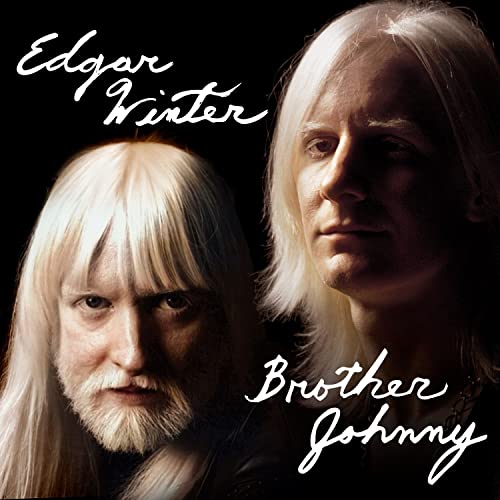
Edgar Winter – Brother Johnny [2022] – Johnny Winter has been gone since 2014, when he passed away in Zurich while on tour. His brother Edgar resisted doing a tribute album. He felt like doing so soon after his brother’s death would be exploitative. Eight years have passed, and Edgar reconsidered – the time was finally right. For this album he gathered many guitarists - Kenny Wayne Shepherd, Joe Bonamassa, Warren Haynes, Derek Trucks [without his wife for once], Billy Gibbons, David Grissom, Joe Walsh, Steve Lukather [yeah, the Toto guy], Doyle Bramhall II, and Keb’ ‘Mo. Oddly enough Rick Derringer is nowhere to be found here. Edgar sings some but not all of the songs. His voice has gotten gravelly over the years, but this is the blues, so it works. Rather than go song-by-song because they’re almost all good, I’ll single out one as being great – Mean Town Blues. Edgar sings, Joe Bonamassa plays. I single this one out because, if you close your eyes while you listen, you can hear Johnny Winter. Joe B nails Johnny’s tone. This is an Edgar Winter CD, but it’s his brother’s music, and it’s wonderful.

Gov’t Mule - Heavy Load Blues [2022] – Ever since the Allman Brothers Band called it a day in 2014 [and Gregg Allman’s subsequent death two and a half years later], Gov’t Mule has been the next best thing for me.  I have followed the Mule since the beginning, when Warren Haynes and Allen Woody were still in the Allman Brothers and Gov’t Mule was still a side gig.  In those 28 years hence, Heavy Load Blues is the first [and hopefully not last] “all-blues” album. Of the twenty-one songs that make up the two-disk version, thirteen of them are songs by Little Milton, Bobby ‘Blue’ Bland, Junior Wells, Howlin’ Wolf, Elmore James, and Muddy Waters among others. The remaining songs have the blues vibe but have the hard rock ethos we’ve come to expect from Gov’t Mule. One foot in the blues, indeed. I saw Gov’t Mule twice this year, and the “new” songs were fabulous. Eleven years ago, Warren Haynes recorded an R&B/soul album under his own name, Man In Motion. It’s the blues side of soul [the “B” in R&B is “blues," after all]. I think of Heavy Load Blues and Man In Motion as companion pieces. Buy both of them.

Walter Trout – Ride [2022] – Walter Trout is one of the best blues guitarists nobody has heard of. I saw him open for Gregg Allman in Sacramento in 1998. I loved what I heard and have been a fan ever since. Ride is his 30th [!] album, a superb follow-up to his equally superb Ordinary Madness [2020] album. Trout’s music is joyous, or at least as joyous as the blues can be. He can step on the gas and go full throttle, or he can ease back and play a slow, minor-chord blues that would make Gary Moore or Peter Green proud. A ferocious soloist, this 71-year-old blues man shows no signs of fading into “adult contemporary Hell,” unlike a British guitarist of renown I could mention.

Mike Campbell & The Dirty Knobs - External Combustion [2022] – I never saw Tom Petty live. This year I saw the next best thing, Mike Campbell and his band The Dirty Knobs. I saw them open for Gov’t Mule in October. Wouldn’t you know they played a fairly Tom Petty-centric set, but I digress. External Combustion is this unit’s second album [Wreckless Abandon (2020) being their first]. During his life as a Heartbreaker, Mike Campbell never had to write an entire album’s worth of material himself. With a songwriter as great as Tom Petty he never had to. Now he’s done it twice, and he’s made the transition from being Tom Petty’s co-pilot to front man look easy. It can’t be easy to start your career over when you’re seventy, but Mike Campbell has done it. In addition to the hard-hitting rock one comes to expect from the Dirty Knobs, they cover more stylistic bases - rockabilly [Bridget Bardot], “country”-ish rock [Electric Gypsy], ballads [State of Mind, In This Lifetime], boogie [Lightning Boogie], and ELO/Revolver-era Beatles [Cheap Talk]. With External Combustion, Mike Campbell & the Dirty Knobs have avoided the sophomore slump.

Thursday, June 20, 2019

Walter Trout - The Blues Came Callin’ & Battle Scars


When Gregg Allman, David Bowie, and Warren Zevon each found out the end of their lives was near, each decided to make one final album [Southern Blood, Blackstar, and The Wind respectively].  There’s nothing quite like impending death to motivate one into doing excellent work.  So too it seemed for bluesman Walter Trout.  I had the opportunity to see Walter Trout open for Gregg Allman in Sacramento in 1998.  He was one of those opening acts that didn’t suck.  In fact, I liked what I heard but I hadn’t bought any of his work until recently.  A few years ago, I heard that he was in dire need of a liver transplant.  Hard living between 1974 [when he moved from New Jersey to LA in search of a music career] and 1987 [when Carlos Santana got through to him to clean up his act] had finally caught up with him.  In 2013 Hepatitis C began to take its toll on him and he was becoming progressively ill.  He recorded songs when he wasn’t touring until his illness prevented him from doing so.  He decided he would make one final musical statement before he was “called home”.  For Walter Trout, that album would be The Blues Came Callin’. 

Walter Trout addresses the elephant in the room immediately on the first track, Wastin’ Away.  He knows something isn’t quite right as his body is turning against him. He doesn’t recognize who he sees in the mirror, but he isn’t going away quietly.  His soloing is as I remember from that night in 1998 – scorching. The World is Goin' Crazy (And So Am I) is Walter addressing the issues of the day that drive him batshit crazy – “Don’t believe our leaders ‘cause all they do is lie”, poor people fighting rich men’s wars, people dying in the streets, etc.  But he lets slip that the crazy stuff going on in the world of 2013-2014 is enough to make him want to get high.  The Bottom of the River is a metaphor for drowning in a river current, but he’s fighting for life because he’s not ready to die yet.  Willie is Walter Trout’s take on managers in the music business.  It’s about the many times he’s been ripped off by many different people in the music business in the past.  The title track tells of how one gets gripped tightly by the music we call “the blues” and how “you’ll never be the man you used to be” once the blues gets its grip on you.  His former boss John Mayall takes a turn on Hammond B-3.  Born in the City talks of Trout’s preference for city life, that country life may be good for some but not for him.  Unlike the other songs, this one is a slow burner, but no less intense. On Hard Time, he compares one’s lover leaving you to doing hard time in solitary. He said “this solitary is all in your mind and in your heart; an invisible psychological cage.” The only cover here is The Whale Have Swallowed Me by J.B. Lenoir.  As one might surmise, it’s the Biblical story of Jonah.  This is heavy music without being morose.  If it was Walter Trout’s intention to go out in a blaze of glory, he’s doing a pretty good job so far.

Not all is doom and gloom on The Blues Came Callin’.  Take A Little Time is Walter Trout as Chuck Berry.  He said of all the songs he’s done in the Chuck Berry style, this one probably comes closest to having an authentic Chess Records feel.  This one smokes!  Trout includes two instrumentals.  The first is Mayall's Piano Boogie, with Mayall himself on the piano.  Tight Shoes is the other that’s done like Freddie King.  Trout shows his sense of humor here.  He explained the origin of the song’s title:

“The title comes from my father, Ed Trout, Sr.  When I was a kid, he took the family out to dinner at a very swanky restaurant in Atlantic City.  It was very quiet and somber in there.  As he got up to leave, he inadvertently cut loose with a massive, thunderous, earth-shaking fart.  The whole place stopped and looked at him in horror.  He just turned to the room, looked at everybody there, shrugged his shoulders and said, “Tight shoes.”  His humor and sense of confidence has left a lasting impression on me.”

The only bit of sentimentality on The Blues Came Callin’ is saved for his wife on the last song, an acoustic piece called Nobody Moves Me Like You Do. It is an honest, real expression of the love that he has for her without sounding maudlin. The music is intense from the beginning to end - it doesn’t let up. This album is nearly perfect.  It is focused, it is intense, and it is Walter Trout at the top of his game. If you didn’t know any better, you wouldn’t think this album was made by a dying man, and that it was meant as a sort of valedictory statement.  One could say that The Blues Came Callin' was Walter Trout's last great act of defiance. There is not a dull moment to be found here, and the playing of all concerned is spectacular.

The Blues Came Callin’ was originally thought to be Walter Trout’s last musical statement, but it didn’t quite work out that way.  Close to death’s door, but not quite ready to cross the threshold, Walter Trout got the liver transplant he needed on May 26, 2014.  He finally got to go home on September 2nd.  He’d lost 120 pounds.  He told NPR that while he was been in physical therapy and speech therapy, he had to learn how to walk again, and how to talk again.  He spent hours every day learning how to play guitar again.  If anyone expected Walter Trout to follow-up The Blues Came Callin’ with a collection of shiny, happy songs, they were mistaken.  The follow-up is Battle Scars, and it is every bit as harrowing as The Blues Came Callin’.  Battle Scars picks up where The Blues Came Callin’ and continues the story of staring down death and recovering his health.  I think of The Blues Came Callin’ and Battle Scars as a single piece as they tell the same story.

Almost Gone starts the proceedings.  He knows something’s wrong, can feel his body shutting down and he knows he won’t last much longer. He sees what is coming.  Knowing what he knows, he wishes he could go back and have a do-over.  He compares himself to a broken toy. Omaha is where things begin to get very dark.  Omaha is where he received his new liver. He told to NPR that while he was waiting for his liver, he saw people on the waiting list who didn’t make it.  You can feel his angst of not knowing whether he’ll get his liver.  He debates with himself the merits of painkilling meds (“I need something for the pain, but I don’t wanna get strung out again”).  With Tomorrow Seems So Far Away, he continues what he started on Omaha.  He relays the uncertainty of waiting, minute by minute, for the call that “somebody gave all”, that an organ was available for him.  So we’ve got three ferocious blues rockers right out of the gate.  Please Take Me Home, a mostly acoustic ballad, slows things down.  Walter is sick of hospitals and just wants to go home to be with his wife.  Once we’ve caught our breath with Please Take Me Home, it’s back to the ferocity of what came before with Playin’ Hideaway.  This one has nothing to do with illness or recovery, but is a poison pen letter to some unknown female.  One is reminded of Like a Rolling Stone, only done ZZ Top-style.

Haunted By The Night gets back to the illness and recovery narrative. Walter captures what it’s like to be alone with your own thoughts, unable to sleep and plagued by your deepest fears.  Before Walter got sick, his record company had planned a big celebration of 25 years of him being a recording artist in his own right, rather than as part of someone else’s band.  There was going to be a complete re-issuing of his catalog on vinyl, the publishing of his autobiography, and a worldwide tour. His illness mooted that celebration, as Walter laments in My Ship Came In.  Fly Away had a peculiar inspiration.  Before he went into the hospital, he was lying in bed, feeling very sick when he says he was visited by spirits.  He said these spirits took him away for an out-of-body experience to “the other side”.  He said these spirits offered him the chance to go live there, but that meant he would die.  He told them ‘no’ because he wanted to see his kids grow up.  On Move On, Walter sings another piece about wanting to get away from the pain he endured.  In Cold, Cold Ground, Walter hears the angels singing, but he doesn’t like the sound.  He thinks he’s got much more to do, and he’s not ready to go.  The blues rarely provide a happy ending, but we listeners get that with Gonna Live Again.  He was just days away from death when he got the call he was afraid would never come and he received his liver transplant.  An acoustic song, he lists all the things he’s done that he isn’t proud of – lying, cheating, etc – but he’s been given a second chance.  He’s having a conversation with God and he asks why he’s gotten this second chance.  He says he has a chance to be a better man, and that means be a better husband, to be a better father, or be a better musician, but he also believes that now it’s up to him to be an advocate to get people to sign up to be an organ donor.  After Phil Lesh of the Grateful Dead went through the same thing about 20 years ago, he dedicated himself to spreading the organ donation message at each show he played.  This is now Walter Trout’s mission as well.

If anyone tells you a white man can’t sing the blues, lay these two albums on them.  I can’t recommend these two albums highly enough.  They are great works.