Showing posts with label Gov't Mule. Show all posts

Sunday, September 15, 2024

Tony's Favorite 1990s Albums

When in doubt, make a list. I subscribe to several YouTube channels, some of which are run by amateur online music critics. As is their wont, they too make lists – top ten prog rock albums, top 10 Deep Purple albums, etc. You get the idea. Thus inspired I thought I would list my Top 10 albums from the 1990s, which to these ears is the last good musical decade. To be clear, this isn’t a “best of” list, because any such pronouncements by anybody are completely subjective. These are “favorites,” so opinions [like recollections] may vary. Without further ado:

U2 - Achtung Baby (1991) – After The Joshua Tree [1987] and Rattle and Hum [1988], U2 faced an existential crisis. The Joshua Tree was their big artistic statement. To punctuate that statement, they decided they would film their subsequent tour. They envisioned a U2 version of A Hard Day’s Night. Rattle and Hum was more like a home movie, four guys looking to discover American music, and a joyless home movie at that. The reviews of Rattle and Hum were scathing, and the guys in the band were a bit shell shocked. Up to this point they were critical darlings and weren’t used to people telling them they weren’t perfect. And they [most especially Bono] had gotten too caught up in their own self-importance. Bono’s wife Ali summed it up best – she told him “you’ve gotten so serious.  The boy I fell in love with was so full of mischief, so full of madness.  You were a much more experimental character – what’s happened to you?” They went away to re-invent themselves, but in the process discovered they weren’t on the same page musically, hence the existential crisis. They pulled themselves together and re-invented themselves. They exorcised the “preachy” U2 [for a while, anyway], stopped Bono’s posturing and hectoring for social justice, and became rock stars that could make music that was fun. Achtung Baby is my favorite U2 album by far.

Rush - Counterparts (1993) – After a five-album run where all kinds of keyboards served as the focus of Rush music, Alex Lifeson finally re-emerged from the shadows with a vengeance. Rush started out as a guitar band, but after Moving Pictures [1981] they moved further and further away from that ethos to the point that Alex Lifeson became a musical afterthought.  There were just too many damn synthesizers for my liking, and the songwriting was pretty weak after Grace Under Pressure [1984]. Counterparts is the album for which I waited nine years. Keyboards were relegated to the background, and Lerxst’s guitar was finally front and center again. Of the eleven songs on the album [one is an instrumental: Leave That Thing Alone], nine are strong, while the remaining songs are merely “ok.”  Once again, Rush was a fire-breathing beast, and I couldn’t be happier as a fan.

R.E.M. - Out of Time [1991] and Automatic for the People [1992] – I’m cheating a little bit here because I think of both of these albums as two sides of the same coin. Both are mostly acoustic, and unlike the louder album that preceded them – Green [1988] – they have aged very well. They don’t sound dated. I admit I didn’t get into these guys at the time, as ubiquitous as they were in the late Eighties/early Nineties. But with the passage of 32 years, and with Carol passing away, I was nostalgic for a happier time and thus I did a reappraisal. For the most part, I haven’t a clue about what Michael Stipe was singing about. I don’t think he had any idea, either. But there is a moment of clarity on Man On The Moon, an elegy for Andy Kaufman. It proved to me that if he wanted to, Michael Stipe can make complete sense. And he had a sense of humor. With that said, I cut him some slack on the rest of his lyrics, which can be very obtuse and impenetrable. At a time when grunge and alternative music were all the rage [some of which I like very much], these two statements, released nineteen months apart, were outside the norm. Instead of loud, detuned guitars, there are mandolins, acoustic guitars, pianos and bouzoukis. There’s a lot to be said for going against the grain, and R.E.M. are to be commended for it. I appreciate them now – better late than never. But when I think I’ve had enough of quiet music, I’ll throw on Dirt or Superunknown.  Speaking of which…

Alice in ChainsDirt [1992] – A long time ago, MTV had this show on Saturday nights called The Headbangers Ball. It was on this show that a video caught Carol’s eye. It was made by a band from Seattle. The singer was going on about being buried in his own shit. Carol didn’t impress easily, but she liked what she heard and told me “you’ve got to hear this.” The band was Alice in Chains, and the song was Man in the Box. The song was from their debut album, Facelift [1990]. We were both immediately hooked. A couple of years later, I saw a movie called Singles [1992]. It takes place in Seattle and is about the love lives of twentysomethings, with the burgeoning grunge movement serving as the backdrop for the story. It was here that I got a preview of the next AIC album. Their new song, Would? [an elegy for Mother Love Bone vocalist Andrew Wood], featured in the movie. Dirt, the album from whence it came, is a musical 2x4 across the forehead. Jerry Cantrell’s riffs were dark and sludgy, very Sabbathesque but recorded a helluva lot better. Though not a concept album per se, this harrowing album has drug addiction as its theme for the last half of the album. Layne Staley, in a vice grip of heroin addiction that just wouldn’t let go, articulated his own downward spiral and self-destruction. The album also includes themes of mortality, relationships, and depression, with a tribute to Cantrell’s father [a Vietnam vet] thrown in for good measure. Of note, they began recording Dirt during the LA riots in the summer of 1992, which only added to the album’s vibe of doom. Alice in Chains have recorded some stellar music since 1992, but Dirt remains their magnum opus. It still remains in heavy rotation for me.

Soundgarden - Superunknown (1994) - Of the four big bands to come out of Seattle in the early 1990s [Nirvana, Pearl Jam, Alice in Chains, and Soundgarden], Soundgarden was the first to get a major label record deal, but the last to get the big break. They got people’s attention with Badmotorfinger (1991), but in 1994 Superunknown launched them into the stratosphere. Superunknown opens with a thunderous one-two punch of Let Me Drown and My Wave. Fell On Black Days which follows slows the pace and is dark and very moody. Mailman is one of Matt Cameron’s songs. As the title says, it’s about a mailman, who is about to “go postal.” Kim Thayil pours the sludge on thick with his detuned guitars in a grinding riff, and Ben Shepard’s bass makes the sludge even thicker. I have no idea what Superunknown [the song] is about, and I don’t care. It’s loud, it’s fast, it’s brutal in its intensity, and it’s relentless. Black Hole Sun is the monster hit, which is more of a mood than a song, but that’s ok. Spoonman is another fast one…and another hit. It’s all good. Carol and I saw them at Red Rocks in 2011, and they played most of this album. To date, it’s the loudest concert I ever attended. We lost some hearing that day.

Pink Floyd- The Division Bell [1994] – The last real Pink Floyd album. I don’t count The Endless River because there’s only one real song on it, and not a very good one. As much as I like 1987’s A Momentary Lapse of Reason, it’s really a David Gilmour solo album in all but name. It has more in common with Gilmour’s About Face [1984] than it does with Pink Floyd. Rick Wright didn’t play much on it, and Nick Mason didn’t play at all. But that album served its purpose. In the aftermath of Roger Waters’ 1985 departure, it proved the band could function without him, much to Waters’ distress. After touring AMLOR for two solid years, Wright and Mason were back in playing shape. Wright has five songwriting credits on The Division Bell and sang on a Pink Floyd album for the first time since Dark Side of the Moon. Unlike AMLOR, this sounded like a Pink Floyd album. David Gilmour isn’t a lyricist, and he isn’t big on the whole “concept album” thing. But in contemporary interviews, he did say the underlying theme of the album was the inability of people to communicate. Both he and Rick Wright opined that The Division Bell sounds more like Wish You Were Here [the favorite of both Gilmour and Wright] than anything else in Pink Floyd’s canon. For me, it took just one listen to Keep Talking to know that this album was going to be a good one. But, the emotional center of the album is the final song, High Hopes. It is a wistful look back on happier times in Cambridge before fame. Carol and I saw two shows on this tour. They were the best shows we had ever seen, with film clips playing on a giant screen behind the stage, flying pigs, lasers, and a giant mirror ball that illuminated everything during Comfortably Numb. The music was pretty good, too. 😊

Deep Purple - Purpendicular (1996) – One can’t discuss Deep Purple without talking about the interpersonal drama of the players. They shocked the rock world by reuniting the classic Mark II lineup [Ritchie Blackmore, Ian Gillan, Roger Glover, Jon Lord, and Ian Paice] in 1984 with the album Perfect Strangers. The House of Blue Light [1987] followed, but the disagreements between Blackmore and Gillan that led to their 1973 split resurfaced. Soon, Gillan was fired in 1989, to be replaced by Joe Lynn Turner. The resulting album, Slaves and Masters [1990] sounds like a bad Rainbow album. Blackmore was happy, but the rest of the band wasn’t. They wanted Gillan back, so he returned in 1992. They recorded The Battle Rages On [1993], and it was Ritchie’s turn to be unhappy. The band toured in Europe and played their last show [Helsinki] in November 1993. In three weeks hence, they were supposed to go to Japan, but Ritchie tore up his visa and left the band. The band had to honor the Japan dates, and somehow, they got Joe Satriani to fill in for Ritchie. They had a world tour ahead of them and they played the dates with Satriani, but there was a hitch. Satriani had his own career and couldn’t stay with Deep Purple. Deep Purple needed a new guitar player [or, as Gillan would say, a “banjo player”]. Each member made a list. The only player on everyone’s list was Steve Morse. Morse turned out to be an enlightened choice. He’s nothing like Blackmore, and that’s the point. If one doesn’t hire someone to sound like Ritchie Blackmore, the less likely people are going to make comparisons to him, other than to say “he doesn’t sound like Ritchie.” With Morse, they could afford to take a fresh approach, to exercise the musical muscles that had atrophied and get away from making generic hard rock albums. Morse’s own work before joining Deep Purple spanned a variety of styles, genres and moods. This is what he brought to Deep Purple, and to their credit they embraced the change. This album swings like no other Deep Purple album. Ian Paice gets to do more than just a 4/4 bash like he had to do from Perfect Strangers onward. The rest of the band was able to write and contribute more than they had when Ritchie was the musical director. The result was Purpendicular, which would be their most experimental album since before Gillan and Glover joined the band in 1969. This album proved that there was life after Blackmore, so much so that the Morse-Purple marriage lasted twenty-eight years. Highly recommended.

Gov’t Mule - Dose (1997) – The Allman Brothers Band reunited in 1989 to commemorate the twentieth anniversary of the band founded by Duane Allman. Guitarist Warren Haynes and bassist Allen Woody were the new guys. After the success of the Dreams tour, the band decided to create new music. The new album, Seven Turns [1990], was their best album since Brothers and Sisters [1973]. Subsequent albums [Shades of Two Worlds (1991) and Where It All Begins (1994)] were almost as good. To occupy themselves during ABB downtimes, Haynes and Woody had formed power trio Gov’t Mule with Matt Abts, who played with Haynes in Dickey Betts’ band before the 1989 reformation. It was going to be a busman’s holiday, like what Hot Tuna started out to be vis-à-vis the Jefferson Airplane. They recorded one self-titled album in 1995. The plan was just one album, but the ABB was a dysfunctional unit. Gregg Allman had his substance abuse issues, and Dickey Betts was in and out of the band due to his own substance abuse issues [to be charitable, he was a mean drunk]. The interpersonal dynamic was a bit toxic. Haynes and Woody decided they had enough and left the Allman Brothers in 1997, and they didn’t look back. The Mule would be their full-time gig. Dose is jam band music at its finest. This album spawned three (!) sprawling, monster classics – Blind Man in the Dark, Thorazine Shuffle [known in some spiritual circles as the “Thorazine Clusterfuck”], and Game Face. Throw in two instrumentals [Birth of the Mule and Thelonious Beck], the folk blues of Son House’s John the Revelator, and a jam take on the Beatles She Said She Said, you have a classic.

Bob DylanTime Out of Mind [1997] – At the conclusion of the 1980s, Bob Dylan released an outstanding album, Oh Mercy, about which I have already commented. As he had more than enough songs for that album, he rerecorded those leftovers [and a handful of newer songs] for the next album, Under the Red Sky [1990]. This wasn’t a bad album, but in the wake of Oh Mercy it was a bit of a letdown. Afterward, he went silent. Not for the first time, many began to doubt whether he could still be creative. The man himself had his doubts, wondering aloud whether he had enough songs to sing and stop writing. He went back to his folk roots and cut two albums - Good as I Been to You [1992] and World Gone Wrong [1993] - that were traditional folk songs, performed by him alone with only an acoustic guitar and a harmonica to accompany him. It took him until 1996 to find the inspiration to write new material. His new songs addressed love, heartbreak, betrayal and loss, old age and mortality. For his sound, Dylan found his inspiration in the blues. When in doubt, go back to the source. I’ve waxed poetic about 2001’s “Love And Theft” in these pages before and how I thought [and still think] that album was the best he had done since Blood on the Tracks. I had done a Top 10 list of Dylan albums. I had Time Out of Mind at #6, Oh Mercy at #3, and  “Love And Theft” at #2. Thanks to a remix of the entire Time Out of Mind album as presented on the Fragments box set [released in 2022], I may have to rethink the order of things. Time Out of Mind is truly extraordinary.

Tom PettyWildflowers [1994] – Tom Petty had a new record deal with Warner Brothers, but there was a catch. He was still signed to MCA, and he wanted out. His relationship with MCA was tempestuous. MCA had originally rejected Full Moon Fever. They butted heads over his compensation, artistic control and album prices. The price for his freedom was a greatest hits compilation, but it had to include two new songs. One song turned out to be Mary Jane’s Last Dance. Tom wasn’t done with making clean breaks. After recording Mary Jane’s Last Dance, he fired drummer Stan Lynch. In his place he hired Steve Ferrone, an inspired choice. They didn’t get along anymore, and Tom thought it was time for a change. No change was more drastic for him than his marriage. His 22-year marriage to Jane Benyo was falling apart. Daughter Adria took one listen to Wildflowers and knew immediately that her parents’ marriage was over. Welcome to middle age. Another break Petty made [though not permanent like the rest] was with Jeff Lynne. Lynne produced Petty’s first solo record, Full Moon Fever [1989] and Into the Great Wide Open [1991]. For Wildflowers he worked with Rick Rubin at Mike Campbell’s suggestion. For this record, Petty said that after spending almost twenty years making records with the Heartbreakers, he wanted to branch out and work with others in order to learn and grow. He credited Rubin with guiding him back to a musical place where he would feel very comfortable. At this point in his life, Petty got more comfortable making music that wasn’t just loud rock ‘n roll. To be sure, there is plenty of loud rock ‘n roll on this record, but there are also folky, confessional moments as well. The album alternates between the loud and the quiet. Originally, Petty planned Wallflowers to be a double album. He wrote twenty-five songs for it, but when he finished it and played it for Warner Brothers, they said it was too long. He pruned Wildflowers to fifteen songs. Some of the leftovers came out for his soundtrack to the movie She’s The One. Others remained unreleased until the Wildflowers & All the Rest box set came out in 2020. There was quantity as well as quality. He wanted to revisit the whole Wildflowers thing after his final tour, but fate had other ideas. Wildflowers is Tom Petty’s masterpiece.

Tuesday, December 20, 2022

Tony's Picks - 2022

It’s that time of year when every music/movie/book critic puts out his/her favorites for the year. I’ve done only one of these in the past few years because I simply didn’t have the time or energy to do it. This year I have plenty of time. I'm not so much a critic as I am a fan. Last year’s list was fairly eclectic with progressive rock, metal, English pop, some Americana, and a chick singer. For the most part, this year’s list has a bluish tint.

Bonnie Raitt - Just Like That... [2022] – Death casts a shadow over this collection of songs, and since it was recorded while the pandemic was raging, why not? There’s a convicted murder who seeks redemption as a prison hospice worker in Down the Hall. In the title track there’s the stranger who shows up unannounced on a woman’s doorstep after he received her dead son’s heart via transplant. Bonnie alludes to those no longer with us in Livin’ for the Ones, when she proclaims “If you ever start to bitch and moan, just remember the ones who won’t ever feel the sun on their faces again.” For the rest of the album, you get what one comes to expect with a Bonnie Raitt release ever since Nick of Time [1989], and we’re better off for it.

Buddy Guy - The Blues Don't Lie [2022] – The last of the blues giants is finally slowing down. His tour to support The Blues Don't Lie has been billed as the farewell tour. Unlike others who’ve had farewell tours only to come back [The Who, Kiss, Ozzy], I’ve got a feeling that at age 86, this one will stick. Since 2008, Tom Hambridge has been Buddy Guy’s producer, and since 2008 there’s been a formula. Guest musicians? Check. Songs written by Hambridge, Gary Nicholson, and/or Richard Fleming? Check. Playing like the assassin that Jimi Hendrix wanted to be? Check. For the most part Buddy has been recording the same album for over thirty years, not that there’s anything wrong with that. The only thing that doesn’t work here is “I’ve Got a Feeling.” Buddy Guy and the Beatles are mutually exclusive, and they should remain that way.

Eric Gales – Crown [2022] – “My name is Eric Gales – any questions?” So begins this superb album. Once upon a time, Eric Gales was a blues prodigy. He released his first album when he was sixteen. Eighteen albums, descent into drug addiction and some jail time later, Gales releases a flawless album. Produced by fellow blues prodigy Joe Bonamassa and his partner in crime Josh Smith, Crown has the blues, rock, soul, rhythm & blues, funk, a little bit of swing, a healthy dose of horns, and guitar heroics – lots of guitar heroics. Most of the songs are written by Gales, Bonamassa and Smith, Gales sings about race, jail, getting knocked down and getting back up, his wife [who sings backup and takes lead vocals for Take Me Just As I Am]. Check out Gales’ guitar duel with Joe Bonamassa on the title track. Somewhere Jimi Hendrix and Stevie Ray Vaughan are smiling. I have one question, Eric – why has it taken this long for me to find you?

Larry McCray - Blues Without You [2022] – Like Eric Gales’ Crown, this too was produced by Joe Bonamassa and Josh Smith. Those two are getting pretty good at the record production thing. The lead-off song Arkansas is a smoking autobiographical, horn-laden, funky statement of intent. Without Love It Doesn’t Matter changes things up immediately thereafter with a Fats Domino groove. Breaking News, with a 1970s sound of horns and strings, draws inspiration from the steady drumbeat of bad news heard every night. Roadhouse Blues [not to be confused with the Doors song of the same name] is Albert King territory. Drinkin’ Liquor and Chasin’ Women is back to the Fats Domino vibe [thanks to Reese Wynans]. Down to the Bottom is a big ballad with Warren Haynes. Mr. Easy is a slower, funkier tune with exceptional horns and the guitar talents of Joe Bonamassa. The album closes with a solo acoustic blues called I Play the Blues. I’m not sure which is the better album – Crown or Blues Without You – but both would be worthy additions to your blues collection.

Los Lobos - Native Sons [2021] – This came out last year, but I didn’t buy it until this year. Musicians had lots of time on their hands when COVID hit, many of whom recorded new music with imaginative titles including the word “lockdown.” Los Lobos put some thought into what they would call their collection of songs recorded under similar conditions. This is a covers album [except for one original song, the title track], but this one has a theme – it features a dozen songs originally written and recorded by artists from Los Angeles. Their choice of songs reflects the melting pot that is LA music. They cover the Chicano side with Thee Midniters, Lalo Guerrero, and Willie Bobo. I admit to being ignorant of their music, but as luck would have it, the one song I did recognize was Lalo Guerrero’s Los Chucos Suaves, which I heard him sing on Ry Cooder’s Chavez Ravine album [on which David Hidalgo played]. They venture to the black side with War’s The World Is a Ghetto. Their clever medley of Buffalo Springfield’s Bluebird and For What It’s Worth brilliantly captures the interplay of the guitar parts as done by Stephen Stills, Neil Young and Richie Furay. They keep the original arrangements but add their own Los Lobos spin. One band I never imagined Los Lobos would cover is the Beach Boys, but they chose wisely which song to cover – Sail On Sailor. The other knuckleball they threw me was when they ventured into singer/songwriter territory with Jackson Browne’s Jamaica Say You Will.  Only once did they pay tribute to one of their contemporaries – The Blasters [Flat Top Joint].  This eclectic set of songs is a good companion piece to The Ride/Ride This [2004], which included performances from a couple of the artists covered here [The Blasters’ Dave Alvin and Thee Midniters Little Willie G.]. Covers albums are ok for a stopgap, but I would love to hear original music from this great band.

Tears for Fears - The Tipping Point [2022] – Here’s something that is completely unlike anything on this list. I have always been a sucker for good English pop, and this one’s pretty good. Eighteen years had passed since TFF’s last album [Everybody Loves a Happy Ending]. They wanted to record another album shortly after that last album, but Roland Orzabal’s wife got sick. She died in 2017, then Orzabal had his own bouts with ill health. He turned to his TFF partner Curt Smith to create something new. What resulted was a collection of songs dealing with loss, grief, and reconciliation. Given my own circumstance, this hit home, and it spoke to me – I knew the feeling all too well. That is reason enough for me to include this on my list.

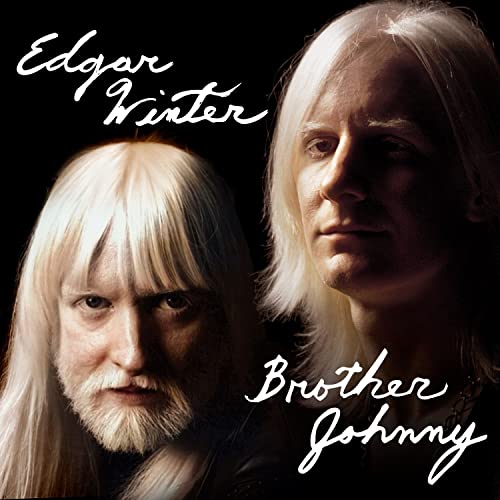
Edgar Winter – Brother Johnny [2022] – Johnny Winter has been gone since 2014, when he passed away in Zurich while on tour. His brother Edgar resisted doing a tribute album. He felt like doing so soon after his brother’s death would be exploitative. Eight years have passed, and Edgar reconsidered – the time was finally right. For this album he gathered many guitarists - Kenny Wayne Shepherd, Joe Bonamassa, Warren Haynes, Derek Trucks [without his wife for once], Billy Gibbons, David Grissom, Joe Walsh, Steve Lukather [yeah, the Toto guy], Doyle Bramhall II, and Keb’ ‘Mo. Oddly enough Rick Derringer is nowhere to be found here. Edgar sings some but not all of the songs. His voice has gotten gravelly over the years, but this is the blues, so it works. Rather than go song-by-song because they’re almost all good, I’ll single out one as being great – Mean Town Blues. Edgar sings, Joe Bonamassa plays. I single this one out because, if you close your eyes while you listen, you can hear Johnny Winter. Joe B nails Johnny’s tone. This is an Edgar Winter CD, but it’s his brother’s music, and it’s wonderful.

Gov’t Mule - Heavy Load Blues [2022] – Ever since the Allman Brothers Band called it a day in 2014 [and Gregg Allman’s subsequent death two and a half years later], Gov’t Mule has been the next best thing for me.  I have followed the Mule since the beginning, when Warren Haynes and Allen Woody were still in the Allman Brothers and Gov’t Mule was still a side gig.  In those 28 years hence, Heavy Load Blues is the first [and hopefully not last] “all-blues” album. Of the twenty-one songs that make up the two-disk version, thirteen of them are songs by Little Milton, Bobby ‘Blue’ Bland, Junior Wells, Howlin’ Wolf, Elmore James, and Muddy Waters among others. The remaining songs have the blues vibe but have the hard rock ethos we’ve come to expect from Gov’t Mule. One foot in the blues, indeed. I saw Gov’t Mule twice this year, and the “new” songs were fabulous. Eleven years ago, Warren Haynes recorded an R&B/soul album under his own name, Man In Motion. It’s the blues side of soul [the “B” in R&B is “blues," after all]. I think of Heavy Load Blues and Man In Motion as companion pieces. Buy both of them.

Walter Trout – Ride [2022] – Walter Trout is one of the best blues guitarists nobody has heard of. I saw him open for Gregg Allman in Sacramento in 1998. I loved what I heard and have been a fan ever since. Ride is his 30th [!] album, a superb follow-up to his equally superb Ordinary Madness [2020] album. Trout’s music is joyous, or at least as joyous as the blues can be. He can step on the gas and go full throttle, or he can ease back and play a slow, minor-chord blues that would make Gary Moore or Peter Green proud. A ferocious soloist, this 71-year-old blues man shows no signs of fading into “adult contemporary Hell,” unlike a British guitarist of renown I could mention.

Mike Campbell & The Dirty Knobs - External Combustion [2022] – I never saw Tom Petty live. This year I saw the next best thing, Mike Campbell and his band The Dirty Knobs. I saw them open for Gov’t Mule in October. Wouldn’t you know they played a fairly Tom Petty-centric set, but I digress. External Combustion is this unit’s second album [Wreckless Abandon (2020) being their first]. During his life as a Heartbreaker, Mike Campbell never had to write an entire album’s worth of material himself. With a songwriter as great as Tom Petty he never had to. Now he’s done it twice, and he’s made the transition from being Tom Petty’s co-pilot to front man look easy. It can’t be easy to start your career over when you’re seventy, but Mike Campbell has done it. In addition to the hard-hitting rock one comes to expect from the Dirty Knobs, they cover more stylistic bases - rockabilly [Bridget Bardot], “country”-ish rock [Electric Gypsy], ballads [State of Mind, In This Lifetime], boogie [Lightning Boogie], and ELO/Revolver-era Beatles [Cheap Talk]. With External Combustion, Mike Campbell & the Dirty Knobs have avoided the sophomore slump.

Saturday, May 27, 2017

Gregg Allman - RIP

I was following the Borussia Dortmund/Eintracht Frankfurt match for the 2017 German Cup.  I was also listening to the new stereo mix of the Beatles’ A Day in the Life when I saw this from writer Alan Paul on my Facebook page:

“With a heavy heart, I have to tell you that Gregg Allman has passed. Not much more to say now. Peace and love to his family and the whole extended community.”

Of all the passings of rock royalty over the last eighteen months [Lemmy Kilmister, David Bowie, Glenn Frey, Keith Emerson, Greg Lake, John Wetton, and just recently Chris Cornell], this one hurts the most.  Damn… The people I have listened to for most of my life are leaving.  For some of those people, time stopped.  They died young, some due to lifestyles of reckless abandon [like Janis, Jimi, and Jim Morrison], others because fate had another plan for them – circumstances beyond their control [like Stevie Ray Vaughan and John Lennon].  Their youth is frozen in time – they didn’t get old, and they never will.  Those that did survive are now passing the scene with such frequency that this blog has become an obituary column.  Time is catching up with the musical heroes of our youth.  And as it does, time is giving us reminders like this that it’ll catch up to us too someday, and probably sooner than we would like.

I was 19 years old, it was my freshman year in college.  The girl I wanted to marry all those years ago told me she had other plans and they didn’t include me.  People often seek out music for solace, and so it was [and still is] for me.  The music of the Beatles wasn’t enough to help ease the pain.  And then out of nowhere, I heard it on the radio.  It was the blues.  It wasn’t just any blues – it was the Allman Brothers Band.  The song was One Way Out from Eat a Peach.  That was the hook.  The first album [of many] that I bought was called Beginnings.  It was a repackaging of their first two albums into one, affordable set - The Allman Brothers Band [1969] and Idlewild South [1970].  Songs from these albums burrowed into my subconscious – Whipping Post, Dreams, In Memory of Elizabeth Reed, Please Call Home, Midnight RiderMelissa [from Eat a Peach] is on my list of favorite songs, right behind the Beatles’ Help! and Pink Floyd’s Comfortably Numb.  From the time I heard these songs made in his twenties, until the music he made in his sixties, Gregg Allman became my favorite singer.  I named my first son after him [and Eric Clapton], not for his off-stage behavior, but for his talent.  His voice moved me like no other, not even Paul Rodgers or John Lennon.

The Allman Brothers were a unique outfit.  They had two lead guitar players [Duane Allman and Dickey Betts], two drummers [Jaimoe and Butch Trucks], a bass player who played like a third guitarist [Berry Oakley], and a young singer in Gregg Allman who also played the Hammond B-3 organ.  As a world-weary singer who sounded like he was way beyond his early twenties, it was as if the proverbial hellhounds were always on his trail.  The Allman Brothers Band are credited with inventing a musical genre – Southern rock.  They didn’t like that tag because they were much more than that.  Gram Parson often talked about combining several kinds of music into a blend he called Cosmic American Music.  He talked about such a music, and was somewhat successful in making it, but his music was always pointed toward country music.  The music described by Gram Parsons was the music the Allman Brothers made.  They combined R&B, soul, gospel, blues, country, jazz and rock into something that was uniquely theirs, even more so than what their contemporaries the Grateful Dead did.  Some musicologists have referred to the Allman Brothers Band as a “jam band”.  Gregg Allman didn’t like the tag.  He said, “we’re not a jam band, but we are a band that jams”.  There is a difference.  Well-written songs were just the starting point for the Brothers to do their musical explorations into the stratosphere

Forty-five years after they came together, the Allman Brothers Band played their last show in New York, October 28, 2014.  The show started the evening of the 28th, but ended in the wee hours of October 29th, the 43rd anniversary of the death of Gregg’s brother, Duane.  It was fitting that it ended this way.  The circle was truly unbroken [the underlying theme of those last six shows].  The last song the band played was the also the first song they played as a band in March 1969.  It was the old Muddy Waters classic, Trouble No More.  Before the band played that last song, Gregg addressed the audience at the Beacon Theatre:

“A few years ago, just a few years ago, I was called to come and meet these guys in Jacksonville, Florida.  And it was kinda like, a little stiff in the room until one of them handed me a lyric sheet and said “Sing!”  And this was about 3:30 in the afternoon in Jacksonville, Florida, March 26th, 1969.  Never did we have any idea that it would come to this.  We give you a heartfelt ‘thank you.’  And now we’re gonna end on the first song we ever played, that broke the ice.” 

I have no doubt that the person who told him to sing was Brother Duane. 

Of all the musicians that have come and gone since my first concert [The Who in 1982], Gregg Allman is the musician whom I have seen live the most.  I saw him six times with the Allman Brothers Band between 1989 and 1995, and four times as a solo performer between 1987 and 2012.  Carol and I saw him open for Stevie Ray Vaughan in Colorado in 1987 the week we got married.  After years of neglect, Gregg finally had radio exposure with I’m No Angel.  We didn't know the Allman Brothers Band would reunite just two years later [I don't think they did either].  Seeing Gregg live for the first time was the next best thing [we saw Dickey Betts a year earlier].  The last time we saw him in 2012, it was Greg and Mark’s first concert.  He was supporting his then-new Low Country Blues, an excellent tribute to his blues forbearers of which I recommend highly.

Gregg had been in bad health in recent years.  He had Hepatitis C, which he said he got from a dirty tattoo needle many years ago.  His Hepatitis led to liver cancer, which subsequently resulted in a liver transplant.  It was never the same for him after that.  He had given up the drugs and the booze, and even quit smoking.  He missed Allman Brothers shows in March 2014 due to bronchitis.  Afterward, he had lung surgery.  He began to cancel shows, then began to cancel entire tours.  About two or three weeks ago it was rumored that he was in hospice care.  He denied the rumors in the press, but in light of his passing today I guess the rumors were true.  As I began to write this, I found a Facebook post from Dickey Betts’ manager.  Gregg and Dickey had a blowout in 2000 [actually I think it was between Dickey and Butch Trucks, but I digress slightly], but according to David Spero he said Dickey and Gregg spoke to each other recently and put all the bad blood behind.  He also related that when he told Dickey of Gregg’s death “he got very quiet and after a moment”…and “was very saddened by the news” [I didn’t hear of any such thing after Butch Trucks killed himself, hence my conclusion about the 2000 feud].  I [and I am sure many fellow Peacheads] am glad that Gregg and Dickey were at peace with each other.

Warren Haynes, longtime on-stage foil for Gregg Allman and the leading light of Gov’t Mule, wrote the following today:

“RIP Gregg Allman - I am at a loss for words. I was moved by Gregg’s voice when I first heard the Allman Brothers Band in 1969. I was nine years old. I had not even picked up a guitar yet but thanks to my two older brothers I had been exposed to a lot of great soul music with the best singers in the world. But this was something different. This music was making a deep emotional connection with me even though it was too complex for me to really understand. Somehow, though, it had this "common man” quality that allowed that music to connect with people on so many different levels without analyzing the ingredients that went into it-soul, blues, rock, country, jazz-all mixed together in a way no one had ever done before. And on top of it all was this beautiful voice that could be soothing, terrifying, mellow, angry, and amazingly natural and soulful all at the same time-and instantly captivating. It drew me in. It drew us all in.

Over the next few years I would begin to play guitar as every one of my music loving friends became Allman Brothers’ freaks. That music spoke to anyone who heard it but in the South it resonated with us. It spoke volumes. It brought a voice to people like myself in the midst of some confusing, ever-changing times. Here was this group of Southern hippies with an integrated band coming out of the Deepest South with equally deep music on the heels of some extremely deep changes. We didn’t realize how heavy that was at the time but we sure realized how heavy the music was. Every guitar player in every Southern town was listening to the Live at Fillmore East record and worshipping at the altar of Duane Allman and Dickey Betts. But the icing on the cake was always Gregg’s voice. That’s what separated the ABB from being a band that only connected with music freaks. Women whom previously had only listened to the radio would tolerate the long jams to get to the parts where Gregg melted their souls with that angelic voice. It turned casual music fans into fanatical fans who were discovering a new multi-dimensional music that a few years prior wasn’t even in existence. And it was all due to Gregg’s voice-and the songs.

He wrote these amazing songs that were as natural as his voice was. The words and melodies felt so perfectly unpretentious and, when delivered by him, made an emotional connection that only happens when music is genuine and honest. I learned an enormous amount about singing and songwriting from him-most of it before we ever met.

I am truly honored to have been fortunate enough to have written many songs with him and equally honored to have traveled the world with him while making the best music the world has ever known. I will never, ever take that for granted. And on top of all that-he was my dear friend.

My fondest memories will always be of Gregg, myself, and Allen Woody sharing a tour bus together-listening to great music and laughing our asses off mile after mile. Traveling- like life- is so much better when you’ve got friends to share the experience with. I’ve lost too many lately and this one is gonna be hard to get past. There is some comfort in knowing that millions of people all over the world feel the same way.

I love you Gregory – WH”


RIP Gregg. You’re with Duane and Mama A again.


Gregg and Duane Allman - together again

Saturday, May 2, 2015

Four Sides of The Mule


What started out as a “side project” for Warren Haynes and Allen Woody during their down time from the Allman Brothers Band, Gov’t Mule has been around for twenty years now [they released their first album Gov’t Mule in 1995].  This year they are commemorating this milestone in a unique way by opening their vaults and releasing some live shows from the years gone by.  Every year The Mule has two special days on their concert calendar – Halloween and New Year’s Eve.  In the spirit of Halloween, where kids put on costumes and pretend to be someone else, The Mule does the same thing.  Instead of being The Mule, they pretend they’re another band.  They began this tradition in 2007, when they decided they would play Led Zeppelin’s Houses of the Holy album in its entirety.  To up the cool quotient of this show, John Paul Jones joined them for that night.  Robby Krieger of The Doors did the same thing in 2013, playing two Doors-heavy shows in California.  Since The Mule started making every show available on their Mule Tracks website, here’s what their Halloween shows have looked like:

2007 – Led Zeppelin – Holy Haunted House [Houses of the Holy in its entirety]
2008 – Pink Floyd – Dark Side of the Mule
2009 – The Rolling Stones – Stoned Side of the Mule [vinyl only]
2010 – The Who [Who’s Next in its entirety]
2012 – Jimi Hendrix
2013 – The Doors [two shows with Robby Krieger]
2014 – Neil Young


To begin their twentieth anniversary celebration, they released part of the 2009 Halloween show, the vinyl-only Stoned Side of the Mule.  I haven’t heard it, but I read about it.  The sight of drummer Matt Abts prancing on-stage like Mick Jagger while singing Shattered was oft-cited to be a highlight.  That’s about all I can say about it until I get the show online [I don’t buy vinyl anymore].  National Record Store Day wasn’t too long ago, and The Mule released the rest of their Stones songs on another piece of vinyl, the cleverly-titled Stoned Side of the Mule Vol. 2.  Perhaps someday the show will be mine…

The rest of the shows in this blog ARE mine, and I’m damn glad to have them.  In 2008, Jorgen Carlsson became the permanent bass player for The Mule, and Warren really threw him in the deep end [no pun intended] of the pool.  Their second gig with Jorgen was on Halloween night, so in addition to learning all The Mule’s songs [they never play the same setlist two nights in a row], Jorgen had to learn a bunch of Pink Floyd tunes as well.  Judging from what I heard, Floyd songs are not much of a problem for Jorgen Carlsson.  The Pink Floyd show [recorded in Boston], dubbed  Dark Side of the Mule, appeared right after Thanksgiving last year.  I happened to be in Hawaii at the time, and I picked up the single-disc version that documents just the Floyd set, while a multi-disc CD/DVD edition not only has the audio of the entire show, but it was also filmed.

I had some minor reservations about how this would sound.  Pink Floyd shows were very tightly-scripted affairs [I saw two of them in 1994].  How would a band such as Gov’t Mule, one that thrives on spontaneity and improvisation [I saw them in Pensacola last October], fare in playing tightly-constructed music?  Well, I must admit that when I heard them play Money, they just about drove over the cliff during the sax solo-to-guitar solo transition, but the sufficiently recovered to avoid complete disaster.  The Mule played the Floyd tunes fairly straight and stuck with the original arrangements.  The big surprise for me was Fearless.  On Meddle, it’s a quiet, pastoral piece.  In Warren Haynes’ hands it became dark, electric 12-string menace.  I think I like it better than the original [Heresy! Burn the heretic!].  On Comfortably Numb I expected Warren to go balls-out with face-melting solos like I know he’s capable – I saw David Gilmour do it twice, but Warren opted not to go there - very curious, but the crowd seemed to like it anyway.  What Warren held back in Comfortably Numb he more than made up for it in the last half of Shine On You Crazy Diamond.  The Mule finished with an electric version of Wish You Were Here, with Danny Louis playing what sounds like a lap steel.  Except for Fearless, Warren eschewed his usual Gibson arsenal and played with Stratocasters and Telecasters to give the Mule a finer stiletto-edged sound like David Gilmour.

Warren Haynes wrote in the liner notes that there were several reasons why they decided to release their Pink Floyd Halloween set.  The show took place at the Orpheum Theatre in Boston, one of their favorite places to play.  He noted this was Jorgen Carlsson’s second gig with The Mule, so “why not?”  He also noted that Rick Wright’s death only a month prior to the show made it appropriate that they should release some kind of tribute to him.  And to that end, this set is dedicated to him.

The Pink Floyd Set:  One of These Days / Fearless / Pigs on the Wing Part 2 / Shine On You Crazy Diamond Parts I-V / Have a Cigar [Matt Abts sings!] / Breathe in the Air / Time / Money / Comfortably Numb / Shine On You Crazy Diamond Parts VI-VIII (no Part IX ‘Funeral March’) / Wish You Were Here

“The band is just fantastic, and I think that’s really cool, by the way – which one’s the Mule?”

Sometimes The Mule treats New Year’s Eve the same way they treat Halloween – an excuse to pay tribute to the music of others.  2014 saw The Mule play 18 AC/DC songs with singer Myles Kennedy.  In 2012 they did a tribute to The Three Kings [Albert, BB and Freddie], while in 2008 there was a Seattle music theme [Soundgarden, Pearl Jam, Alice in Chains, Nirvana, Temple of the Dog].  That would make an interesting release.  In 1999, they played a six-song set with Little Milton Campbell as well as lots of covers from the likes of The Beatles, Hendrix, Alice Cooper, Lynyrd Skynyrd, Humble Pie, and more [all documented in the three-CD Mulennium].   My point is that on New Year’s Eve, one can expect a show of nothing but The Mule, or anything BUT The Mule, or something in between.  In 2006, the audience at the Beacon Theatre got something in between.


Dub Side of the Mule sounds vastly superior to the dub/reggae album they released in 2007, Mighty High.  I never thought I would say this about any Gov’t Mule album, but I hate Mighty High.  This document with Toots Hibbert should have been released in its place. It sounds great, and it is obvious that a great time was had by all.  In addition to some of Toots Hibbert’s songs, you’ll find a couple of tunes by Otis Redding.  The real curve ball here is a reggae version of a Radiohead song [Let Down].  Al Green’s I’m a Ram [one of the very few things I like about Mighty High] kicked off this set.  My favorite song from this set is Hard Road.  It alternates between being laid back and being intense.  The blues standard Turn On Your Love Light also gets the reggae treatment.  To me it sounds more like ska, but I quibble.  I like it.  It kicked off the New Year.  Warren’s Soulshine got a reggae makeover [Reggae Soulshine].  It’s ok, but I didn’t need yet another version of this overplayed song.


The reggae set:  I’m a Ram / 54-56 Was My Number / Hard To Handle / True Love Is Hard To Find / Pressure Drop / Let Down / I’ve Got Dreams To Remember / Reggae Got Soul / Hard Road / Turn On Your Lovelight / Reggae Soulshine

Sco-Mule had been sitting in the can for the longest time of these archive releases.  Warren Haynes wrote a very detailed story about how he met with guitarist John Scofield about 25 years ago and how he came to invite Scofield to play two shows with them in Georgia in September 1999.  The Mule was a rock power trio then [Allen Woody was still alive and well].  They had recorded some jazz-influenced instrumentals for their first two albums [Trane, Birth of the Mule, Thelonius Beck], and at this point they got in the habit of changing their setlists from night to night as well as expanding their repertoire.  They were looking for new musical areas to explore.  Why not do something all-instrumental?  So they got together with John Scofield and worked out some tunes – some of Scofield’s, some of theirs, and others like Mongo Santamaria’s Afro Blue.  After the shows Warren listened back to what they played and mixed the shows for eventual release.  They had already begun recording their third album Life Before Insanity, but these shows might have been the release following LBI.  That was not to be because Allen Woody died unexpectantly in 2000.  After a period of time where the band didn’t know whether to continue without Woody, they decided to record the two volumes of The Deep End as well as the live The Deepest End as a tribute to him.  Once that project was behind them, the focus was to find a permanent bass player, move ahead and create new music.  The time never felt right to release Sco-Mule…until now.

Sco-Mule track list:


Hottentot / Tom Thumb / Doing It to Death / Birth of the Mule / Sco-Mule / Kind of Bird / Pass the Peas / Devil Likes It Slow / Hottentot [alternate version] / Kind of Bird [alternate version] / Afro Blue

Gov’t Mule and John Scofield just recently completed a month of shows together, all of which were recorded.  Warren hints that there might be a Sco-Mule 2 in the future.  One can only hope!

Tuesday, April 22, 2014

Gov't Mule - Shout!

I love Gov’t Mule. I don’t like Shout! Between commitments to the Allman Brothers Band, Gov’t Mule and his own “solo” career, Warren Haynes has a lot on his musical plate. Since James Brown is still dead, Warren Haynes is the Hardest Working Man in Show Business. But I think all that work has finally caught up with Warren. This album sounds “tired” to my ears.

There are two albums in one for Shout! The first disc is all Gov’t Mule. The second is the same songs [with a few instrumental differences here and there], but a different vocalist sings each song. It’s the approach Carlos Santana took on his last five vocal albums [Supernatural, Shaman, All That I Am, Guitar Heaven, and Corazon]. Sometimes it works – on other tunes, not so much. I won’t blame the singers for that – for that I blame the material. The material is ok, but I have the same complaint about Shout! that I did about the Tedeschi Trucks Band’s Revelator – too many slow songs.

Those that worked [not enough of ‘em]:

World Boss [featuring Ben Harper] – This is an uptempo song that opens both discs has the usual stuff one expects of Gov’t Mule. This one resembles Broke Down on the Brazos from By a Thread – it has that same funky vibe. Ben Harper is a good match for this one. Warren’s version was pretty good, too.

Whisper in Your Soul – [featuring Grace Potter] Read these words and tell me who you’d rather have sing to you, Grace Potter or Warren Haynes:

Lying with your body next to mine
Feels like I’m traveling through time
I feel the whisper in your soul
I feel me losing all control


If you said “Grace Potter,” you’re with me. I would rather think about Grace Potter “losing control” than Warren Haynes. Her vocals are as smokin’ as her looks. That being said, regardless of who sings it, the backing track is very cool. I like it a lot.

Captured [featuring Jim James] – I got to see Jim James with My Morning Jacket last year when they opened for Bob Dylan in Virginia Beach. I liked the band, liked the singing, liked the songs. This is the first slow one on Shout! When Warren sings it on the first disc, it’s 9 minutes of slowness. When Jim James sings it, it’s cut to 5:45. Warren cuts loose on this one. His soloing is…insane.

Bring On The Music [featuring Ty Taylor] – Until this album, I’d never heard of Ty Taylor. I didn’t know what band he plays in, nor could I name a single, solitary song. He sings for a Los Angeles-based soul/rock band called Vintage Trouble. This one is a good one. I like what I heard here. On the Mule CD, it is the closer which clocks in at 11 minutes – the other version is 6:43. The longer version has a great solo from Warren. Both versions are worth it.

When The World Gets Small [featuring Steve Winwood] – This one has a “Low Spark of High Heeled Boys” vibe to it, only a little more mellow. I like this one.

Those that didn’t work [too many of 'em]:

Scared To Live – [featuring Toots Hibbert]. Toots sounds great singing this track. I don’t hear Gov’t Mule – I just hear a reggae track that could’ve been done by anybody.

Stoop So Low [featuring Dr. John] – This isn’t a terrible song, but it’s not particularly memorable either. There are “chick” vocals on both versions, the Warren of which clocks in at 8:23. Dr. John’s version is 10:01. I’m sorry, but chick vocals do NOT belong on a Gov’t Mule album. It would’ve sounded more ‘at home’ on Warren’s Man in Motion CD. And even if it was recorded for that album, it should have stayed on the cutting room floor [I like Man in Motion, but not this]. Stoop So Low doesn’t belong here. This sounds like Warren’s solo career and Gov’t Mule coming together as one. I thought the whole purpose of Warren going out on his own was to play songs from his soul/R&B side. Gov’t Mule has no business here. The song has one saving grace – there’s a jam at the end of the Dr. John version that almost redeems it…almost.

No Reward – [featuring Glenn Hughes]. When I first saw the song list and the guest artists, I thought “cool – the ‘Voice of Rock’ on a record by a rock band that usually plays ‘balls out’ rock [think ‘Humble Pie’ or ‘Mountain’].” Notice I said “usually,” because in this case the intensity just isn’t there. GH gives brings his usual intensity, but the Mule magic just isn’t there. The version with Warren on the vocals isn’t any better.

Foresaken Savior [featuring Dave Matthews] – Zzzzzzzzzzzzzzzzz….. The most dynamic singer in the industry [whoever that is] can’t breathe any life into this snoozer. This song also would have fit better on Man in Motion, but it would have been just as dull.

On the fence:

Funny Little Tragedy [featuring Elvis Costello] – If you’re an Elvis Costello fan, you’ll love this one. If you’re indifferent about him before you hear this, your mind won’t change about him when you do hear it. The good things I can say about Funny Little Tragedy are that it’s an uptempo number, and Danny Louis gets to play the guitar solo [it’s a change of pace, anyway]. Danny Louis isn’t in Warren Haynes’ guitar league [not many people are], but his solo is ok – it’s short and to the point. Other than that…meh.

Done Got Wise [featuring Myles Kennedy] – I like Myles Kennedy’s work with Slash. He’s a good fit for Slash. He’s not a good fit here. Regardless of who sings it, it gets a bit repetitive.

Since their formation in 1994, Gov’t Mule has spoiled me with good, intense rock music that wouldn’t be out of place in the 1970s. I’ve come to expect greatness from Warren Haynes each time out of the box, but not everybody can be “on” all the time. Shout! just doesn’t excite me like Dose or Life Before Insanity . Out of eleven songs, I really like only five of them. If Gov’t Mule wants to continue in this direction, count me out. I put this Gov’t Mule album in the same category as Mighty High - for completists only.

March 12, 2016 Update - I've had a couple of years to live with this album, and I was a bit hasty in slamming it.  I blew it on the first couple of listens.  I got to see the Mule play some of these songs live in Pensacola.  The Mule version of No Reward is smokin' hot!  Their version of Bring On The Music burns for over eleven glorious minutes.  Captured is a nice slow burner. Foresaken Saviour sounds like an outtake from Warren's Man In Motion album.The more I listen to Shout! and By a Thread [I like to listen to them one after the other], to me it sounds like the former is the Mule's "Traffic" album, while the latter is the Mule's "Hendrix" album.  That's a pretty good combination to have.  Ever Mule fan should have a copy.


Friday, May 13, 2011

Warren Haynes - A Tale of Two Albums

In 1994, Warren Haynes was pulling his first stint as a member of the Allman Brothers Band. By this time, the Allman Brothers had recorded three studio albums [Seven Turns, Shades of Two Worlds, Where It All Begins] and one live album [An Evening with the Allman Brothers Band: First Set]. He and ABB bassist Allen Woody were both hired guns for the Allman Brothers. There was lots of downtime between tours and both men had the itch to play in front of paying audiences more often. They decided to form a power trio with drummer Matt Abts, whom Warren Haynes knew during his [and Matt’s] tenure in the Dickey Betts Band before the Allman Brothers reformed in 1989. They called this power trio Gov’t Mule. Originally it was just a side project in between ABB albums and tours. But then the ABB studio albums stopped. I still don’t know the reason they quit making studio albums, but the effect was to stifle an outlet for Warren Haynes’ creativity.

After the Beacon Theatre run in the spring of 1997, both Warren Haynes and Allen Woody left the Allman Brothers to concentrate on Gov’t Mule full time. They made three studio albums [Gov’t Mule, Dose, Life Before Insanity] and two live albums [Live at the Roseland Ballroom, Live…With a Little Help From Our Friends] before Allen Woody died in a New York hotel room in 2000. Other Gov’t Mule albums followed. There’s the three-album Deep End project [The Deep End Vol 1, The Deep End Vol 2, The Deepest End] that paid tribute to Allen Woody. Once that project was put to bed, Gov’t Mule settled on a permanent bassist – Andy Hess. They recorded three albums with Andy Hess [Déjà Voodoo, High & Mighty, and Mighty High] before they parted ways. And since Woody’s death, Warren Haynes rejoined the Allman Brothers in 2001. Warren is a prolific writer who needs several outlets for his creativity. Recently he recorded two albums back-to-back – By a Thread with Gov’t Mule, and Man in Motion under his own name. Here are my thoughts on a “tale of two albums.”

By a Thread, like High & Mighty before it, was recorded at Willie Nelson’s Pedernales Studio. Warren Haynes co-produced the album with Gordie Johnson. Unlike previous albums where Warren would show up with completed songs ready to record, By a Thread boasts many tunes credited to the entire band. Most of these songs were created in the studio from scratch. This was a very different approach for Gov’t Mule, but one that appears to make the others in the band happy.

Broke Down on the Brazos kicks off the album with Matt Abts and new bassist Jorgen Carlsson leading the way. Jorgen Carlsson replaced Andy Hess a couple of years back. With his inclusion, Gov’t Mule has some of its “in-your-face” swagger they had when Allen Woody was still alive. Jorgen plays his bass loud, aggressive and dirty. I like his sound. When the guitars kick in, the astute Mule listener will immediately notice it isn’t Warren Haynes, but none other than ZZ Top’s Billy Gibbons, the Rev. Willie G. himself. Warren mentioned one time the song itself was inspired by early ZZ Top. It was the last song written and recorded for By a Thread. Warren called up Billy Gibbons, sent him the track, and got a call back to say “let’s do it.” And so they did.

Steppin’ Lightly oozes that 70s vibe. LOTS of guitar solos abound.

Railroad Boy is a Celtic folk tune that gets the Led Zeppelin treatment, most especially from drummer Matt Abts. Matt channels his inner John Bonham on this tune. A rarity among Mule tracks, Warren plays a Les Paul 12-string capoed at the 7th fret. After Warren’s blistering slide solo he makes way for Danny Louis and his Hammond. If you close your eyes you could swear you were hearing Deep Purple’s Jon Lord, vintage Made in Japan. His Hammond has that same fire-belching, uncaged beast sound that Jon Lord used so effectively as a counterpoint to Ritchie Blackmore. My favorite song on By a Thread. I can listen to it anytime.

Monday Mourning Meltdown is a rip on the Bush Administration. “Shame on you for fooling me, shame on me for believing. Who would have thought your Patriot Act would be so damn deceiving? What’s happened to you?” The music strikes me a cross-between of Pink Floyd and Jimi Hendrix with backwards guitar solos to boot.

Gordon James is a folk song about an arms dealer. It starts of which churchy organ and acoustic guitar. Then when the drums kick in, you can also hear a violin or two. This song is very out of character for Gov’t Mule, but its fun to listen to.

Any Open Window is a fast track, especially for Gov’t Mule. When I heard the riff and Matt Abts pounding out the drums, something inside told me “Hendrix – Stone Free.” Wouldn’t you know that I opened the CD booklet, and between the songwriting credits and the lyrics, you see the words “Dedicated to Mitch Mitchell and Buddy Miles.” I like it when Warren says “excuse me” before he rips into a solo. I’ve heard Albert King do that numerous times.

Frozen Fear – Gov’t Mule flirted with reggae on High & Mighty on the song Unring the Bell. They return to that reggae-ish vibe on Frozen Fear. This is the lighter side of Gov’t Mule, like Beautifully Broken from The Deep End Vol. 1.

Forevermore – I first heard Warren play this on his Live at Bonnaroo CD. On that CD he played it solo and acoustic in front of 250,000 people. Apparently Gordie Johnson talked him into recording it with the band. On By a Thread it starts out the same way – solo and acoustic through the first verse. Danny Louis adds organ tones starting with the second verse. Right at the 2:00 mark, Jorgen and Matt Abts join the song, and Warren plays electric. At 3:03, a scorching wah-wah drenched solo, until the 3:45 mark, where the song ends as begun- solo and acoustic.

Inside Outside Woman Blues #3 is Warren’s answer to Cream’s Outside Woman Blues. It has a big, fat Les Paul tone with greasy wah-wah to boot. It’s called “#3” because they recorded two other versions, which [according to Warren] are going to see the light of day one way or another. Each version had a different vibe – they chose this one to release. If jamming is what you like, here it is.

Scenes from a Troubled Mind and World Wake Up. Both are leftovers from High & Mighty with Andy Hess on the bass. If there is a Gov’t Mule, it’s that Warren saves the slow, moody tunes for the end of an album. By a Thread is no exception.

Man in Motion is Warren Haynes’ first solo studio album since 1993’s Tales of Ordinary Madness. The album’s title is appropriate. Since the death of James Brown, Warren Haynes has assumed the title of “The Hardest Working Man in Show Business.” When he is not touring or recording with Gov’t Mule, he’s one of the guitarists in the Allman Brothers Band. To underscore his importance to that band, Gregg Allman often refers to Warren as “my right arm.” Whenever The Dead want to tour, Warren usually gets the call to fill in for the late, lamented Jerry Garcia. He was an integral part of Phil Lesh & Friends for three years, appearing on that group’s lone studio album There and Back Again. In his spare time he produced a few tracks for Taj Mahal’s Maestro album. And when most people are sleeping, he’s usually sitting in with somebody else at a gig.

The antithesis of a Gov’t Mule album, Man in Motion is a vocal driven affair. According to Warren, "before I started playing guitar, I wanted to be a singer, right from the age of five or six, and what I wanted to sing was soul music. My brothers and I had just a handful of albums. First they were the ‘Best of' collections by Sam & Dave, Wilson Pickett, James Brown, the Temptations, Aretha Franklin…and eventually albums by the three Kings of the blues, Freddie King, B.B. King and Albert King. In fact, it was hearing B.B. and Freddie that made me realize you could be a great singer and a great guitar player. So I decided to model myself after them." Fear not guitar lovers, there’s plenty of Warren’s playing on Man in Motion. It just isn’t the face-melting variety one is used to from his work with Gov’t Mule and the Allman Brothers. According to Warren, there’s a heavy influence of the “Three Kings” [Albert, Freddie, and B.B.]. Instead of his trusty Les Pauls, Warren utilizes vintage Gibson semi-hollow body instruments — ES-335 and ES-345 models from his extensive collection.

After Gov’t Mule finished recording By a Thread, Warren Haynes recorded Man in Motion. He worked in the same studio [Pedernales Studio], same producer [Gordie Johnson], but he swapped out Gov’t Mule with a different set of players. He put together his soul-band “dream team” - a New Orleans based trio of George Porter Jr. on bass, Ivan Neville on keys and Neville’s Dumpstaphunk bandmate Raymond Weber on drums. This lineup soon expanded with the addition of second keyboard player Ian McLagan from The Faces, as well as vocalist Ruthie Foster and Ron Holloway on saxophone. Also present are the Grooveline Horns [Carlos Sosa, Fernando Zastillo, Reggie Watkins]. This may be a band of all-stars, but they sound like they’ve been playing together for a long time. Putting Ivan Neville and Ian McLagan together was a stroke of inspiration from co-producer Gordie Johnson. It gives Man in Motion that Richard Manuel/Garth Hudson feel. A testament to the skill of these musicians, Warren Haynes and company recorded this gem in six days.

Man in Motion – Who starts an album with an eight-minute song? Warren Haynes does. “Still life is overrated.” What would Warren Haynes know about being still? When I first heard this song, I was reminded of Booker T. & The MGs, which is fitting since this album was released on Stax Records. From the opening notes of George Porter, Jr.’s bass line to the wah-drenched rhythm guitar on the title track, this album is all about groove and soul. Warren describes the title track as "a snapshot of someone who is evolving and in constant change, and I can certainly relate to that. I feel that musicians are students for life, so it's important for me to always seek new experiences and throw myself curve balls, to remain inspired and challenged, and to grow. And while I've been thinking about getting back to another solo studio album for a long time now, I've had other things demanding my attention." You think?

River’s Gonna Rise – Warren has been playing this with the Allman Brothers. If they ever do another studio album, they could do this one and Gregg Allman’s Just Another Rider, which Warren co-wrote with Gregg. I can always dream… Ruthie Foster is all over this one while Warren solos the last two minutes – think Merry Clayton on Gimme Shelter.

Everyday Will Be Like a Holiday – written by Booker T. Jones and William Bell, this is the lone cover on the album. I haven’t heard the original (yet), so I don’t have a frame of reference. This version is pretty good.

Sick of My Shadow – sax man Ron Holloway plays his tenor sax through a wah-wah. That’s something he used to do when he was in a band called Root Boy Slim. He swaps call-and-response solos with Warren for the last two minutes. Warren sounds almost…jazzy.

Your Wildest Dreams – Gospel! When I hear this song, I hear Otis Redding. I’m reminded of Dreams to Remember. I’ve heard Warren sing that song, and this one sounds like that one. He shows off his vocal chops here – his best vocal on the album. Ron Holloway gets to stretch out during the last minute. It’s a toss-up between this one and the title track for my favorite song on the album.

On a Real Lonely Night – funk! There’s a formula emerging on this album – when you think the song is over, and then Warren starts a solo that takes the last two to three minutes of the song. Sometimes it’s just him, sometimes he swaps solos with Ron Holloway. On this number, he trades off with the entire horn section. Nice!

Hattiesburg Hustle – this is about as close to Gov’t Mule that Warren gets on Man in Motion. There aren’t the face-melting solos you’d normally hear on any Mule CD. This song is more along the lines of Banks of the Deep End or Beautifully Broken. I foresee Gov’t Mule and/or the Allman Brothers doing this one live. There’s a great lyric on this song – Ego is a muscle – just add fame and watch it swell.

A Friend To You – a slow song about unrequited love that has a tempo change in the middle. That kind of dynamic keeps things interesting – it does for me anyway. This one is very laid back, and I mean that in a good way.

Take a Bullet –This one reminds me of In the Midnight Hour. Somewhere Wilson Pickett is smiling – Steve Cropper too.

Save Me – the album closer, this opens with both Neville and McLagan taking things to church while Warren’s vocal sounds like it was recorded during a Sunday morning service. Save Me has a false ending – in the coda you can hear just a little bit of Warren’s guitar. A great song and a great way to finish an album.

So there you have it – two sides of Warren Haynes. If you like good original music played by fantastic musicians, these two albums are a good addition to your music collection. Enjoy!