Tuesday, February 16, 2021

Dad Rock

I’ve been listening to a lot of Paul Weller’s music lately.  One term the British rock press has attached to his music is “dad rock.”  Perhaps I’m a bit slow on the uptake – what is “dad rock”?  Is it rock music your dad listens to?  In my case, that would be a “no.” My dad was born in the 1920s.  He couldn’t stand rock, even though he had two kids who came of age during the 1960s and one who did in the 1980s [me].  I consulted with the Urban Dictionary and found these choice words:

      1.      “Classic rock you first heard from your dad's old record collection.”

2.      “The standard set of albums from the 60s and 70s that every boomer likes.”

3.      “A variety of genres from the 60s and 70s that dads are most likely to enjoy. Dad Rock is made up of Psychedelic Rock, yearly Hard Rock, Progressive Rock, and Shoe Gaze.” [Editor’s note – what the fuck is “Shoe Gaze” music?]

4.      “Dad rock is defined as the genre of music that is listened to uniquely by fathers, not grandfathers or children or mothers (though mothers may have adapted survival strategies to tolerate or ignore dad rock music). To be a dad rocker, you must own albums by all of the following three defining bands of the dad rock genre: Tom Petty and the Heart Breakers, Phil Collins, and Sting. Dad rock is most commonly heard blasting out of Cameros, El Caminos, vans, and large trucks on cassette or from the home on vinyl or, occasionally, compact disc.”

5.      “Term used by children who are angry that most of the modern music they listen to from their generation is garbage in comparison. Unable to come up with viable comparisons to previous classic bands and musical artists, they resort to insulting all of them at once in a dismissive and condescending tone.”

Here’s a tidbit I found from author Jeremy Gordon:

“You might say dad rock means any rock n’ roll enjoyed by dads aged Boomer to Gen X, with millennials on their way — sprawling parameters encompassing most of mainstream rock music, from the Allman Brothers to Zappa.” [Editor’s note - I actually have music from A to Z [including the LA punk band X]].

The editors at Vice.com decided they would interview a bunch of dads ranging from ages 28-62 to see what they think of the term “dad rock”  It turns out there are as many different definitions of “dad rock” as there are dads.

Age: 58

Lives in: Fort Walton Beach, Florida

Children: 2

Last album purchased: Saturns Pattern, Paul Weller [2015]

Last concert: Dwight Yoakam

Does he own toe shoes or Crocs? Not only “no,” but “Hell No!”

Heard the term "dad rock" before? Sure I have.  How else would I be able to write this?

Thoughts on the term:  The term “dad rock” is used by some as a pejorative.  That’s fair from the POV of someone younger than me, since I go the other way and complain about today’s music with the phrase “yes, I’m old and your music really does suck!”  I listen to lots of dinosaurs [the good ones, at least].  “Old” doesn’t necessarily mean “great” because at the time my favorites made music, there was still a lot of crap to weed out.  I listen to Parliament/Funkadelic – does that make it “dad funk”?  I listen to Dwight Yoakam and Waylon Jennings – “dad county,” right?  I’ve seen comments about “dad rock” being the kind of music played by people too old to get angry or too old to want to change the world.  Neil Young is 75, and he’s still plenty angry about the environment.  Another comment I saw concerned whether the older musicians make any music that “pushes boundaries.”  I wonder what “boundaries” they refer to - boundaries of good taste, boundaries of melodic/not melodic, lyrics that insult the listeners’ intelligence, etc?  Bob Dylan will be 80 in three months, and he’s been creating his own genre of music since 1997 [others would argue sooner].

Is the music I listen to “dad rock”? You bet it is.  And when you get older, YOUR music will also be defined as such <giggle snort>.  

Saturday, December 26, 2020

Leslie West - RIP

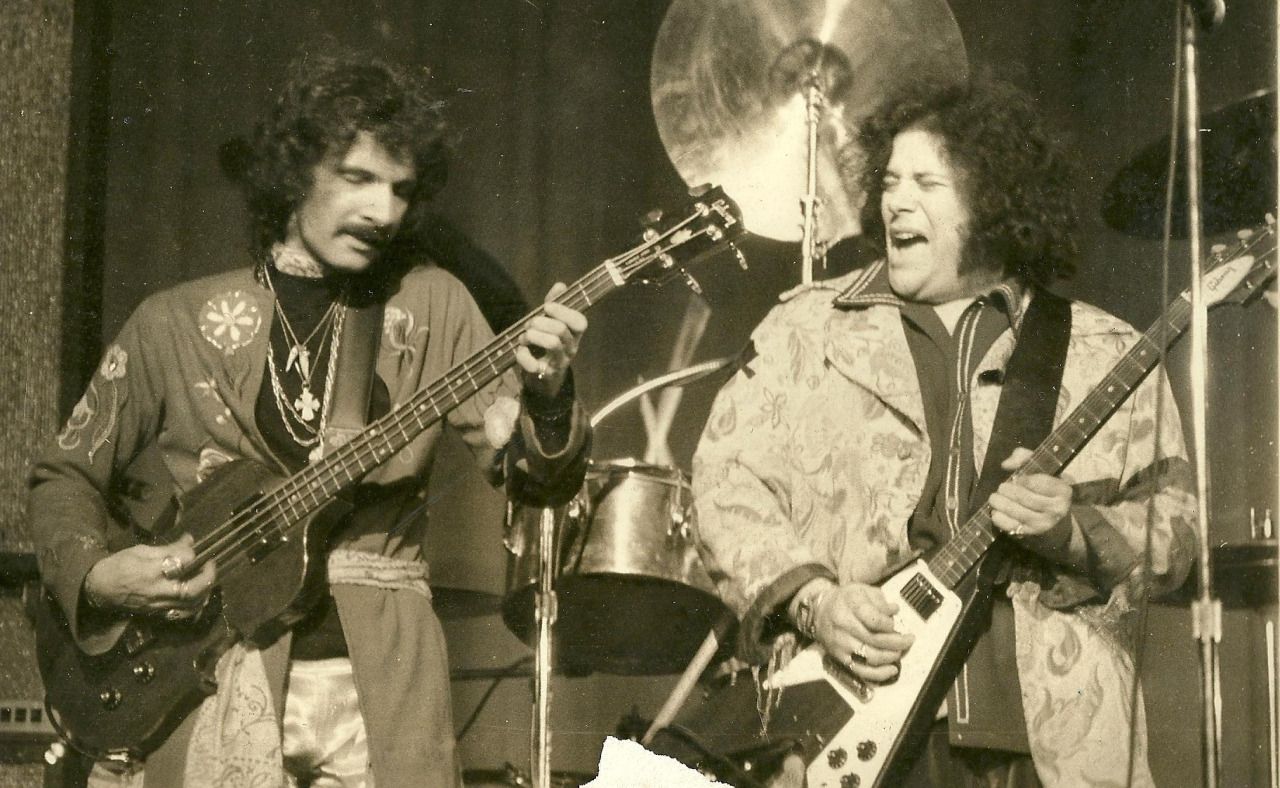
One could do a whole lot worse than to be remembered for the riff of Mississippi Queen.  If you Google the name Leslie West this week, almost every hit that comes back links that indestructible riff to his name, like Ritchie Blackmore and Smoke on the Water.  Leslie West was almost as indestructible as the Mississippi Queen riff.  As many drugs as he did in the 1970s, it would have surprised no one if he joined the 27 Club.  He had bladder cancer – he beat it.  In 2011 he lost his right leg to diabetes.  That minor inconvenience didn’t stop him from touring.  But he didn’t die until last week at age 75.  According to his brother, his heart just gave out.

I got into Leslie West in a roundabout way, via his association with Jack Bruce. I started with West, Bruce & Laing, then I worked backwards to Mountain and his solo stuff.  Twenty-five years ago, The Who released a deluxe set of Who’s Next.  I thought I knew a lot about The Who, but I missed something. Imagine my surprise when I found a few songs that Leslie West played on.  Apparently, Pete Townshend wanted to record some stuff live with him playing rhythm and another guitar player playing lead.  They called Leslie West.  There’s a track of them playing the Motown song Baby Don’t You Do It.  The Who and Leslie West bashing live in the studio for almost nine minutes – magical stuff.  In his solo work after Mountain, one can hear him branching out into acoustic work.  His take of John Lennon’s Dear Prudence from his third solo album is a bit darker than the original, but no less captivating.  After 1988, his career was one long excursion into the blues.  It’s all good.

The influences:  Two of the Kings, Freddie and Albert.  Clapton was also a big influence.  A story he liked to tell involved he and his brother going to see Cream at the Fillmore East [it was the Village Theater before it had its famous name].  Felix Pappalardi produced West’s pre-Mountain band, the Vagrants. His brother told him the guy who produced him also produced Cream’s Disraeli Gears. West wondered “why don’t we sound like Cream?” His brother told him why he didn’t sound like Cream – “you guys suck, you don’t practice.” They went to the Village Theater, and they took LSD before the show. West said, “took some LSD, the curtain opened up and I heard Cream and I said ‘Larry, we really do suck”. Then he started practicing.

Many years ago, I read an interview of him in one of the guitar magazines of the day [I think it was Guitar World] and he talked about being a guitar teacher in either the late 1970s or early 1980s.  One of his students wanted to be taught how to shred.  Leslie West blew the shredder wannabe’s mind by telling him to play Eric Clapton’s Wonderful Tonight.  His reason was that if you can’t play the slow stuff, you’re really gonna suck trying to play the fast stuff.

Who did he influence? Warren Haynes [he told West he started Gov’t Mule because of Mountain], Michael Schenker, Randy Rhoads, Neal Schon, Eddie Van Halen, Joe Satriani [he bought one of West’s signature Dean guitars just so he could play with him on tour], Martin Barre [Jethro Tull!].

The guitars: Les Paul Jr [“a tree with a microphone” – he loved the P90 pickups], Gibson Flying V

The sound: Huge tone. It’s a big wall of sound.  He wanted his guitar to sound like three guitars.  West was a melodic player who didn’t play too fast. He once remarked that he didn’t know what “shredding” meant.  He was a proponent of the “less is more” approach.  Felix Pappalardi taught him “don’t play anything you can’t sing.”  Sometimes it’s difficult to describe someone’s music.  You kind of know what you want to say, but you’re not sure how to say it.  As is the case whenever a musician of renown passes, Warren Haynes writes an eloquent essay, and he always manages to put into words what the rest of us are thinking.  Perhaps that’s why he’s such a good songwriter.  A few days ago, he wrote this about Leslie West:

“Leslie’s style as a guitar player was not only powerful but unique as well. He had warm, rich tone and a beautiful, wide vibrato that sounded like a human voice. That combined with his note selection and spacious phrasing really gave him that vocal-like quality that I’ve always personally been drawn to (as I’ve mentioned many times). His ability to choose the right notes and not overplay was in an odd way like a rock version of BB King.

I know there are some young guitar players out there playing a million notes that may not have listened to Leslie West.  Do yourself a favor and check it out. You’ll be glad you did.”

I can’t top that, and I won’t even try.  I checked out Leslie West’s playing a long time ago.  Warren is right – I’m glad I did.  Below is a playlist I’ve had for a while.  I limited to the first seven years of his recorded output for the sake of brevity. It clocks in at just short of two hours.

Tony’s Leslie West playlist:

Blood of the Sun [Leslie West – Mountain (1969)]
Dreams of Milk & Honey [Leslie West – Mountain (1969)]
This Wheel's On Fire [Leslie West – Mountain (1969)]
Mississippi Queen [Mountain - Climbing! (1970)]
Theme for an Imaginary Western [Mountain - Climbing! (1970)]
Never In My Life [Mountain - Climbing! (1970)]
Silver Paper [Mountain - Climbing! (1970)]
Sittin' On a Rainbow [Mountain - Climbing! (1970)]
Don't Look Around [Mountain - Nantucket Sleighride (1971)]
Nantucket Sleighride (To Owen Coffin) [Mountain - Nantucket Sleighride (1971)]
You Can't Get Away! [Mountain - Nantucket Sleighride (1971)]
The Great Train Robbery [Mountain - Nantucket Sleighride (1971)]
Flowers of Evil [Mountain – Flowers of Evil (1971)]
Baby Don’t You Do It [The Who – Whos’ Next Deluxe (1995)]
Why Dontcha [West, Bruce & Laing – Why Dontcha (1972)]
Out Into The Fields [West, Bruce & Laing – Why Dontcha (1972)]
Shake Ma Thing (Rollin Jack) [West, Bruce & Laing – Why Dontcha (1972)]
Pollution Woman [West, Bruce & Laing – Why Dontcha (1972)]
Love Is Worth the Blues [West, Bruce & Laing – Why Dontcha (1972)]
Rock 'N' Roll Machine [West, Bruce & Laing - Whatever Turns You On (1973)]
Backfire [West, Bruce & Laing - Whatever Turns You On (1973)]
Token [West, Bruce & Laing - Whatever Turns You On (1973)]
Crossroader [Mountain – Twin Peaks (1974)]
Don't Burn Me [Leslie West – The Great Fatsby (1975)]
E.S.P. [Leslie West – The Great Fatsby (1975)]
Dear Prudence [Leslie West - The Leslie West Band (1976)]
Sea of Heartache [Leslie West - The Leslie West Band (1976)]


1/16/22
 
Not content with having a single Leslie West playlist, here’s another one I compiled from his work between 1988 and 2015.

Masters of War [Mountain - Masters of War, 2007]
Standing On a Higher Ground (feat. Billy F. Gibbons) [Unusual Suspects, 2011]
One More Drink for the Road (feat. Steve Lukather) [Unusual Suspects, 2011]
Busted, Disgusted or Dead (feat. Johnny Winter) [Still Climbing, 2013]
Third Degree (feat. Joe Bonamassa) [Unusual Suspects, 2011]
Serve Somebody [Mountain - Masters of War, 2007]
Subterranean Homesick Blues [Mountain - Masters of War, 2007]
Long Red [Still Climbing, 2013]
To the Moon [Unusual Suspects, 2011]              
A Stern Warning [Soundcheck, 2015]
Tales of Woe [Still Climbing, 2013]
Blues Before Sunrise [Blue Me, 2006]
I Woke Up This Morning [Blue Me, 2006]
Four Day Creep [Blue Me, 2006]
Crawlin' Kingsnake [Blues to Die For, 2003]
Louisiana Blues [Got Blooze. 2005]
(Look Over) Yonder's Wall [Got Blooze. 2005]
Spoonful [w/ Jack Bruce] [Theme, 1988]
I'm Ready [Blues to Die For, 2003]
Going Down [Soundcheck, 2015]
Walk in My Shadow [Got Blooze. 2005]
Hellhound on My Trail [Blues to Die For, 2003]
As Phat As It Gets [As Phat As It Gets, 1999]
Here For the Party [Soundcheck, 2015]
Empty Promises / Nothin' Sacred [Soundcheck, 2015]
Don't Start Me Talkin' [Blues to Die For, 2003]
Nothing's Changed [Unusual Suspects, 2011] 
Love You Forever [Unusual Suspects, 2011] 


Sunday, November 29, 2020

Drugs - a theme

Of the many themes touched upon by Bob Dylan in his Theme Time Radio Hour, he spent time on three specific, socially-acceptable chemical dependencies – whiskey, coffee, and cigarettes. But he didn't touch on the underbelly, the illicit side of things.  Why do songwriters touch on such things?  My smart-ass answer is "because they can."  But seriously folks, these kinds of things are more available to them once they become "successful."  Musicians, for better or worse, are seen as people who have made it financially and live the high life [no pun intended].  Unsavory characters who want to get close to musicians use drugs as a tool to get themselves closer to the high life they want for themselves.  Some musicians are depressed, some have suicidal thoughts, some have some kind of chemical imbalance, and some are just bored with their own existence.  Stories about addiction and drug abuse have been part of our culture in music, books, and theater for centuries. As long as people are in some sort of pain and there’s something to let people get away from that pain, drugs will be a topic for "the arts."

The rules – 1) only one song/artist [because some have quite a few drug songs]; 2) the song is in my collection.

Marijuana
Don't Step on the Grass, Sam [Gov't Mule]
Rainy Day Women ♯12 & 35 [Bob Dylan]
Legalize It [Peter Tosh]
Kaya [Bob Marley]
Willin’ [Little Feat]
 
Cocaine
Cocaine [Eric Clapton]
Don't You Think This Outlaw Bit's Done Got Out Of Hand [Waylon Jennings]
Gold Dust Woman [Fleetwood Mac]
Snowblind [Black Sabbath]
Cocaine Blues [Johnny Cash]
For Your Life [Led Zeppelin]
Truckin’ [Grateful Dead]
 
Heroin and other opiates
Heroin [The Velvet Underground]
Super Stupid [Funkadelic]
The Needle and the Damage Done [Neil Young]
Sister Morphine [The Rolling Stones]
The Needle and the Spoon [Lynyrd Skynyrd]
Bad [U2]
All Night Train [The Allman Brothers Band]
Hurt [Nine Inch Nails]
Under the Bridge [Red Hot Chili Peppers]
Happiness is a Warm Gun [The Beatles]
Mr. Brownstone [Guns N' Roses]
Junkhead [Alice in Chains]
Cold Turkey [John Lennon]
Sam Stone [John Prine]
 
LSD & other hallucinogens
White Rabbit [Jefferson Airplane]
Legend of a Mind [The Moody Blues]
And She Was [Talking Heads]
Purple Haze [The Jimi Hendrix Experience]
Kid Charlemagne [Steely Dan]
The Acid Queen [The Who]
Soft-Hearted Hana [George Harrison]
Roller Coaster [13th Floor Elevators]
 
Others
Motorhead [Motörhead]- speed
Artificial Energy [The Byrds] - speed
Waiting Around to Die [Townes Van Zandt] – codeine
Detox Mansion [Warren Zevon] – therapy
Pink Turns to Blue [Hüsker Dü] – overdose
Feel Good Hit of the Summer [Queens of the Stone Age] – drugs in general - "Nicotine, Valium, Vicodin, marijuana, ecstasy, alcohol...cccccocaine!"
Master of Puppets [Metallica] – drugs in general

Saturday, November 28, 2020

Midnight - a theme

Between 2006 and 2009, Bob Dylan hosted his own weekly program on satellite radio called the Theme Time Radio Hour. According to the website that serves as a repository for these one-hour programs, the programs were a thematical journey through musical history.  The themes could be a single word – “divorce,” “father,” “hello,” “weather,” “baseball,” “money,” and about 100 other themes.  The archive site reads like this – “Covering topics from smoking to presidents, Bob served as curator, educator, philosopher and comedian in our journey through his vast collection of recordings, including some secret gems that had been all-but-lost to us.”  I want to try a theme he hadn’t covered. 

My first choice was the word “Moon,” but to my chagrin he already covered that.  Having searched the archive, I finally came up with a theme Dylan didn’t cover – “Midnight.”  Why “midnight”? Midnight is the time on the Doomsday Clock when the world will succumb to some man-made catastrophe, like a nuclear war.  The New Zealand Oxford Dictionary identifies midnight as the time when witches are supposedly active. Traditionally referred to as the witching hour and the darkest part of night--midnight is more than a number on the clock, more than just the end of one day and the beginning of another. In blues parlance, it’s a time of intense sadness.  Cinderella had to be home before midnight, lest her carriage turn back into a pumpkin. You get the idea. Good things don’t happen at midnight.

I made only two rules for myself: 1) the songs have to be in my collection; 2) one song per artist.  Here’s my hour [roughly] of “midnight” songs:

Midnight Rider – The Allman Brothers Band

2 Minutes to Midnight – Iron Maiden

Living After Midnight – Judas Priest

After Midnight – Eric Clapton

Midnight Train to Georgia – Gladys Knight and the Pips

In the Midnight Hour – Wilson Pickett

Midnight Rambler – The Rolling Stones

Isn’t It Midnight – Fleetwood Mac

The Midnight Special – Creedence Clearwater Revival

South City Midnight Lady – The Doobie Brothers

Midnight Sun – Asia

Midnight – Red Hot Chili Peppers

Midnight at the Movies – Justin Townes Earle

Midnight Blues – Gary Moore

Moanin’ at Midnight – Howlin’ Wolf

Friday, November 20, 2020

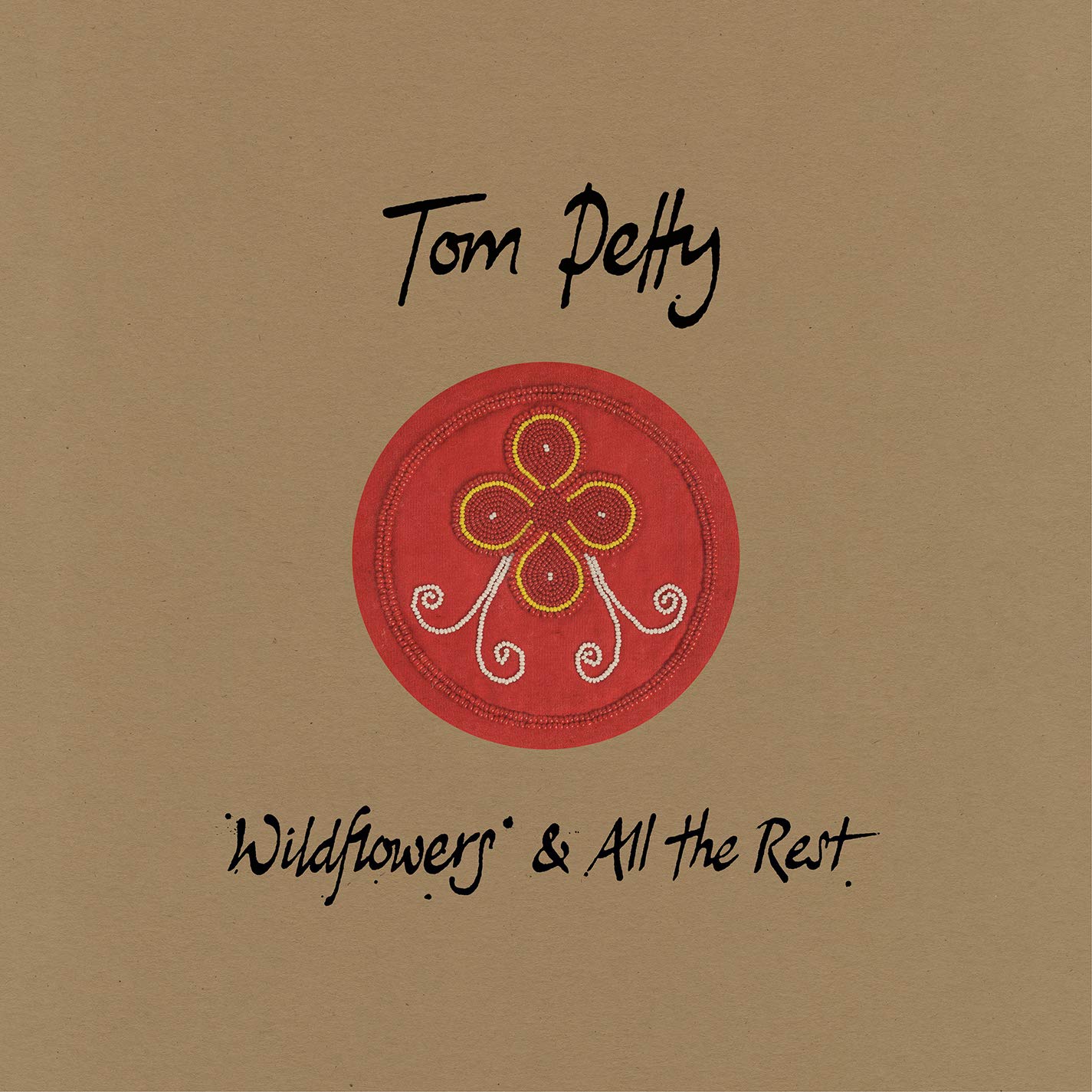
Tom Petty - Wildflowers & All the Rest

Tom Petty released Wildflowers in 1994. [What a dull beginning, huh?]. It was his first album for Warner Records after being released from his contract with MCA.  The price for that release was a “greatest hits” album.  That album included a new song, a “bonus track” which turned out to be one of his biggest hits of all – Mary Jane’s Last Dance.  Petty made the album when there was trouble in both his personal and professional relationships.  Petty’s marriage to his first wife Jane was on the rocks.  Heartbreakers drummer Stan Lynch didn’t think much of Petty’s first solo album, Full Moon Fever, and said so to anyone who would listen.  He thought playing Petty’s solo tunes was like work, like playing in a cover band.  And Lynch didn’t like playing music that felt like work.

When it came time for Petty to make his second record without the Heartbreakers, Lynch felt the same way he did about Full Moon Fever.  Lynch was the guy in the Heartbreakers who never felt shy about expressing any displeasure with Petty.  And Petty wasn’t enamored with Lynch’s playing in the studio.  He was great in a live situation, but Petty was always concerned about a drummer who had trouble keeping time.  Things came to a head after doing two benefit shows for Neil Young’s Bridge School, and Petty fired Lynch.  Exit Stan Lynch, enter Steve Ferrone – the perfect time keeper.

Tom Petty stated he had a great time doing the album with Rick Rubin, that it was a “big hang.”  He admitted that he had no control over what he wrote for the record. He didn’t edit himself, he just let everything come out.  Wildflowers begins with the song of the same name.  The way he explained it was that it was a stream-of-consciousness thing – “I turned on my tape-recorder deck, picked up my acoustic guitar, took a breath and played that from start to finish.”  His therapist told him that he was singing to himself. 

From Warren Zanes’ book Petty: The Biography:

“I’ve read that Echo is my ‘divorce album,’ but Wildflowers is the divorce album. That’s me getting ready to leave. I don’t even know how conscious I was of it when I was writing it. I don’t go into this stuff with elaborate plans. But I’m positive that’s what Wildflowers is. It just took me getting up the guts to leave this huge empire that we had built, to walk out. My kids … I knew this was going to be devastating to the whole family. I was leaving them there, without me to balance things out. My kids knew that a nightmare was coming. Adria was already out of the house, but Annakim was just entering her teens. But staying there was finishing me off. I’d become a different person.” 

According to his daughter Adria, she knew her parents’ marriage was over the first time she heard Wildflowers. Of the songs on Wildflowers, she explained that they expressed the purity of where he wanted to go, that he had figured out during the process of making the album he was going to make some changes to his band, and to not live with his childhood sweetheart from high school anymore. He was going to give himself more agency over his own life, considering that as a bandleader and successful recording artist he had a lot of “crippling responsibility” since he was 21.  She referred to the album as “bottled sunshine.”

TP wrote and recorded 25 songs for the album.  Warner thought Petty gave them too much and asked him to cut the album to a single album.  He cut 10 songs, which still left him with enough songs to fill a double album had it been released on vinyl instead of CD.  He said it took him three months to figure out which songs to keep and which to shelve. According to Rick Rubin, Petty wanted to release the remainder of the Wildflowers sessions because the legacy of Wildflowers loomed large in his career, that he knew the second half of Wildflowers was an important statement. 

During a very informative podcast Rick Rubin did with Adria Petty [Rick Rubin’s Broken Record], Rubin had an epiphany about why Tom Petty went along with the Warner’s suggestion that Wildflowers be a single rather than a double album.   Rubin had known Petty to be very stubborn when it came to creative decisions for his music.  Whether or not to have his first album for Warner is definitely in that category.  When Tom Petty made Hard Promises in 1981, MCA was going to raise the price of the album by a dollar. It would cost a little more than most other albums. Petty thought that was unfair for his fans.  Warner exec Lenny Waronker told Petty that double albums don’t sell as much, that the company could do more for marketing the record if it was a single album, and that a single album would be less expensive for his fans.  Rubin’s epiphany was the “less expensive for the fans” argument was what sold Tom Petty on the single album.

What happened to “All the Rest”?

Some of the songs came out on the next Tom Petty & the Heartbreakers album She’s The One (Songs and Music from the Motion Picture). Those songs were Climb That Hill, Hope You Never, and California.  The recordings themselves didn’t appear on She’s The One. The band recorded them again while the originals sat on the shelf.  Tom Petty gave Leaving Virginia Alone to Rod Stewart.  Somewhere Under Heaven appeared as a stand-alone single on iTunes in 2015. Oddly enough, Tom Petty said he didn’t remember recording that song. From what I’ve read from various sources there were plans to release Wildflowers & All the Rest in 2015, but those plans didn’t come to fruition until now.  Other than these songs, the rest of Wildflowers sat…

What is in the set?

Wildflowers & All the Rest” isn’t just the 25 recordings Tom Petty intended to release as a double CD.  There is a basic edition of two discs – the 25 songs.  The deluxe edition is the basic edition plus two more CDs [this is what I bought].  A third CD is demos. The fourth CD contains the same songs recorded on various tours. The “super deluxe” adds a fifth CD: “Alternate Takes (Finding Wallflowers),” with 16 additional studio tracks, including the B-side “Girl on LSD” and an acoustic version of “Cabin Down Below.” The packaging gets much more elaborate at this level, too, with the printed material now hardbound, plus extras like a replica 1995 tour program, cloth patch, handwritten lyric reprints and numbered certificate of authenticity.

Disc 1 - Wildflowers

Wildflowers

You Don’t Know How It Feels

Time to Move On

You Wreck Me

It’s Good to Be King

Only a Broken Heart

Honey Bee

Don’t Fade on Me

Hard on Me

Cabin Down Below

To Find a Friend

A Higher Place

House in the Woods

Crawling Back to You

Wake Up Time

Disc 2 - All the Rest

Something Could Happen

Leaving Virginia Alone

Climb That Hill Blues

Confusion Wheel

California

Harry Green

Hope You Never

Somewhere Under Heaven

Climb That Hill

Hung Up and Overdue

Disc 3 - Home Recordings

There Goes Angela (Dream Away)

You Don’t Know How It Feels

California

A Feeling of Peace

Leave Virginia Alone

Crawling Back to You

Don’t Fade on Me

Confusion Wheel

A Higher Place

There’s a Break in the Rain (Have Love Will Travel)

To Find a Friend

Only a Broken Heart

Wake Up Time

Hung Up and Overdue

Wildflowers

Disc 4 - Wildflowers Live

You Don’t Know How It Feels

Honey Bee

To Find a Friend

Walls

Crawling Back to You

Cabin Down Below

Drivin’ Down to Georgia

House in the Woods

Girls on LSD

Time to Move On

Wake Up Time

It’s Good to Be King

You Wreck Me

Wildflowers

Disc 5 - Alternate Versions (Finding Wildflowers)

[Available only from Tom Petty’s website]

A Higher Place

Hard on Me

Cabin Down Below

Crawling Back to You

Only a Broken Heart

Drivin’ Down to Georgia

You Wreck Me

It’s Good to Be King

House in the Woods

Honey Bee

Girl on LSD

Cabin Down Below (Acoustic Version)

Wildflowers

Don’t Fade on Me

Wake Up Time

You Saw Me Comin’

Interesting Tidbits

1.     Adria Petty is one of the curators of Wildflowers & All the Rest, along with Mike Campbell, Benmont Tench, her sister Annakim and Petty’s widow Dana.  Rick Rubin thought all the demos that make up part of this collection were lost.  He said that even when Tom Petty was alive, he didn’t know the demos’ location.  In a podcast with Rubin, Adria Petty told him that all the demos were in Tom Petty’s closet.  Rubin also asked her about what demos happened in which chronological order, and she replied that "as disciplined as my Dad was, he was still a stoner who didn't label his tapes."

2.     During this same podcast Rick Rubin said You Don’t Know How It Feels was the first song they recorded for Wildflowers, and it was Steve Ferrone’s “audition” to see if Tom Petty thought he was “the guy” to play drums. The performance on the record was a “first take” – Ferrone passed the audition.

3.     You Wreck Me was known for a long time as “Mike’s Song” [Mike Campbell wrote the music].  When TP first wrote the words, the chorus was “you rock me,” which Campbell thought was lame and cliché.  TP dwelled on it for some time and finally came back with “you wreck me”.  It’s amazing how the change of one word can change the entire meaning of a song. About Mike Campbell, Adria Petty refers to him as “a magical being,” an under-recognized songwriter.  Rubin said the Tom Petty told him that Mike Campbell would always bring in a couple of really good songs that he would never have written otherwise.  Of Campbell’s guitar playing, Rubin simply said that Campbell’s guitar playing is “as good as it gets.”

4.     The car test.  Rick Rubin and Tom Petty would use the sound system in a Toyota as a reference point for mixing Wildflowers.  If the record didn’t sound good in the car, they determined the mix wasn’t done.  They’d keep going back and forth between the studio and the car until the album sounded good in the car [Editor’s note – that’s one way I test-drive cars when I buy a car.  I spend a lot of time in my car. If music doesn’t sound good in the car, I won’t buy the car.]

Wildflowers & All the Rest is the “Holy Grail” for Tom Petty enthusiasts. It's as good as one would expect from Tom Petty.  Buy it!

Monday, November 16, 2020

Workingman's Dead and American Beauty - 50th Anniversary

The year 2020 really has sucked.  Live music is but a distant memory.  Neil Peart, Eddie Van Halen, Jerry Jeff Walker and Billy Joe Shaver all died.  On the bright side, this year marks the 50th anniversary of two seminal albums by the Grateful Dead - American Beauty and Workingman’s Dead. Released only four months apart, each record is a retreat from the psychedelia of Anthem of the Sun and Aoxomoxoa.  Workingman’s Dead/American Beauty marked a return to folk-blues roots with a rustic sound, much as The Band had done with Music From Big Pink and their self-titled second album.  Of all the albums the Dead made, these two are perhaps the most timeless.  They are my favorite Dead albums [they probably are for many others as well]. 

As record companies are wont to do, the Rhino subsidiary of Warner Brothers released deluxe 50th anniversary versions of both albums. Do we really need another copy of American Beauty and Workingman’s Dead? Of course we do!  Any Deadhead would tell you that.  The sound of the new releases differs little [if at all] from the remasters put out in 2001 [which I also own].  Both albums were well-recorded, for which we can thank Bob Matthews and Betty Cantor-Jackson [Workingman’s Dead] and Stephen Barncard [American Beauty].  I didn’t buy the new releases because of “enhanced sound” because there wasn’t any.  The attraction for me was the extra goodies.  Each album includes an entire show recorded by the band during their six-show run at the Capitol Theatre in Port Chester, New York in February 1971.

The American Beauty re-release includes the show from February 18, 1971.  This show was the first live airing of five new songs - Bertha, Loser, Greatest Story Ever Told, Wharf Rat, and Playin' In The Band. Two more new songs [Bird Song, Deal] also made their live debuts during this run of shows.  The Workingman’s Dead re-release includes the show from February 21, 1971.  It was their third without Mickey Hart.  The first show without Mickey [2/19/71] has already been released in its entirety, titled Three From the Vault. This will sound like heresy to the hardcore Deadheads, but I liked the Dead better with only one drummer.  I think they sounded better without the clutter [see Europe ‘72]. Anyway, both of these shows make the purchase [or in my case, re-purchase] of the 50th anniversary editions worthwhile.

In addition to the change in musical direction, the Dead were going through some internal changes.  In Dead circles the 2/18/71 was an historic show for it was the last drummer Mickey Hart would play with the band until October 1974.  Hart’s dad Lenny was the band’s manager. Unbeknownst to the band, he signed the band to a contract extension with Warner Brothers and kept all the advance money for himself.  The band didn’t blame Mickey for his dad’s criminal behavior, but that didn’t make Mickey feel any better.  He felt shame for his dad fleecing the band and he left.  Original front man Ron “Pigpen” McKernan’s role in the band had been had been receding as his heavy drinking started to affect his health [he died of liver failure in 1973]. 

More goodies from the 50th anniversary releases are included in what the band calls “The Angel’s Share.”  The name comes from a term used by whiskey distillers for alcohol lost in the distillation process.  As such, the digital-only releases include outtakes and demos that show how the band developed the songs even further after they had been road-tested.  According to Rhino, “much like the whiskey-distillation process, there were also ingredients that were vital to the creation of Workingman’s Dead that were lost and did not end up on the final album, the band’s own version of the ‘angel’s share.”  There’s 2 ½ hours of “angel’s share” of Workingman’s Dead, while for American Beauty there is an album-length edition with one demo for every song, as well as a 56-track version containing 20 different takes on “Friend of the Devil” alone.  These bits are for the hardcore.  Perhaps that is why “The Angel’s Share” is for sale separately. Should you decide to go the whole hog, the digital downloads are available in two formats – FLAC [for $29.99], and ALAC [for $12.99].  I went the ALAC route. Those files can play on your iPod without having to be converted [as one needs to do with FLAC files].

Wednesday, August 26, 2020

Justin Townes Earle - A Playlist [RIP]

Justin Townes Earle died the other day. I was shocked, but not surprised, given his own history and that of his father.  Like his father, he was a very good songwriter. But he sang a lot better than his father.  I won’t do the deep dive on his work like I have on others.  Suffice to say, pick a song, any song, and you’ll like what you hear. “Bro Country” this is not.  This is what country music is supposed to sound like – no frills, no bullshit.  His work reminds me of that of Jason Isbell.  I found a great line about his songwriting – he “turpentined everything down to the essence”.  I can’t write it any better, so I’ll leave it like that.  Like his namesake Townes Van Zandt, he’s gone way too early.  Here’s a playlist I put together today:

Harlem River Blues (Harlem River Blues - 2010)

Lone Pine Hill (The Good Life - 2008)

Rogers Park (Harlem River Blues - 2010)

Yuma (Yuma - 2007)

Mama’s Eyes (Midnight at the Movies - 2009)

Memphis In The Rain (Nothing's Gonna Change the Way You Feel About Me Now - 2012)

Ahi Esta Mi Nina (The Saint of Lost Causes - 2019)

One More Night In Brooklyn (Harlem River Blues - 2010)

Kids In The Street (Kids in the Street - 2017)

Can’t Hardly Wait (Midnight at the Movies - 2009)

Nothing's Gonna Change The Way You Feel About Me Now (Nothing's Gonna Change the Way You Feel About Me Now - 2012)

If I Was The Devil (Kids in the Street - 2017)

White Gardenias (Single Mothers – 2014)

The Saint of Lost Causes (The Saint of Lost Causes - 2019)

Who Am I to Say (The Good Life - 2008)

Won’t Be the Last Time (Nothing's Gonna Change the Way You Feel About Me Now - 2012)

Someday I’ll Be Forgiven for This (Midnight at the Movies - 2009)

When the One You Love Loses Faith (Absent Fathers – 2015)

Champagne Corolla (Kids in the Street - 2017)

Frightened by the Sound (The Saint of Lost Causes - 2019)

Maybe A Moment (Kids in the Street - 2017)

Graceland (Single – 2017)

Appalachian Nightmare (The Saint of Lost Causes - 2019)

Midnight at the Movies (Midnight at the Movies - 2009)

Look the Other Way (Nothing's Gonna Change the Way You Feel About Me Now - 2012)

Christchurch Woman (Harlem River Blues – 2010)

Ain’t Waitin’ (Harlem River Blues - 2010)