Sunday, August 22, 2010

The Allman Brothers Band - The Decline and Fall of a Great Band


Laid Back [Gregg Allman]
After the release of Eat a Peach in February 1972, the Allman Brothers Band toured as a five-piece. There was no way they could replace Duane Allman with another guitarist, so they didn’t. The band didn’t have a “leader” as such, but there was no doubt amongst the band who the boss was: Duane Allman. Duane started the band, he was their guiding light. His brother Gregg later said of him “he was always the first one to face the fire.” Berry Oakley was the faithful lieutenant. When Duane Allman died the mantle of leadership fell to B.O. Scott Freeman, author of Midnight Riders, described Berry as so consumed with grief at Duane’s passing that he was in no shape to lead anything. His drug intake increased significantly. His weight dropped to about 100 pounds. Sometimes during shows he could barely stand. He was in pretty bad shape.


Once the band finished their touring commitments in the first half of 1972, Gregg Allman got busy making his first solo album, Laid Back. Among the session players for Laid Back was a 20-year old pianist from Alabama named Chuck Leavell. During the sessions for Laid Back Chuck began jamming with the Allman Brothers Band. The band liked what they heard and invited him to join the band in September 1972. His piano became another lead instrument that could take some of the load off Dickey Betts, now the band’s sole guitarist. Since the Allman Brothers were once again a six-piece, they got to work on their follow-up to Eat a Peach, Brothers and Sisters. It was such a creative period for the band that Laid Back and Brothers and Sisters were recorded one right after another. But with that said, the two albums are very different.


Compared to any Allman Brothers album, Laid Back is a very quiet album. It is more of a rhythm and blues album and has very little to do with what people would call “Southern rock.” It has more to do with R&B, soul, and gospel with a tinge of country thrown in for good measure. There are few if any guitar solos. The emphasis is on Gregg’s soulful voice, the Hammond organ, and the arrangements which could include acoustic guitars, steel guitars, dobros, acoustic and electric pianos, gospel choirs, horns and strings. Those are elements you will never find on any Allman Brothers album. The rhythm section takes a more relaxed approach than that taken by Berry Oakley, Butch Trucks and Jaimoe. Both Butch and Jaimoe play on Laid Back, but they play smaller percussion instruments like the conga or cabasa rather than full drum kits.


Leading off the album is a re-arranged Midnight Rider. Unlike the faster-paced original from Idlewild South, this version is taken at a slower pace, it’s more a mournful, spooky dirge. Gone are Gregg’s harmonies from Idlewild South – this vocal is solo. The strings and horns that replace the guitar solos give the song more of a Southern Gothic-feel. It was released as a single and peaked at #19 on Billboard’s Singles chart. Another ABB song, Please Call Home, is arranged almost like the original except that a gospel choir is added. There are two newer Gregg Allman originals. The first is the album’s centerpiece, Queen of Hearts. It’s one of those rare Gregg Allman songs about a woman [in this case his wife at the time] that doesn’t portray her as an evil, mean wench to be derided and avoided. It is [gasp!] a love song, to wit:


And after all that we've been through
I find that when I think of you
A warm soft wind runs
Through and through
And in my heart
There’s only you
And I will always keep on trying
To gather this strange piece of mind
Without it there’d be
Lonely me and
Oh darlin’ lonely you


I love you Queen of Hearts
Don't tell me when to stop
Tell me when to start


Most of the song is in 3/4 time [a waltz like Dreams], but when it’s time for David “Fathead” Newman’s sax solo, it switches to 11/4 time. The other “new” original is Multi-Colored Lady. Gregg’s on a bus trip from Memphis to Rome, Georgia, where he encounters a very sad lady [“a broken hearted bride”] who didn’t have much to say. He tries to get her to talk but all she asks for is a map for death row. He doesn’t know the way, and all through the trip the rain comes down which doesn’t do much for the lady’s mood. After awhile he gets her to talk. They talk for hours and the “Multi-Colored Lady” [“angry red, passion blue, but mostly shades of gray”] finally begins to smile.


The rest of the album’s eight songs were written by someone else. Two songs with the tinge of country are Scott Boyer’s All My Friends [which begins almost like Wild Horses] and Jackson Browne’s These Days. Gregg Allman actually recorded the song before Jackson Browne did. When Browne got around to releasing it, he credited "Arrangement inspired by Gregg Allman." A sad song, Gregg double-tracks his vocal over an equally sad steel guitar. At the end he adds own line - "Please don't confront me with my failures/I'm aware of them." Why all the sadness? Remember, he and his big brother were very close and Gregg was still wallowing in grief. There is one “up” tune on Laid Back, Don’t Mess Up a Good Thing. The album ends with the traditional gospel song Will the Circle Be Unbroken. Duane used to quote this song often in his solos during the Allman Brothers’ extended jams.


Laid Back isn’t what one expects from Gregg Allman. Despite the presence of three Allman Brothers members and two Allman Brothers songs, this album sounds very little like the Allman Brothers. It shows another side of Gregg Allman and proves he can do more than just rock and blues.


Brothers and Sisters
Dedicated to a brother, Berry Oakley. As the recording sessions for Laid Back were coming to their conclusion, the Allman Brothers began recording their follow-up to Eat a Peach, Brothers and Sisters. The songs appear on the album in the order in which they were recorded. The first two songs, Gregg’s Wasted Words and Dickey’s Ramblin’ Man, were the last to feature bassist Berry Oakley. Wasted Words was about a relationship that was beyond repair. Gregg played electric rhythm guitar, and like Ain’t Wastin’ Time No More from Eat a Peach, Wasted Words features Dickey Betts playing electric slide guitar. It’s a better song now than it was when it was recorded in 1972. It’s taken at a slower, more funky pace, and it’s a more powerful song for it, what with two guitars and a Hammond organ instead of what you hear on the original recording. Ramblin’ Man takes the Allman Brothers further in the country direction that was hinted at on Blue Sky. A demo of this song from 1971 exists. The song Dickey played for Duane, then known as Ramblin’ Country Man, was demoed in Gatlinburg, Tennessee prior to the recording of Eat a Peach. It got up to #2 on Billboard’s Singles chart. The song that kept it from hitting #1 was Half Breed by Cher [how ironic…]. What can I say about Ramblin’ Man? It’s a good song that has been played to death. As good as it is, I can go the rest of my life without hearing it again. Although, if I am stuck someplace where all I hear is European techo music or worse [think rap…ugh!], Ramblin’ Man would be a welcome listen.


After the Allman Brothers recorded these two songs, the band journeyed to New York to play a concert at Hofstra University. The concert took place on Nov 2, 1972 and was filmed for ABC’s In Concert series. As it turned out, this was to be the only concert to have both Berry Oakley and Chuck Leavell in the band. Nine days after the show, Berry was killed in a motorcycle accident just like Duane 13 months prior. Berry’s accident happened only a couple of blocks from where Duane had his accident. Duane’s accident happened in Macon at the intersection of Hillcrest Avenue and Bartlett Street. One street over and two block east at the intersection of Napier Avenue and Inverness Street, where Napier has a 90 degree bend in the road, Berry plowed headfirst into a Macon city bus. He got up and walked away from the accident and was taken to the “Big House” on Vineville Avenue. But shortly thereafter, Berry began having hallucinations and a very bad headache and was taken to the hospital. Three hours later he died of hemorrhaging resulting from a fractured skull. Duane Allman and Berry Oakley are now buried side-by-side in Macon’s Rose Hill Cemetery.


Jaimoe’s friend Lamar Williams came in and replaced Berry Oakley and recording resumed. Gregg’s best song on the album, Come and Go Blues, was Lamar Williams’ first with the band. The Brothers still play it in concert to this day, but arranged for two guitars [Warren Haynes and Derek Trucks] instead of guitar and piano. Gregg’s Jelly, Jelly is a slow blues that plods along until Dickey fires up a very inspired solo to save the song from mediocrity, but if you listen to it and Gregg’s Queen of Hearts back-to-back [as I often do] it somehow sounds a lot better. Jelly, Jelly finishes Side 1 of Brothers and Sisters.


Side 2 is all Dickey Betts territory. Since most of Gregg’s songwriting efforts were directed toward Laid Back, Dickey Betts, being the band’s other songwriter, rose to the challenge and more than picked up the slack. Southbound kicks off Side 2. Although Dickey wrote it, Gregg sang it. There aren’t many words to the song – this is a jam vehicle. On record there’s two guitar solos with a piano solo from Chuck Leavell in between. He last time I saw the Allman Brothers in 1995, Dickey sang it and they played it in a radically different arrangement. There was Dickey Betts, Warren Haynes, and Chris Anderson [who opened the show] in a three-guitar jam that lasted about 17-minutes and blew the roof off the Nissan Pavilion. It was definitely one of those “we’re not worthy” moments. All you could do at the end was say “wow!” After Southbound comes Jessica. This instrumental is Dickey Betts’ finest hour. Inspired by his one-year-old daughter Jessica, Dickey wanted to write a happy, upbeat instrumental. Django Reinhardt is one of Dickey’s biggest influences as a player, so thus inspired he wanted to write not only a happy instrumental, but one that is something Django would be able to play with only two fingers on the fretting hand [if he was still alive, of course]. It’s a very exciting piece of music, complete with a memorable piano solo from Chuck Leavell that reminds one of a Charlie Brown cartoon. I’ve heard this one go on for 30 minutes at a time. Brothers and Sisters closes with Pony Boy, an acoustic country blues. As a sign of things to come, Gregg is nowhere near this song.


Overall, this one is a fine effort from the Allman Brothers. It doesn’t scale the heights of At Fillmore East or Eat a Peach, but considering they lost two key members to tragedy in a little more than a year, it’s more than one would expect. These guys were resilient enough and talented enough to persevere and put out something that’s pretty damn good. The way the songs are played live now [especially Wasted Words and Come and Go Blues] prove that there was a good foundation to start with. Good songs are eternal. Jessica is timeless. Play it back-to-back with Blue Sky and I defy anyone not to smile.


Highway Call [Richard Betts]
After Brothers and Sisters, Dickey Betts [who went by the name ‘Richard’ at this time] made a country record. That record is Highway Call. On songs like Blue Sky, Ramblin’ Man and Jessica, Dickey stuck his toe in the water to see how his listening public would react to the Allman Brothers getting away from the blues and toward a more countrified sound. On Highway Call he jumped in the deep end with both feet. I owned this album when I was in my early twenties because at that time I wanted to get my hands on anything I could that was Allman Brothers-related. Imagine my surprise when this turned out to be a country record. This was NOT what I wanted to hear. I remember two songs – Long Time Gone, which sounds a lot like Ramblin’ Man, and Hand Picked, an instrumental tour-de-force with Vassar Clements. Now that I can somewhat tolerate country music [not what passes for it today, but what it was back when I was a kid], I may seek this album out again and I see if I like it. I probably will. Critics describe Highway Call as Dickey Betts’ masterpiece. I may just have to check it out for myself, again.


Win Lose or Draw
It was with this album that things began to slip. Actually, things went downhill in a hurry and picked up speed. This is the first Allman Brothers album that bores me. It has two good songs on it. The first one, which kicks off the album, is Muddy Waters’ Can’t Lose What You Never Had. You can’t go wrong with Muddy Waters, and the Brothers do well with this song. There’s a better version of it on Gregg’s One More Try anthology. It’s the Allman Brothers Band without Dickey Betts doing a run-through of the song. This song still pops up in Allman Brothers set lists from time to time. The other good tune is High Falls, a 14 1/2 minute instrumental from Dickey Betts. High Falls is similar to Les Brers in A Minor from Eat a Peach. It starts off with what sounds like musicians warming up for a few minutes. When that dies down, Jaimoe starts playing the beat, with Lamar Williams joining in, laying down a fat Berry Oakley-like bass line that he maintains throughout the song. The rest of the band joins in to play the main theme. Dickey takes the first solo, then once he’s done he hands off to Chuck Leavell who takes the next solo on electric piano. Like Elizabeth Reed, High Falls is a lengthy excursion into jazz fusion territory. It works very well. There’s lots of interplay between Dickey and Chuck.


As for the rest of the album, don’t bother.


A big part of the reason Win Lose or Draw sounds so lifeless is because Gregg wasn’t there most of the time. He started living in Southern California with Cher and recorded his parts separately. That’s not the best way to record an album. Shortly thereafter, Gregg Allman got caught up in a drug bust in which he had to testify against one of his roadies. The rest of the band saw this as an act of betrayal, and they swore they would never work with Gregg again. As a result, the Allman Brothers Band broke up in 1976. Duane Allman’s legacy was done, over, kaput, or so people thought.

Tuesday, August 17, 2010

The Allman Brothers Band - The Duane Years

After the Beatles, my favorite band on this planet is the Allman Brothers Band. I first got into the band during the summer before my freshman year in college in 1981. I heard the song One Way Out from Eat a Peach and I was hooked. Then I heard Please Call Home from Idlewild South and that sealed the deal. I have seen the band six times, I’ve seen Gregg Allman and his solo band three times [including once opening for Stevie Ray Vaughan the day after Carol and I got married], and Dickey Betts with his band once at the old Rainbow Music Hall in Denver in 1986. What follows is an album-by-album tale of my favorite band. I hope you find some things in it you didn't know before. Enjoy!

The Allman Brothers Band
This is where it all began in November 1969. The band had two lead guitarists [Duane Allman and Dickey Betts], two drummers [Butch Trucks and Jaimoe], a bass player who played like a third lead guitarist [Berry Oakley], and a lead singer who played Hammond organ [Gregg Allman]. Not only did Gregg sing and play the organ, he wrote 5 of the album’s 7 songs. Two Gregg Allman originals are all electric blues with a hard rock edge. Black Hearted Woman is fairly self explanatory. Every Hungry Woman [you’ve got 15 hungry children, no proud papa knockin’ at your door…] is pretty much an “it sucks to be you” kind of song. It’s Not My Cross To Bear [which opens the album paired with the instrumental Don’t Want You No More as an intro] is a slow blues where the singer [Gregg] tells his lady that she isn’t his problem anymore, and that he’ll live on and be strong without her. Trouble No More is one of Muddy Waters’ more famous songs. There is a story to this one. While Gregg was coming back to Jacksonville from Southern California to join the band, the rest of the band had spent a lot of time rehearsing. Duane had bragged to the rest of the band that he had the perfect singer for his new band – his baby brother Gregg. Duane talked up Gregg’s singing quite a bit. So when Gregg showed up in the middle of a rehearsal, he took Duane aside and told him he didn’t think he could cut it with musicians of the caliber of Duane’s new bandmates. Duane’s response? He basically said “you little punk! I talked you up to these guys, don’t you dare make me look like an idiot!” With that challenge to Gregg’s manhood, he asked Duane to hand him the words to the song they were rehearsing [Trouble No More], counted it off, and went for it. Gregg was in the band and Reese Wynans [he of Stevie Ray Vaughan fame] was out. The band could get along with two guitarists and two drummers, but they didn’t need two keyboard players.

The last two songs on the debut album are really the essence of the Allman Brothers Band. Gregg had written Dreams while he was living in Southern California before Duane called him home to join the band in March 1969. A slow blues in 3/4 time [yup, a waltz], the song betrays a world-weariness of someone way beyond his 21 years. With Gregg playing simple chord changes on the organ and Dickey playing rhythm guitar, Duane cuts loose. Clocking in at over 7 minutes, Dreams is the quintessential Allman Brothers Band tune.
Just one more morning I had to wake up with the blues
Pull myself out of bed, put on my walking shoes
Went up on the mountain to see what I can see
The whole world is fallin’ right down in front of me
‘Cause I’m hung up on dreams I’ll never see
Ah help me babe
This will surely be the end of me…

After he joined the band, Gregg wrote Whipping Post on an ironing board by burning the lyrics into it with matches. The band all lived in the same house, a baby was sleeping there. Gregg got the inspiration to write Whipping Post but didn’t have any paper or anything to write with, didn’t want to make any noise to wake up the baby, but he did have some matches and there was an ironing board close by. Usual blues themes are present – in this case an evil, mean woman whom he loves so much that he puts up with her making a fool out of him. Gregg’s singing as if Robert Johnson’s proverbial hellhounds are on his trail.
I’ve been run down, I’ve been lied to, I don’t know why I let that mean woman make me out a fool.
She took all my money, wrecked my new car,
Now she’s with one of my good time buddies, she’s drinkin’ in some cross-town bar…
Sometimes I feel…Sometimes I FEEL like I’ve been tied to the Whippin’ Post
Tied to the Whippin’ Post
Good Lord I feel like I’m dyin’…

The song has an ominous, almost scary bass intro from Berry Oakley that launches the song into 11/4 time. Gregg plays a steady organ in the back, the three-man rhythm section keeps things on-track. Duane solos after the first verse, Dickey solos after the second, and when Dickey’s solo is done both lead guitars make the climb up the mountain to a head-spinning crescendo where they do a call-and response with the Hammond. When that’s done, Gregg shouts out the last bit of the chorus then gives way to Duane and Dickey to end the song, with volume swells, wah-wahs and furious riffing. A great way to finish an album...

Idlewild South
The Brothers’ second album was even better than their first. Produced by Tom Dowd, the album’s named is taken from the Allman Brothers’ place in Georgia, which they named Idlewild South because all of the comings and goings at the place reminded them of Idlewild Airport in New York [now named JFK Airport]. There’s more electric blues like the first album but with acoustics thrown in, starting with Dickey Betts’ debut as a songwriter Revival. You can almost see the hippies twirling in the aisles when Gregg sings “love is everywhere” and songs everywhere. Don’t Keep Me Wonderin’ sees Gregg wondering what the hell his lady is up to and what she’s trying to hide. This one is another showcase for Duane Allman’s slide playing. Then there’s Midnight Rider, Gregg’s signature tune, a vision of a man on the run, determined not to be caught. There are hints of blues, country and soul all in the same song. This song had “hit single” written all over it, but the Brothers weren’t a singles band so Midnight Rider was never released as such. To close out Side 1 is Dickey Betts’ first instrumental, In Memory of Elizabeth Reed. The tune draws its name from a tombstone in Macon’s Rose Hill Cemetery. I’ve been there, seen it down by where the railroad tracks run along the Ocmulgee River. It’s just down the hill from where Duane Allman and Berry Oakley are buried side-by-side. But I digress… Elizabeth Reed takes the Allman Brothers into jazz fusion territory. On Idlewild South it’s just a hair under 7 minutes, but on-stage it becomes an adventure in improvisation that can sometimes last over 30 minutes. It never gets boring.

Hoochie Coochie Man, another Muddy Waters tune courtesy of Willie Dixon, kicks off Side 2. Berry Oakley sings the lead [Warren Haynes does the honors these days]. Fans of the Muddy Waters original will not recognize this radical arrangement. Please Call Home is a slow piano blues. The title is self explanatory – Gregg just wants his lady to reconsider leaving him, but he’s not going to talk her out of it. All he asks is that when she’s gone that she “please call home” if she changes her mind and he’ll come running to get her wherever she is. This song is one of those that attracted me to the Allman Brothers in the first place. The album ends with Leave My Blues at Home. This one is a prime example of the twin-guitar harmony parts from Duane and Dickey. When they aren’t harmonizing, they go toe-to-toe in a ferocious guitar duel. It doesn’t hurt that this is one of Gregg’s finest vocals on any Allman Brothers album.

As a footnote to Idlewild South, at the time of its recording an album from Johnny Jenkins called Ton-Ton Macoute! came out. It was originally intended as a Duane Allman solo album, but when the Allman Brothers Band came together that was put on hold and it turned into a Johnny Jenkins album. The album features the talents of Duane Allman, Berry Oakley, Jaimoe and Butch Trucks. Duane plays dobro on Dr. John’s I Walk on Gilded Splinters. This is significant in that given the Duane Allman connection, the Allman Brothers play this song in concert to this day.

Layla and Other Assorted Love Songs [Derek & the Dominos]
Technically speaking, this is not an Allman Brothers record, but it looms large in their story. Eric Clapton and several sidemen from Delaney & Bonnie formed Derek & the Dominos, and retreated to Miami to record their first album. According to Clapton, they were messing around with practically anything that came out of Clapton’s head. Most of what came out of his head was songs about his unrequited love for his best friend’s wife. That tale has been told countless times so I won’t re-tell it here. Suffice to say there were lots of bluesy songs about Clapton’s pain and anguish about loving another man’s wife. While recording Idlewild South with Tom Dowd producing, he took a phone call from Eric Clapton to ask him to work with Derek & the Dominos on the new album. When Tom Dowd got off the phone he told Duane who it was. Duane’s eyes lit up, he starting playing a whole bunch of Cream guitar licks and asked Tom Dowd if it was ok for him to stop by the studio and watch Clapton record.

A couple of weeks later while Layla sessions were underway, Tom Dowd got a phone call from Duane to tell him they were in town [Miami]. When he got off the phone with Duane, Tom Dowd told Eric who it was he was talking to. Clapton responded “isn’t that the guy who played on Wilson Pickett’s version of Hey Jude” and then started playing Duane’s licks. Tom Dowd also told Clapton the Brothers were playing in town at the Convention Center, and would they like to come to the show? Clapton cancelled that evening’s session and told the band they were all going to see the Allman Brothers. The band got to sit right down in front of the stage. Duane was playing a solo, and when he saw Clapton he froze, probably for the first and only time in his life. Dickey Betts heard that Duane froze, so he started to cover for Duane. When he saw Clapton he nearly froze too, but quickly turned his back to Clapton to keep playing. After the show Clapton invited the band to the studio for a jam [these jams were captured on tape and released on the 20th Anniversary set of Layla]. Duane then asked Clapton if he could come to the studio to watch them record, and Clapton told him “no – bring your guitar. We’ve got to play!”

After Duane joined Derek & the Dominos in the studio, the Layla sessions took off. Passion oozes out of the record. They took blues standards like Have You Ever Loved a Woman and Nobody Knows You (When You're Down and Out) and made them sound original, and collaborations with organist Bobby Whitlock like Anyday and Why Does Love Have to Be So Sad are simply fantastic. As a bonus, the band recorded Jimi Hendrix’s Little Wing. It is unrecognizable as a Hendrix tune. It’s a ferocious guitar duel between Clapton and Duane. And here’s a revelation that not many people know. One day while trying to think of an intro to Layla the song, Duane sat for a minute, and then said “I’ve got something.” He put on his guitar, went into the studio, and off the top of his head fired off the seven-note intro for Layla that we recognize today. So it boils down to this – the signature riff from Clapton’s career started off as one of Duane Allman’s throwaways. Incredible…

When the sessions were over, Clapton tried to talk Duane into joining Derek & the Dominos on a permanent basis. Duane told him “thanks but no thanks, I’ve got my own band.” Duane did play live with them two or three times on the Dominos’ last tour of America. When asked how one could tell who played what, Duane responded that Clapton played a Fender Stratocaster, which has a sparklier sound, while he played a Gibson that has more of a “full tilt screech.” That might sound a bit flippant, but when you listen to the 20th anniversary mixes on headphones, you can tell the difference.

At Fillmore East
This is my favorite Allman Brothers album, bar none. Producer Tom Dowd describes At Fillmore East as a big-band jazz record, and he’s not very far off the mark. This whole record is an exercise in improvisation that never fails to astound. After the first two studio discs, Duane wanted to cut the third album live. The stage was the Allman Brothers’ natural environment. According to Tom Dowd:

Most rock bands are formula bands. The Allman Brothers would play an eight-, a twelve-, a twenty- or thirty-bar formula and then it’s like jazz, complete free form and everybody goes for himself. And they have enough empathy and enough musicianship among them that Jaimoe could be playing in 5/4, Butch could be playing in 6/8, and Dickey could be playing 4/4, and they all go in different directions and it would swing. And when they get through this solo and that solo and this section, they’d nod and BOOM they’re back to square one. They’d all go back to their parts right away in line again. It’s magnificent!

They didn’t like recording studios – these guys were all hardened road cases. They all lived for the stage. Almost all live albums are recordings of songs that have already been released in studio form. Never ones to do things the conventional way, the Allman Brothers cut five songs their audience had never heard before. The set starts out with that most iconic song of the Allman Brothers canon, Statesboro Blues. For Allman Brothers fans everywhere, every note, every nuance of Duane’s slide playing is seared into their memory [and mine]. Dickey’s solo is no slouch either. Next was another “new” song, an old Elmore James song called Done Somebody Wrong. More slide virtuosity from Duane, then the old T-Bone Walker song Stormy Monday. Instead of giving the instrumentalists a chance to show off their chops, this song is Gregg’s to show off why he’s the finest white blues singer in America [perhaps anywhere, but then again I’m biased].

With the blues out of the way on Side 1, then the fun begins. Side 2 has one song – the 19-minute You Don’t Love Me. Everybody gets their licks in here. Side 3 begins with a short, 5-minute instrumental to which all band members contributed – Hot ‘Lanta. Then comes the my favorite version of In Memory of Elizabeth Reed. When Rolling Stone reviewed Idlewild South, they said Elizabeth Reed was "the blueprint of a concert warhorse, capturing the Allmans at their most adventurous." Wouldn't you know, they got it right! On At Fillmore East, Elizabeth Reed becomes otherworldly at just over 13 minutes. Noted critic Robert Palmer wrote of the Allman Brothers “that if the musicians hadn't quite scaled Coltrane-like heights, they had come as close as any rock band was likely to get.” Duane was listening to a lot of John Coltrane and Miles Davis at the time. His solo in the second half of the song is incendiary. It is proof that not only was Duane a fine slide guitar player, he was also pretty damn good at playing without a slide as well.

Side 4 is also one song – Whipping Post. The original studio version is about 5 1/2 minutes long. This version is 23! Duane introduced the song – “Berry starts her off” – then a fan yells out “Whipping Post.” Duane responds “you guessed it,” and off they go…The verses, choruses, and solos go into 6/4 time, then the interludes after the vocal part go back to 11/4. Dickey Betts in particular gets to shine. Whereas Duane got the more memorable solos on Dreams and Elizabeth Reed, Dickey steps out on this version of Whipping Post. You can even hear the beginnings of Dickey’s instrumental Les Brers in A Minor. After Dickey gets through shredding, the band goes almost dead silent except for Duane’s guitar. After the apocalyptic climax you can hear Butch Trucks play the tympani to introduce the next monolithic jam, Mountain Jam. But that’s all you hear. Then the record fades…

The Allman Brothers recorded more than 7 songs during their four shows at the Fillmore East. They also recorded One Way Out, Trouble No More [both of which were included on Eat a Peach], Don’t Keep Me Wonderin’ [included on the 1972 Duane Allman Anthology], Mountain Jam [also on Eat a Peach], and Drunken Hearted Boy with Elvin Bishop [which finally surfaced on the 1989 Dreams box set]. A few years ago Polygram released a “deluxe” version of At Fillmore East that includes both the original set and the songs I just listed here. If you are going to own one Allman Brothers Band album, the deluxe version of At Fillmore East is the one to have.

Eat a Peach
Produced by Tom Dowd. Dedicated to a brother, Duane Allman. Contrary to belief, Eat a Peach did not get its name because Duane Allman was supposedly killed by a peach truck [he wasn’t – he collided with a flatbed lumber truck]. The name came from an interview Duane did with a magazine. When asked what he was doing to help the revolution, Duane replied, "There ain't no revolution, it’s evolution, but every time I'm in Georgia I eat a peach for peace." So there you have it. The first side is three new songs recorded after Duane’s death [October 29, 1971]. Ain’t Wastin’ Time No More is a statement of purpose after Duane’s death. Of note, it also features Dickey Betts playing slide for the first time on an Allman Brothers album. Les Brers in A Minor is another long Dickey Betts instrumental that shows off Berry Oakley’s lead bass attack that he developed to fill the sonic hole left by Duane’s absence. Melissa was Duane’s favorite song that Gregg sung at Duane’s funeral. Gregg and Duane originally cut Melissa with the short-lived band 31st of February. That particular version can be found on Gregg Allman’s One More Try anthology set, but good luck finding it - it's out of print. It’s the only version to feature Duane Allman’s slide talents. As for the Eat a Peach version, it’s Gregg’s tribute to his fallen brother. It’s one of the few Allman Brothers songs on which Gregg plays guitar. The aforementioned Mountain Jam takes up a full two sides of Eat a Peach. It features a lot of great playing [especially from Duane] that acts as a send-off for Duane.

Side 4 has five songs. All these songs include Duane Allman. The first two, One Way Out and Trouble No More were recorded at the Fillmore East. Trouble No More was recorded during the same shows as At Fillmore East, but One Way Out was taken from the Allman Brothers performance in June 1971 that closed the Fillmore East. Dickey Betts steps out and plays the lead parts, including the amazing first solo. You can tell the difference between Dickey and Duane – Duane plays the slide. There is a fuck-up on it as well, courtesy of Berry Oakley. He came out of the drum break one beat too early, but Butch Trucks played an extra beat to make up for it and quickly got everyone back on the same page. I love it when mistakes are left in…it makes the musicians seem more human. The first studio track was a Gregg Allman/Berry Oakley composition called Stand Back. It is about, of course, some demonic woman who needs to be sent away and avoided at all costs. Duane’s slide playing actually sounds a lot like a horn section. Next is Blue Sky, a country song Dickey Betts wrote about his wife at the time. It’s the first song Dickey sang on an Allman Brothers record, and was a foreshadowing of what was to come on later Allman Brothers albums, particularly Ramblin’ Man and Jessica. Duane plays the first solo, Dickey plays the second solo, and both play that circular figure that wraps up before the final verse. It’s one of Dickey’s best songs. Finally, there is Little Martha. A short, two-minute acoustic number, it is the only song Duane Allman ever wrote. It came to him in a dream. Jimi Hendrix showed him how to play it on a water faucet. That must have been one strange dream. Only Duane and Dickey appear on it. Duane plays in an open E tuning. I've just learned it myself. If I didn't know it was in open E, I probably would have become an alcoholic while trying to figure it out.

And so ends my first chapter of the Allman Brothers Band and its legacy. I will pick up the next chapter with Gregg Allman’s first solo album, Laid Back.

Thursday, August 5, 2010

Los Lobos - The Town and the City/Tin Can Trust

I was going to write this as my take on the new Los Lobos release Tin Can Trust. But as I listened to it I realized it is a lot like their previous CD of original material, 2006’s The Town and the City. The lyrical themes in several of the songs are similar. Both discs contain songs about people facing different kinds of adversity. The production on both discs sounds the same. If I didn’t know any better I would think all of these songs were recorded during the same sessions and in the same studio instead of four years apart in different studios. This is a testament to Los Lobos’ quality and consistency.

There are songs of escape. TCT’s opening track Burn it Down chugs along with just acoustic guitar, upright bass, and drums, with a hint of mandolin. Susan Tedeschi provides background harmony on the chorus. The electric guitar makes its first appearance at the 2:36 mark with a fairly laid back solo, and then it becomes a full-blown wah-wah-drenched psychedelic freakout at 4:14 that lasts until the song ends. I don’t know what the singer is trying to get away from, but he wants to get away from it in the worst way and not go back by “burning it down.” TCT’s All My Bridges Burning expresses that same sentiment of running away from something. The Road to Gila Bend from TTATC is the tale of a breakneck run across the border from Mexico.

There are songs about “home.” Between the two discs there is a yin-and-yang thing about “home.” On Main Street from TCT depicts a guy going on a stroll through his neighborhood, hanging out with his friends male and female alike, watching the women and their kids, and not worrying about a thing. He’s taking pleasure in the simple things in life. These are the things that make the singer’s blues go away. The Town [East Los Angeles, the home of Los Lobos], one of two title tracks from TTATC, depicts low-riders, graffiti on walls, shots ringing out in the night, and mothers telling their kids not to stray too far from home in “the town where I come from.” It’s a place where the singer’s “heart will be found,” where he’ll rest and go there whenever he dreams. Two Dogs and a Bone, another of TTATC’s reminders of “home,” is a mom’s advice to two brothers not to fight. But it’s all “home,” with all of the good and the not-so-good that go with it. The City [Los Angeles] is the place with the neon lights, where lovers kiss in doorways, people yell at you from their second floor windows. It’s a place where the people dance real slow, where you can go bar hopping from Paramount and Cudahy, you can go get high and shoot out those neon lights. It’s a place to go to get away from The Town, if only for a little while.

There are songs about love. TCT’s The Lady Of The Rose and Jupiter Or The Moon and TTATC’s Little Things and If You Were Only Here Tonight have that topic covered. While listening to Little Things, close your eyes and you’ll hear Marvin Gaye’s What’s Going On or Procol Harum’s A Whiter Shade of Pale. You hear the singer being wistful about being so driven to be a success in life that he doesn’t see the “little things” in life, like the love of a woman, like his own heartbreak. Jupiter Or The Moon sounds almost like a long-lost Traffic classic. This one is the classic tale of a man saying he would do anything for his lady [if he could], but she’s not anywhere to be seen and he misses her terribly. There’s optimism and hope in TTATC’s The Valley. It's got the backwards guitars like what you'd hear from The Beatles I'm Only Sleeping, that hypnotic sound that sounds like the singer is waking from a dream. TTATC’s Hold On is a hardworking guy, holding on to every breath while he’s “killing himself to survive,” and if he makes it to sunrise, he’ll do it all over again. On TCT’s title track, the singer tells his lady that he’s broke, but there is one thing he can bring her that doesn’t cost anything – love. Most of these songs from both of these albums fit into the same narrative about life in East L.A.

Of the songs that don’t fit the narrative, here’s a great cover of the Grateful Dead’s West L.A. Fadeaway on TCT. Where the Dead’s original is kind of lazy and laid back, Los Lobos add muscle with David Hidalgo and Cesar Rosas swapping guitar solos. I like the separation here – you can hear Rosas’ Les Paul in your right ear and Hidalgo’s Stratocaster in your left ear. The tones of the two guitars are very distinctive. The TCT instrumental Do the Murray is a chance for both David Hidalgo and Cesar Rosas to show off a little. TCT’s final track 27 Spanishes is Los Lobos’ take on the Spanish Conquista. It reminds me of Neil Young’s Cortez the Killer, only more subdued.

If there’s a formula to Los Lobos’ music, it’s this – you can count on two songs in Spanish from Cesar Rosas. On Tin Can Trust there’s the cumbia Yo Canto and the norteño Mujer Ingrata. On The Town and the City there’s Chuco’s Cumbia and No Puedo Más. David Hidalgo throws in Luna for good measure on The Town and the City.

I have every Los Lobos album since By the Light of the Moon, which came out in 1987 [I think]. These guys continue to amaze me with every release, even when they put out Los Lobos Goes Disney last year. These guys are incapable of making a bad album. Listening to The Town and the City and Tin Can Trust back-to-back is like watching a movie about the complicated experience of simply living. It is a somewhat dark and murky tale, but you get to hear of the values that the guys in Los Lobos cherish, and that’s not a bad thing. Do yourself a favor and pick up these two discs. You will not be disappointed.


Little Things [from The Town and the City]

Wednesday, July 14, 2010

Iron Maiden: Flight 666


In 2008 Iron Maiden put on their Somewhere Back In Time Tour. The band invited filmmakers Scot McFadyen and Sam Dunn to film not only what transpired on stage, but also behind the scenes. Flight 666 documents everything - interview segments with all the band members, a look into what it takes to stage an Iron Maiden show, and we also get a look at what the band members do on their rare days off while they’re on the road. The first leg of the Somewhere Back In Time tour took them over 45,000 miles. They played 23 concerts in 45 days. They averaged about 2,000 miles between each of the tour stops. They were able to achieve that feat by flying around the world in a customized 757, dubbed “Ed Force One.” The idea of specially modifying a plane to take the band, 70 crew and over 12 tons of equipment, had never been attempted before. It took a year to get the engineers to come up with the plans to make sure the 757 could handle the stress of flying all that equipment. It was a very ambitious undertaking. During the film they kept a running tally of the distance travelled on the tour ["Day 16 - 16,6277 miles." "Day 23 - 27,366 miles." "Day 38 - 30,646 miles."].

Bruce Dickinson, the band’s singer, is a licensed airline pilot. When he is not touring with Iron Maiden or as a solo act, he has a day job flying for the UK charter airline Astraeus. So during this tour, Bruce got to indulge himself in his other job and flew the band, crew and all their gear around the world. According to Bruce:
“The aeroplane idea started off as a crazy gleam in my eye. I went “wow, if you could get all your gear into an aeroplane, you could cut down hugely on the amount of dead space we have in touring.”” So I said, “What if you join up all the countries that accountants say ‘You can’t go there it costs too much’?” And we just join them up. And we go…’Yes we can ‘cause we’ve got our own magic carpet.’”

Usually bands get their equipment from one venue to the next by eighteen-wheel truck. Not so this tour.

Usually bands tour only when they have a new album to plug. Not so for Iron Maiden in this case. The Somewhere Back In Time Tour of 2008 was a “thank you” for their fans. When asked by XM Radio DJ Eddie Trunk if Iron Maiden were just going back and revisiting the catalog, Bruce Dickinson replied:

“No. Not at all. We’re not some old fossil dragging the bones of old songs around. What you’ll see tonight is not just a celebration of our old songs. It’s the celebration of a lot of young new fans, who have never seen us play these songs.”

“Anytime you go out and you play songs that you’ve played before, there’s always an element of people going ‘I’ve heard these songs before.’ But the purpose of this tour was really very different, because our entire audience for the last eight years has been getting steadily younger. So as a big thank you, large Christmas present wrapped up in a box with a big bow on top, here, have a classic World Slavery Tour. And that’s why I get bent out of shape any time anybody tries to play ‘pin the tail on the donkey’ and the tail they’re trying to pin on us is that this is some kind of antique revival show. And it’s not that.”

The Tour Stops: Mumbai/Perth/Melbourne [2 shows]/Sydney [2 shows]/Brisbane/Yokohama/Tokyo/Los Angeles/Guadalajara/Monterrey/Mexico City/San Jose (Costa Rica)/Bogota/Sao Paolo/Curitiba/Porto Allegre/Buenos Aires/Santiago/San Juan/East Rutherford, NJ/Toronto

The setlist itself was modeled on that played during their World Slavery Tour of 1984/85. One quick glance at the setlist below and you can see there are a few songs they didn’t play on that tour because they hadn’t been written yet. But it was a real treat to see the band play songs like ‘Ancient Mariner,’ ‘Powerslave,’ ‘Aces High,’ and ‘Revelations.’ The big treat for me is ‘Moonchild’ from Seventh Son of a Seventh Son. I’ve always wanted to know what that particular song sounded like live, and with this DVD I finally got the chance. ‘Rime of the Ancient Mariner’ is another highlight. Bruce Dickinson told Eddie Trunk of all the songs he looks forward to singing, by far for him it was ‘Ancient Mariner.’ Of note, when he introduced the song, he made a point to repeat the song intro he did in 1985 in Long Beach [captured for posterity on the Live After Death album] – “This song is about what NOT to do when a bird shits on you.” That line has cracked me up for going on 25 years now…

The setlist: Churchill’s Speech/Aces High/2 Minutes to Midnight/Revelations/The Trooper/Wasted Years/The Number of the Beast/Can I Play With Madness/Rime of the Ancient Mariner/Powerslave/Heaven Can Wait/Run to the Hills/Fear of the Dark/Iron Maiden/Moonchild/The Clairvoyant/Hallowed Be Thy Name

After they left Los Angeles and headed south of the border for Latin America, there was a sense that the “holiday was over” and there was a bit of trepidation among the band that “boy, I hope we’re as good as the audiences are.” For them there is always a feeling of going somewhere where something, anything is on the edge of exploding. In Columbia they encountered riot police. In Chile, they set foot in a country that once banned them from playing because the supposed ‘Satanic’ content of their lyrics. They needn’t have worried because every time I’ve seen Iron Maiden, either on TV or on film [I’ve never seen them live], they always seem to put on a very professional, high energy show. That was the case in this documentary as well. These guys are all in their 50s, but they’re running around on stage like people half their age. One can tell they very much love doing what they do, and they don’t just go through the motions. After the first tour stop in Mumbai half the band got sick [food poisoning I think], but that didn’t stop them from putting on the same high-voltage show they always put on. Such is their dedication to giving their fans what they want and what they expect.

Iron Maiden fans are a pretty fanatical bunch, but in South America that’s taken to a higher plane. Wherever they went, be it Brazil, Argentina, or Chile, they were mobbed by fans like they were the Beatles at the height of Beatlemania. To hear guitarist Adrian Smith tell it: “The fans do get a bit much sometimes, when you’ve been traveling and people expect you to stop and sign and have photos and look all cheerful. The way I look at it, once you’re in a hotel that’s my home away from home. Outside the hotel, we’re fair game .”

Nicko McBrain: “When you’re on the road as much as we are, you don’t want to sit in your hotel room and mope or watch movies. Everyone has their activities that they do. I think it keeps you sane.” What do the guys do on their rare days off? Nicko McBrain and Dave Murray play golf. Adrian Smith plays tennis, goes fishing, and goes diving. Steve Harris is always up for a game of football. Janick Gers likes to hit any Irish pub he can find. There’s footage of some of the band visiting the Mexican pyramids at Teotichuacán. Since Bruce is doing double duty as both pilot and singer, there isn’t any footage of him doing anything else. Between the two activities there probably wasn’t enough time for him to do anything else except sleep and get fresh for the gigs.

As for the concert footage, there are sixteen songs in all, each filmed in a different city on the tour. Now if one wants to skip all the documentary stuff, there is a bonus disc that shows the whole live set uninterrupted. Even though the songs are each filmed in different cities, the set flows together as if it was one concert.

All things considered, this is a well-done documentary. If you’re an Iron Maiden fan like me, you owe it to yourself to get yourself a copy. Up the Irons!

Sunday, June 13, 2010

Live Fast, Die Young, Leave a Good-Looking Corpse…


If anybody in music personifies this phrase, it would be Gram Parsons. Not many people know who Gram Parsons was, his work, or his impact on music. He’s credited by many as having invented “country rock.” He always hated that phrase. He preferred to use the term “Cosmic American Music.” He was very adept at taking musical forms like country, soul, and rock, throwing them all in a musical blender, and come up with a synthesis of all three. But I don’t think that was his biggest contribution to music. In my feeble mind, his big thing was introducing the world to Emmylou Harris. After his time with the Byrds and the Flying Burrito Brothers, he finally decided he wanted to do his own thing, but his own thing included having a female singing partner like George Jones and Tammy Wynette. Chris Hillman [the Byrds, the Flying Burrito Brothers] discovered Emmylou Harris while on tour and told Gram Parsons about her. The rest, as they say, is history.

If anybody knows about Gram Parsons, it’s because of his death and the way he went out of this world. His passing is the stuff of legend. The legend even generated a movie called “Grand Theft Parsons.” While at the funeral of Byrds guitarist Clarence White, he made a pact with his road manager [Phil Kaufman]. He didn’t want a normal funeral – he just wanted to be taken out to Joshua Tree, California and cremated. Why Joshua Tree? Whenever he wanted to get away from all the hassles of the music business, Gram Parsons always liked to go to his favorite place, which was Joshua Tree. Joshua Tree was a spiritual place for him. He’d go there, commune with nature, take trips on LSD or magic mushrooms, and look for UFOs, usually all at the same time.

Gram Parsons did lots of drugs – you name it, he probably did them. His drug use caught up with him in September 1973. He had just finished recording his Grievous Angel album and was going to go on tour to support it. Before the tour he and several friends went to Joshua Tree for a vacation. They consumed lots of drugs and lots of alcohol. Gram Parsons died on this trip, having ingested too much morphine and alcohol. But before his step-father could claim his remains to fly them to New Orleans for burial, his road manager honored the pact they made at Clarence White’s funeral. He stole Gram Parsons’ body, drove out to Joshua Tree, poured gasoline on it, and set it on fire.

Bernie Leadon: “He was very alive – a lovely guy. He just had this dark side and really sort of a death wish.”

Keith Richards: “He could touch a core in people. We call it ‘high lonesome,’ and it’s a certain melancholy, and it’s sort of ‘beautiful pain.’ But he had that to the max.”

Pamela Des Barres: “Gram was rock and country. He bridged those two worlds. To see him standing in the middle of these two worlds, you know, bringing them together, uniting them, and that was his purpose.”

Chris Hillman: “We’re talking about a very classic Tennessee Williams play here. Southern money and alcoholism, just a tragedy.”

Gram’s mom [Avis Snively] came from a wealthy family in Florida. They got all their money from citrus. Gram’s father was a World War II veteran. Both had drinking problems. His father was affected greatly by the war. If he was alive today, he would be diagnosed as suffering post-traumatic stress disorder. This condition was recognized as a kind of disability until after the Vietnam War, so when Gram’s father went through it, the only way he coped was to drink a lot. When Gram was twelve his father committed suicide right before Christmas. He became the “man of the family” until his mother married Bob Parsons.

He went to prep school in Jacksonville. While he was in prep school, Gram’s mother had to be hospitalized for her alcoholism. Coincidentally [or maybe not], right after Bob Parsons paid here a visit in the hospital she died. Her death happened the same day Gram graduated from prep school. Avis Snively’s family didn’t like Bob Parsons – they thought he married her for her money, so when she died right after he visited her in the hospital, that just added to the suspicion that he was after her money. Shortly after Avis’ death, Bob married the family’s teenage baby sitter.

I think the first thing I bought of Gram Parsons’ music was the anthology Sacred Hearts & Fallen Angels. It is the place to be introduced to his music as it has the best from his solo work, his first band [the International Submarine Band], his work with the Byrds and the Flying Burrito Brothers. His body of recorded work wasn’t large so it’s easy to summarize in a couple of CDs what he left behind. That anthology collection was the hook, so I just had to get the sources. The first source I decided to get was Sweetheart of the Rodeo from The Byrds. I read awhile ago that many of Gram Parsons’ vocals were wiped from the final release due to a contract dispute with another record label, but I also read those mixes still existed. So being the compulsive music buyer that I am, naturally I had to get the “special edition.” Having heard the Byrds come up with the likes of Eight Miles High, So You Want to Be a Rock N Roll Star, and other rock classics, it was quite a shock to hear them do an all-country album [or as close to country as the Byrds could play it]. Such were Gram Parsons’ powers of persuasion. According to Roger McGuinn, they “hired a keyboard player and instead got George Jones in a Nudie suit.” Most of the songs on the album were country covers. There were songs from Bob Dylan, the Louvin Brothers, Merle Haggard, there were traditional songs. Gram Parsons had the only original songs – Hickory Wind and One Hundred Years From Now, both of which Chris Hillman said were two of the best songs Gram had ever written. But the sleeper track [for me, anyway] was You Don't Miss Your Water, a soul/R&B song from Stax Records recorded written and recorded by William Bell. This was the embodiment of Gram’s “Cosmic American Music,” a blend of a soul song with a country feel.

Gram Parsons lasted only one album with the Byrds before he moved on to other musical things. The Byrds toured England in support of Sweetheart of the Rodeo, and they met the Rolling Stones. Gram became great friends with Keith Richards immediately. They talked about South Africa, which was then in the throes of apartheid. The Byrds were going to play some shows in South Africa. Once Keith told Gram what South Africa was like, and the segregation that persisted there [which made Gram think “oh, like in Mississippi” – he was a son of the South after all…], Gram told the rest of the Byrds he wouldn’t go with them to South Africa. So Gram was no longer with the Byrds. To this day Chris Hillman thinks the real reason Gram didn’t want to go to South Africa was because he wanted to hang out with Keith Richards, not because of any sensitivity to racial matters.

Almost immediately Gram hooked up with Chris Etheridge, a bass player with whom he had worked before. They decided to form a band. Shortly thereafter, Chris Hillman came back from South Africa, patched things up with Gram, and told him it was a mistake for the Byrds to go to South Africa. He also told Gram he was going to leave the Byrds, and could he join Gram’s new band? Thus was born the Flying Burrito Brothers. At first they didn’t have a permanent drummer [they eventually got Michael Clarke, another ex-Byrd]. They had a steel guitar player named Sneaky Pete Kleinow who had a very distorted, fuzzy sound. The Burrito Brothers didn’t have a proper lead guitar player. Their first album was Gilded Palace of Sin. It’s very good. It didn’t sell a lot. In fact it still hasn’t been certified gold, and it’s been out for forty years. But I’ve read that most of the people who bought the record started bands themselves. If that isn’t influence I don’t know what is.

The very first song from the record was called Christine’s Tune, the story of a girl who caused trouble for everyone in the Byrds. As it turns out, she was Christine Hinton, David Crosby’s girlfriend. They later changed the name of the song to Devil in Disguise because Christine was killed in a car wreck and they wanted to keep her identity secret – they didn’t want to explicitly speak ill of the dead. It’s a very catchy song with Gram and Chris Hillman sharing lead vocals, as they did with the next song, Sin City. Chris Hillman was going through a horrible divorce at the time, the Byrds manager was ripping them off, so he thought Los Angeles was a whole town “filled with sin.” Another song that really grabbed me was The Dark End of the Street. Like the song You Don’t Miss Your Water, The Dark End of the Street was a soul standard that Gram Parsons turned into a country song. I thought that was Gram Parsons’ finest vocal performance. Chris Hillman said he thought Hot Burrito #1 was best song he had ever written, the best vocal on record, on any recording. Both it and Hot Burrito #2 were songs about love gone sad [I like #2 better].

Chris Etheridge described Gram’s voice as a “soulful, almost a ‘help me’ voice, like he had a voice that when he would sing it was almost like he was asking for help or something – it’s kinda hard to explain. I don’t know what it was, but it seemed like everyone almost felt sorry for him. But the women really loved him, loved the way he sang.” Keith Richards – “Gram Parsons is the only guy I know that could make every chick in the audience weep, which is a rare quality. I remember being in the Palomino Club in California and hardened old peroxide waitresses who have been there for yonks [sic], tears streaming down their eyes while they were listening to Gram play.” Yes, he was that good of a singer. He was very convincing.

The next album, Burrito Deluxe, was ok, but it wasn’t so tightly focused as Gilded Palace of Sin. Some of the songs were good, many of them felt like they were rushed. They lost the magic they had on Gilded Palace of Sin. Burrito Deluxe is notable in that the Burrito Brothers cut and released the Rolling Stones’ Wild Horses [from Sticky Fingers]. This was a big deal because the Rolling Stones didn’t give songs to anybody. In listening to Burrito Deluxe it appeared Gram Parsons had lost interest, like all he wanted to do was be a star, get high, be high, and stay high. He started to miss rehearsals, and he was spending more time with the Stones than he would with his own band. One time Chris Hillman tracked him down at a Rolling Stones studio session for Let It Bleed and dragged him out to do a show. Chris Hillman had enough of Gram’s shit and fired him.

Free of his Burrito Brothers commitments, Gram went to France to hang out with the Stones while they made Exile on Main Street. Gram wasn’t on Exile on Main Street, but Keith Richards claims Gram was still very involved in the making of the album. There’s a lot of country-ish music on Exile, so perhaps Keith was right. But one side effect of this association with the Stones was drug abuse. Gram Parsons discovered heroin. In Chris Hillman’s words, he had gone from this thin good-looking kid with nice brown eyes into this overweight, loud stupid person. Gram’s dissipation kept him out of the game until 1973. He finally recorded his first solo album, GP, with Elvis Presley’s TCB Band. Unlike his work with the Burrito Brothers, GP was [to these ears anyway] a straight-up country record, complete with banjos, dobros, fiddles, steel guitars, and female harmonies. There was nothing rock and roll on this album, but this wasn’t a bad thing. Unlike Burrito Deluxe, there isn’t a bad song on the album. There are some Gram Parsons originals mixed in with songs written by others, like Harlan Howard’s Streets of Baltimore. The whole album is a joy to listen to.

Gram Parson’s final album was recorded in the summer of 1973. Grievous Angel is a continuation of what was on GP, only the songs are mostly Gram Parsons originals. Of all the originals, the very last song on the album, In My Hour of Darkness, caught my ear. It sounds like a spiritual [“O Lord grant me vision, O Lord grant me speed”] There were three main verses to the song, each telling a story of someone who Gram Parsons knew. The first verse was about a young man who died in a car accident. Upon further review I found the young man in question was the actor Brandon De Wilde. He was a friend of Gram’s who was killed in Colorado – “who’d have ever thought there’d be such a deadly Denver bend” as the song goes. I had to think long and hard who Brandon De Wilde was and then it hit one night as I was watching the John Wayne movie “In Harm’s Way.” Brandon De Wilde played the part of the young ensign who happened to be the son of John Wayne’s character. I couldn’t think of anything else he’d been in, but I was finally able to put a face with thee name. The second verse dealt with a country singer whom Gram Parsons had known. In this case it was Clarence White. As the song goes: “Another young man safely sung his silver-string guitar/and he played to people everywhere some say he was a star/But he was just a country boy his simple songs confessed/ And the music he had in him so very few possessed.” “Then there was an old man, kind and wise with age/And he read me just like a book and he never missed a page/And I loved him like my father, and I loved him like my friend/And I knew his time would shortly come, but I did not know just when.” The song is the last a very good album. The album has other very good songs, including $1000 Wedding, Ooh Las Vegas, and Love Hurts just to name a few. Gram Parsons and Emmylou Harris harmonized perfectly together. The work she did with Gram Parsons is what got me interested in Emmylou Harris’ work.

Gram Parsons did not leave a large recorded legacy. He never had a hit record. He’s one of those legendary cult-like figures that you really don’t know much about. What would have happened if Gram Parsons could control his demons and overcome his addictions? He’s been lauded by many as this great singer and songwriter. I agree with half that assessment. He was a great singer, but I think he was a good songwriter, not a great one. Be that as it may, that doesn’t keep me from listening to and enjoying his music. It’s just a shame there isn’t more of it to enjoy.

Wednesday, June 9, 2010

Emmylou Harris - An Appreciation [and the Gram Parsons connection]


Some time ago I got heavily into listening to the music of The Byrds. After finding their “Sweetheart of the Rodeo” CD, I picked up on Gram Parsons. Gram Parsons has been credited with inventing “country rock.” Gram Parsons didn’t like that term – neither do I because of the connotation of lesser talents like The Eagles. He preferred the term “Cosmic American Music.” Gram Parsons’ music was more than just taking rock music and putting it into a country context. More like he took country music, which he loved since he was a teenager, and put it in a rock contest. Roger McGuinn once remarked that he thought that when he hired Gram Parsons, he was hiring just a piano player, but instead he got “George Jones in a Nudie suit.” “Sweetheart of the Rodeo” was Gram Parsons bringing country music kicking and screaming into rock. He also brought soul music, like the William Bell chestnut “You Don’t Miss Your Water”, and merged it with country, hence the term “Cosmic American Music.” After his short stint with The Byrds, Gram Parsons co-founded the Flying Burrito Brothers with Chris Hillman, also of The Byrds. Their first album “Gilded Palace of Sin” laid the blueprint of Gram Parsons’ “Cosmic American Music.” Gram Parsons lasted one more album with FBB [“Burrito Deluxe”] before Chris Hillman fired him. With little to do, Gram Parsons hung out with the Rolling Stones during the making of their last great album, “Exile on Main Street.” Soon afterwards, Gram Parsons set out on his own career under his own name. He had expressed to Chris Hillman that he wanted to find the perfect female singer with whom to harmonize. While in Baltimore, Chris Hillman found such a singer waiting tables and singing in a small club. That singer was Emmylou Harris.

Gram Parsons shortly thereafter contacted Emmylou, and soon she began her recording career in earnest. She recorded two albums with Gram Parsons – “GP” and “Grievous Angel.” Emmylou can be heard harmonizing with Gram Parsons on such songs as “Ooh Las Vegas”, “In My Hour of Darkness”, “Love Hurts”, and other country standards and Gram Parsons originals. Shortly after completing “Grievous Angel,” Gram Parsons died of a drug and alcohol overdose in Joshua Tree, California. Unexpectedly at a career crossroads, Emmylou had made friends with Linda Ronstadt. Linda Ronstadt persuaded Reprise Records (Gram Parsons’ label) to sign Emmylou to a record deal. It is reported that one condition of her being signed was that she have a “Hot Band.” Using many of the players whom she recorded with on Gram Parsons’ albums, she had her “Hot Band.” Her Hot Band has included the likes of Ricky Skaggs, Rodney Crowell, and Albert Lee. Her debut, “Pieces of the Sky”, was released in 1975. It contains Emmylou’s first tribute to her mentor Gram Parsons, “Boulder to Birmingham,” a song she still sings in concert today. She released many more albums on Reprise. In addition to “Pieces of the Sky”, I have “Elite Hotel”, “Luxury Liner”, “Blue Kentucky Girl”, and “The Ballad of Sally Rose”, a concept album that is loosely based on Emmylou’s relation ship with her late mentor Parsons. Emmylou Harris is not a prolific songwriter. She has admitted that songwriting does not come to her easily. She prefers to interpret the songs of others, including the likes of Buck Owens, Merle Haggard, George Jones, Townes Van Zant, the Beatles, the Louvin Brothers and, yes, Gram Parsons. Her career picked up where Gram Parsons’ left off so prematurely.

Since leaving Reprise, Emmylou has since recorded for Nonesuch Records. In doing so, she has pursued a more experimental direction, working with Daniel Lanois. Lanois is known for his work with U2, Peter Gabriel and Bob Dylan. She has worked not only with Lanois, but also the likes of Neil Young, Willie Nelson [“Teatro”], and Mark Knopfler [“All the Roadrunning”]. She has produced acclaimed work such as “Wrecking Ball”, “Red Dirt Girl”, and “Stumble Into Grace” [the last two containing mostly Emmylou Harris originals]. I have them – I think they’re great. They definitely aren’t the heavy metal fare I usually listen to. Country records these are not. They didn’t get any country radio airplay, but she got the attention of alternative rock listeners. She recorded for soundtracks of movies such as “O Brother Where Art Thou?” and “Cold Mountain.” She's released two "Trio" albums with Dolly Parton and Linda Ronstadt. Her latest CD is “All I Intended To Be.” It's another good one. She has been awarded a dozen Grammy awards for her work in country music, and she was elected to the Country Music Hall of Fame in February 2008. She is highly respected throughout the music world, and rightly so.

Since her beginnings with Gram Parsons, Emmylou Harris has followed his vision of "Cosmic American Music." She learned well from her mentor. If there is one word I can use to describe Emmylou Harris’ voice, it would be “flawless.” What more can one ask for from a performer? If you haven’t heard Emmylou’s work, you’re missing out on something special.

Monday, May 24, 2010

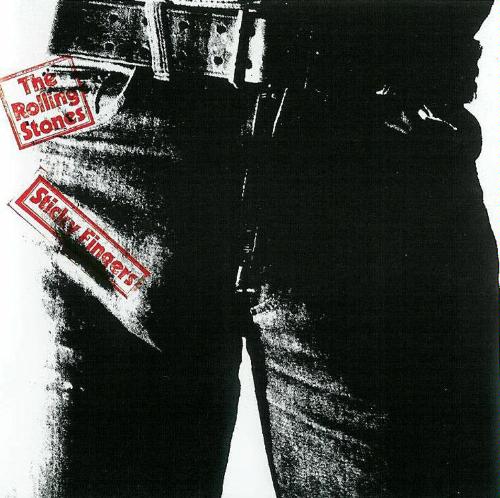
Rolling Stones: Sticky Fingers

With all the hoopla surrounding the recent re-release of Exile on Main St, one hears the rehash of all the accolades that have piled up over the last 38 years as Exile being the best Stones album ever recorded. With respect to those many who have pronounced Exile as the best thing ever committed to vinyl, let me just say this: YOU’RE…ALL…WRONG! The best album the Stones recorded was the one that came immediately before Exile, namely Sticky Fingers. Like Exile, Sticky Fingers has a mixture of blues [You Gotta Move, Sway], country [Wild Horses, Dead Flowers], R&B soul [the Stax-soundalike I Got the Blues], a world-weary ballad [Moonlight Mile], and lots of rock ‘n’ roll. As with many great Stones songs, the lead-off track Brown Sugar derives its greatness from a memorable riff. Lyrical references to interracial sex, slave rape, and losing one’s virginity abound [drug reference implied: “Brown Sugar” is another name for heroin.  But then again, a sometimes a cigar is just a cigar.  Marsha Hunt WAS Mick's girlfriend...]. Sway is one of two showcases for new guy Mick Taylor. This slow blues features a bottleneck slide solo in the middle of the song with Mick Taylor soloing for over a minute at the end, which is a lot considering the song is less than four minutes long. Wild Horses, according to Mick Jagger, is not about his old flame Marianne Faithfull. Keith Richards originally wrote the song about the pain of being separated from his son Marlon, originally wrote the melody and played the song in “Nashville tuning.” The heavier strings of an acoustic guitar [EADG] are replaced with lighter-gauge strings and tuned an octave higher, hence the song’s distinctive acoustic sound. In my opinion, the only bum note on Sticky Fingers is the only cover, Fred McDowell’s You Gotta Move. Mick Taylor’s acoustic Delta blues slide is authentic enough, but Mick Jagger’s singing doesn’t make it. He sounds so...English. Then there’s Bitch – there’s the riff, the horns, and Charlie Watts kicking the band’s ass. What else needs to be said? It’s a great track.

Sticky Fingers has several songs with a drug reference or two. Can’t You Hear Me Knockin’ [drug reference: “You got cocaine eyes…”] is the second of two showcases for Mick Taylor. Play this one back-to-back [this one first] with Sister Morphine. The classic Keith Richards human-riff rhythm playing sets the table, and then keeps the song going while first Bobby Keys delivers a blistering sax solo, to be followed by Mick Taylor soloing out of his mind. By the time it’s over after seven minutes of jamming, you think the song was over too soon. It ends with you wanting more. Sister Morphine is best heard while driving around Los Angeles at night. If you can’t get to LA, just turn off all the lights, sit back and enjoy this very dark and scary drug overdose tale. Can you imagine being in a hospital bed and seeing the hallucination of your doctor not having a face? Spooky stuff…Ry Cooder plays the slide guitar, Jack Nitzsche on piano. Both of these contributions contribute to the scary atmosphere [which seems to work better for me after dark]. Dead Flowers is a light-hearted, country-flavored tongue planted firmly in cheek ode to an ex [drug reference: “I'll be in my basement room, with a needle and a spoon…”]. Moonlight Mile [drug reference: “head full of snow...”] is one of the best ballads the Stones ever recorded. It’s about life as a coked-up rock star keeping up appearances on the road that gently closes Sticky Fingers. It’s an oriental-sounding piece with a string section courtesy of Paul Buckmaster. There’s no Keith in sight on this one – there doesn’t need to be as both Micks have the musical end covered very well.

So there you have it. Exile on Main St has gotten all the notoriety of being the best thing the Stones have ever done. For me, Exile is more like the Beatles’ White Album, a sprawling work that covers many musical bases, just not all of them equally well. As good as Exile is [and make no mistake, it is an outstanding piece of work], Sticky Fingers is a more coherent work with it being a single album. What Abbey Road and Sgt Pepper are for the Beatles [concise, coherent statements of purpose], Sticky Fingers serves the same purpose for the Rolling Stones.


Sister Morphine - video by ChristineHate


Bitch - video by morenaspin