Saturday, February 26, 2011

Movies I Can Watch Anytime

I watch a lot of movies. Some of them are great. Most are “ok.” Some are just complete crap where I lament “I’ll never get those two hours of my life back.” Then there are those I can watch at anytime. These are the movies that if I’m surfing TV stations looking for something to watch, and if one of these movies happens to be on, the surfing stops. It doesn’t matter how much of the movie has already been shown, I’ll watch the rest of it. So in no particular order, here’s my list:

Butch Cassidy and the Sundance Kid – the first movie Paul Newman and Robert Redford made together. There’s a lot of witty banter in this movie. “Who are those guys?”

Unforgiven – Clint Eastwood’s last western [so far]. Great storytelling – you know that by the time Clint’s character takes that first drink from a whiskey bottle, all hell will break loose shortly thereafter. There are some very fine performances from Gene Hackman and Morgan Freeman. Clint wasn’t too bad either.


The Wild Bunch – Sam Peckinpah moviemaking at it’s best. You know the minute William Holden says “if anybody moves, kill ‘em!” you’re in for a wild ride. Ernest Borgnine, Warren Oates, and Ben Johnson are also in it. It’s one of those few movies that has a big-name cast that doesn’t suck.


The Long Riders – the tale of the James/Younger Gang. The Brothers Carradine, Keach and Quaid are in this one. The bank robbery scene in Minnesota was taken out of the Sam Peckinpah slow-motion death handbook. Ry Cooder did the music. What’s not to like?


Shaun of the Dead - a wonderful spoof of zombie movies that’s a pretty good zombie movie itself. Just mention the words “Shaun of the Dead” and my boys go right into Shaun’s plan – “kill Phil…”


O Brother, Where Art Thou? – A very fine Coen Brothers movie. This movie has so many quotable one-liners in it. Such is the popularity of this movie that one day I put in my Facebook status “We thought you was a toad” and before I knew it, many friends followed that with other one-liners from the movie. It was fun to watch…


The Big Lebowski – This is another fine Coen Brothers movie, one that launched the Cult of Dudeism. Oh to be an unemployed slacker who smokes pot, drinks White Russians, and bowls all the time? Jeff Bridges may have won the Oscar for his role in Crazy Heart, but he’s much more convincing here. He is The Dude. John Goodman nearly stole the show as The Dude’s best friend Walter Sobchak, a Vietnam veteran who has more than one screw loose.


A Lion In Winter – My favorite actor, Peter O’Toole, is King Henry II. Katherine Hepburn is his estranged queen, Eleanor of Aquitaine. The writing in this is fantastic. There are so many twists and turns in this tale of palace intrigue it’s almost dizzying to follow. “The Lion” is King Henry, who is facing the end of his life and is trying to pick a successor to his throne. He has his favorite [Prince John], and Eleanor has hers [Richard the Lionhearted, played by Anthony Hopkins].


Becket – Richard Burton is Thomas Becket, Peter O’Toole is King Henry II. This takes place about 100 years after the Norman Conquest. In his desire to exercise control over the church, Henry [the French-born king] the makes his best friend Thomas Becket [a Saxon] the Archbishop of Canterbury. He didn’t count on Becket having his own religious awakening and becoming a thorn in his side. One of the best lines in the movie, as spoken by Henry: "Becket is the only intelligent man in my entire kingdom...and he is against me!" While on a drunken binge Henry asks of his barons "Will no one rid me of this meddlesome priest?" These same barons take this as direction from their king, travel to Canterbury, and kill Becket in the cathedral. Henry does penance by having Saxon monks whip him, after which he proclaims Thomas Becket a saint. It’s a long movie, but a great one.


This Is Spinal Tap – when Carol and I saw this in a theatre in 1984, the only people who “got it” were the two of us and the two people sitting behind us. It was in Pueblo after all, so it’s no wonder the audience didn’t understand satire. Yeah, that’s a gratuitous slam on Pueblo, but you try living there for nine years and see how you feel about the place.


The Manchurian Candidate – it has to be the Frank Sinatra original, not the Denzel Washington remake. Directed by John Frankenheimer, this is a political thriller with Russian and Chinese Communists, John Birch Society-type right wingers, brainwashing, and political assassination [almost]. Angela Landsbury was sufficiently evil in this movie. She definitely was not the nice little old lady from Murder She Wrote. Sinatra was pretty good in this one.


Seven Days in May – John Frankenheimer made this one in 1964 right after The Manchurian Candidate. Rod Serling wrote the screenplay. Set in the Cold War, the President of the United States, Jordan Lyman [played by Frederic March] signs a nuclear disarmament treaty with the Soviet Union. The Chairman of the Joint Chiefs of Staff, USAF Gen James Matoon Scott [played by Burt Lancaster] doesn’t like the treaty – neither does most of the American public. Gen Scott’s aide, USMC Col Jiggs Casey, learns of a plot by Gen Scott, the Joint Chiefs and others to launch a coup d’etat in seven days, which coincides with the Preakness horse race [hence the title]. The scene where President Lyman confronts Gen Scott in the Oval Office provides a great civics lesson about the American political system and civilian control of the military. In a great exchange between Gen Scott and Col Casey at the end of the movie, Gen Scott asks "Do you know who Judas was?" to which Col Casey answers "Yes. He's a man I used to work for and respect, until he disgraced the four stars on his uniform." Great stuff…


Patton – My favorite movie – ever. George C. Scott has me convinced he really was Patton. Francis Ford Coppola wrote the screenplay which is based on two books – Ladislas Farago’s Patton: Ordeal and Triumph, and Omar Bradley’s memoir A Soldier’s Story. The opening monologue, the “Patton speech,” is iconic. I first saw the movie when I was a kid. I’ve been hooked on it ever since.


Apocalypse Now – This is Carol’s favorite movie. Which Coppola movie is better, this one or The Godfather? That’s a tough call, but I know which one I like better. When I was a freshman at the University of Colorado, I saw this movie on-campus. Of all the movies I saw that year (and I saw one on-campus every Saturday night), this was the only one that sold out. In Boulder of all places! It’s hard to pick a favorite part of the movie, but I’d have to say it was any part that had Robert Duvall in it. I love the smell of napalm in the morning…


Full Metal Jacket – this Stanley Kubrick movie is set during the Vietnam War. This is where I first met R. Lee Ermey. His performance as a Marine Corps drill instructor is simply mesmerizing. After he gets killed by “Private Pyle” at the end of basic training, the rest of the movie is kind of a letdown in comparison, but it’s still very good.


Tora! Tora! Tora! – This one is the only movie about the Japanese attack on Pearl Harbor that matters. Forget about that POS that Ben Affleck and Kate Beckinsale made years ago. This movie from 1970 is great.


The Big Red One – This one came out while I was in high school. Lee Marvin and four other guys fight in the US Army First Infantry Division [the “Big Red One” patch on their sleeve] through North Africa, Sicily, and France and survive the war.


My Favorite Year – Yet another movie with Peter O’Toole. In this he plays a drunken English actor Alan Swann [think Errol Flynn] who has to do a live comedy show in the early 1950s in order to pay off the IRS and avoid deportation. Mark Linn-Baker is a writer for the show named Benjie Stone who has to ensure that Swann, who is notorious for getting drunk and not showing up for engagements, shows up for all rehearsals and the show itself. Hilarity ensues as Benjie tries to keep up with Alan Swann for a week. Who knew that Peter O’Toole could be so funny?


Breaker Morant – This Australian film was about the court martial of three Australians being tried for murder at the tail end of the Boer War [“a new kind of war for a new century”]. This is based on a true story. Morant led a unit of Aussies attached to the British Army named the Bushveldt Carbineers. After his unit captures and executes Boer commandos and a German missionary, Morant and two lieutenants [Hancock and Witton] are arrested and tried for their murder. Lord Kitchener wants to end the Boer War, and he uses the prosecution of Morant and his men as proof to the Boers that he would deal harshly with those under his command if they disobey the rules of war. But the Boer War was no “regular” war. It was a very irregular war, fought by men wearing no uniforms. Kitchener rigs the trial by transferring anyone who could help Morant to India, and gives their court-appointed lawyer only one day to prepare his case. There’s superb acting from Edward Woodward [Morant] and Jack Thompson [the attorney Major Thomas].


Dirty Harry – “Was it six shots or only five? In all this excitement I kinda lost track myself. But this being a 44 Magnum, the most powerful handgun in the world and could blow your head clean off, you have to ask yourself a question – ‘do I feel lucky?’ Well, do ya punk?” Need I say more?


Casablanca – American expatriates, refugees from many countries, crooked French cops, Nazis, and Ingrid Bergman all come together to make one of the finest films ever. For the record, Bogart never said “play it again, Sam.” He just said “play it!” Of all the characters in the film, I think Claude Raines’ Capt Renault is my favorite.


The Horror of Dracula, The Curse of Frankenstein, Dracula: Prince of Darkness - All three of the are Hammer Studios horror movies. The very first time I was allowed to go to a movie by myself was when I was 11 years old. It was a horror double-feature at the Fairborn theater. They showed The Curse of Frankenstein and Dracula: Prince of Darkness. Christopher Lee was both Dracula and the Frankenstein monster. Peter Cushing was Dr Frankenstein and Dr Van Helsing. Three words about Christopher Lee – best Dracula ever! He didn’t say a single word in Dracula: Prince of Darkness and he still scared the crap out of me that day.


Monty Python and the Holy Grail, Monty Python’s Life of Brian – of course!


The Blues Brothers – my boys love it, especially the car chase scenes. It’s all good for me.


Ferris Beuller’s Day Off – who hasn’t wanted to skip school and get away with it? I always wanted to, but like Ferris’ sister, I would have been caught.


Animal House – are college fraternities really like this?


Dr. Strangelove – a great movie, one of Stanley Kubrick’s best. Peter Sellers rocks! He plays three roles in the movie. And who knew that George C. Scott could be so funny? The image of Slim Pickens riding a nuclear bomb to its target like a rodeo cowboy is unforgettable. Sterling Hayden’s Gen Jack Ripper reminds one of Curtis LeMay. The best name for a character in this movie? Col Bat Guano, played by Keenan Wynn.


Raising Arizona – the first Coen Brothers movie I ever saw. Between H.I and Ed McDonough, unpainted furniture salesman Nathan Arizona, escaped convicts Gale and Evelle Snoats, and the Lone Biker of the Apocalypse, it’s all good. Frances McDormand telling Holly Hunter that “Junior” needs his “dip-tet” so he won’t get lockjaw and night vision – priceless!


Monday, January 24, 2011

Chris Hillman - Pioneer

Of the five original members of The Byrds [Roger McGuinn, Gene Clark, David Crosby, Chris Hillman, Michael Clarke], Chris Hillman has had [in my opinion] the most interesting career of them all. McGuinn and Crosby got more notoriety, but Hillman had more impact. He co-founded the folk-rock group The Byrds, he and Gram Parson practically invented country rock when they formed the Flying Burrito Brothers, and he discovered Emmylou Harris. Need I say More? Well, I will anyway.

Chris Hillman is from Southern California, just north of San Diego. It was here that he first fell in love with folk and bluegrass music. His mom bought him his first guitar, but then he discovered the mandolin, which became his stringed instrument of choice. He played in bluegrass bands the Golden State Boys and The Hillmen. The Hillmen disbanded and Chris Hillman entertained thoughts of quitting school and going to school at UCLA. Then he got a call from the guy who managed The Hillmen with an offer to join a new group in Los Angeles. This group was The Byrds. They asked him to play bass. He’d never played bass, but since he could play guitar and mandolin, he could easily adapt.

For the first three Byrds albums Chris Hillman was just the bass player at the back of the stage with the drummer, Michael Clarke. That all changed when Gene Clark left the band in 1966. McGuinn and Crosby promoted him to the “front line” and Hillman started to write songs. On 1967’s Younger Than Yesterday he contributed So You Want To Be A Rock ‘N’ Roll Star [with Roger McGuinn], Have You Seen Her Face, Time Between, Thoughts and Words, and The Girl With No Name. That’s not bad for a guy who had not written songs before. Time Between and The Girl With No Name marked the beginning of the Byrds’ flirtation with country music as they both feature the playing of flatpicking legend and future Byrd Clarence White. For the 1968 follow-up The Notorious Byrds Brothers he contributed [either by himself or with help from Roger McGuinn and David Crosby] Artificial Energy, Natural Harmony, Draft Morning [a David Crosby tune that McGuinn and Hillman finished after they fired Crosby], Change Is Now [the only Byrds tune to feature both David Crosby and Clarence White on the same track], Old John Robertson, Tribal Gathering, and Dolphin Smile. Hillman had gotten quite prolific in just two albums. Both Younger Than Yesterday and The Notorious Byrds Brothers are widely credited to be the finest the Byrds ever did. A lot of that has to do with the emergence of Chris Hillman as a songwriter.

With David Crosby out of the picture, the Byrds needed a replacement. Chris Hillman found one while in line at his bank. He met a guy named Gram Parsons. Soon enough, Parsons was hired as a piano player. According to Roger McGuinn they “hired a keyboard player and instead got George Jones in a Nudie suit.” Gram Parsons was bitten by the country music bug, but he wanted to synthesize rock, country and R&B/soul into its own kind of music which he called “Cosmic American Music.” Such was the force of his personality that this guy who came into the band on salary pretty much dictated the direction of the next album. That album would be 1968’s Sweethearts of the Rodeo. Of course, Gram Parsons had a willing accomplice in Chris Hillman. Hillman had been a bluegrass musician before picking up a bass to join the Byrds, so he was very enthusiastic about the Byrds’ new direction. Such was Parsons’ influence that the only Byrds originals on Sweetheart of the Rodeo were written by him. Chris Hillman was happy to recede into the background, but he did have a couple of lead vocals – I Am a Pilgrim, which had been sung by Merle Travis in the 1940s, and Blue Canadian Rockies, which has been sung by Gene Autry in 1952 in a film of the same name. Of note, several Nashville musicians played on Sweetheart of the Rodeo, including pedal steel player Jay Dee Maness, but more on him later. But the die was cast – the Byrds went country all the way. Gram Parsons’ previous band, the International Submarine Band, has been credited with inventing what some call “country rock,” but they were not nearly as big as The Byrds. And to be sure, Gram Parsons could not have done it without Chris Hillman.

Gram Parsons lasted just that one album with the Byrds before he moved on to other musical things. The Byrds toured England in support of Sweetheart of the Rodeo, and they met the Rolling Stones. Gram became great friends with Keith Richards immediately. They talked about South Africa, which was then in the throes of apartheid. The Byrds were going to play some shows in South Africa. Once Keith told Gram what South Africa was like, and the segregation that persisted there, Gram told the rest of the Byrds he wouldn’t go with them to South Africa. So Gram was no longer with the Byrds. To this day Chris Hillman thinks the real reason Gram didn’t want to go to South Africa was because he wanted to hang out with Keith Richards, not because of any sensitivity to racial matters.

Almost immediately Gram hooked up with Chris Etheridge, a bass player with whom he had worked before. They decided to form a band. Shortly thereafter, Chris Hillman came back from South Africa, patched things up with Gram, and told him it was a mistake for the Byrds to go to South Africa. He also told Gram he was going to leave the Byrds, and could he join Gram’s new band? Thus was born the Flying Burrito Brothers. Gram Parsons and Chris Hillman lived in a house in the San Fernando Valley they dubbed “Burrito Manor.” There they together crafted the songs that would become their debut album, The Gilded Palace of Sin. One such song was Sin City. It was the tale of an innocent country boy’s descent into the urban jungle. It was partially inspired by the band’s then-manager, Larry Spector, whose office was on the 31st floor who, according to Hillman, “robbed us, and whose office was on the 31st floor. We were taking a tongue-in-cheek, risqué jab at everything – the earthquake, the bad manager, the Vietnam War.” Chris Hillman had the first verse and the chorus [This old earthquake’s gonna leave me in the poorhouse/ It seems like this whole town’s insane/On the 31st floor/A gold-plated door/Won’t keep out the Lord’s burning rain], but asked Gram to help him finish the song. The leadoff track on The Gilded Palace of Sin was Christine’s Tune. Another Hillman/Parsons collaboration, it was about David Crosby’s girlfriend, Christine Hinton. She was at one time the head of the Byrds’ fan club. According to Hillman, “we took a light poke at her because she was being mischievous about our ongoing problems with our exes.” She got killed in a car accident shortly after Woodstock so they renamed the song Devil in Disguise. Parsons and Hillman came up with a good road song, Wheels. It’s a companion piece to Sin City, with the theme of escaping from temptation and the turbulence of an evil place (the 31st floor perhaps?). Juanita [also a Hillman/Parsons song] is the true story of a 17-year old girl who tries to pull a guy out of a booze-and-drug-induced descent into Hell before eventually giving up and walking out [for the very last time]. Since it’s release in 1969, The Gilded Palace of Sin still has not been certified gold, but I’ve seen it written that those who did buy the album all formed bands. Bands like Wilco, Whiskeytown, Son Volt,and artists like Dwight Yoakam, Lucinda Williams, Emmylou Harris, and Elvis Costello all have recorded music that sounds like The Gilded Palace of Sin – such was its influence.

High Fashion Queen is another Hillman/Parsons song. It appeared on Burrito Deluxe. It was recorded at a manic pace. In 1999 Emmylou Harris put together a Gram Parsons tribute called Return of the Grievous Angel. Chris Hillman got to recut High Fashion Queen with Steve Earle. According to Hillman: “The way Steve and I cut it was the way it should have been cut but never was. I don’t know what we were doing on that album. It was like crazy music, with real fast tempos and spotty rhythm section.” I guess they were in a hurry – it sounds like it. Hillman did another tribute of sorts. This one was with Roger McGuinn. They cut Bob Dylan’s You Ain’t Going Nowhere for the Nitty Gritty Dirt Band’s Will the Circle Be Unbroken Volume II. They originally cut it for Sweetheart of the Rodeo. McGuinn sang the lead then. This time he and Hillman recorded it as a duet. But I digress…

After Hillman fired Gram Parsons from the Flying Burrito Brothers and replaced him with Rick Roberts in 1970, they recorded another album, The Flying Burrito Brothers. The band started to splinter, but before they broke up, Chris Hillman found a female folk singer in Baltimore while on tour. Knowing that Gram Parsons was looking for a girl to sings harmonies with, he told Gram about this girl. As it turns out, that girl was Emmylou Harris. It wasn’t Gram Parsons who discovered Emmylou – it was Chris Hillman. Shortly thereafter, Chris Hillman left the Flying Burrito Brothers and joined with Stephen Stills. Hillman helped Stephen Stills create what I think is the best album of Stills’ career, Manassas. Stills’ tour de force covered a lot of musical ground, to include Latin jams, rock, blues, country, folk, and bluegrass. Hillman’s influence on the album can be heard on the album’s second side [it was a double LP], subtitled The Wilderness. That’s the side that has the more country/bluegrass feel. Hillman also contributed my favorite song from the Manassas album, It Doesn’t Matter. I first heard It Doesn’t Matter when I visited Carol in Fort Collins back in 1985. It appeared on an imported Stephen Stills “greatest hits” album that I bought while visiting her. So whenever I hear it today, I am always happily reminded of those carefree days when Carol and I were inseparable. Unfortunately, the band lasted a little less than two years. Atlantic Records was more interested in a Crosby, Stills, Nash and Young reunion, so Manassas was doomed. What a shame – they were a much better band than CSN&Y could ever hope to be.

Here’s where my knowledge of Chris Hillman’s music gets a bit fuzzy. I know he recorded albums with J.D Souther and Richie Furay [of Buffalo Springfield fame]. He also reunited with Roger McGuinn and Gene Clark to record a couple of albums. I don’t have any of them. From what I’ve read about them, they’re extremely average, but that’s just what I’ve read. I couldn’t rate their quality first-hand because I’ve never heard them. After these projects Chris Hillman founded the Desert Rose Band, which included the talents of guitarist/banjo player Herb Pedersen, guitarist John Jorgenson, Jay Dee Maness [who played pedal steel on Sweetheart of the Rodeo], drummer Steve Duncan and bassist Bill Bryson, all of them Southern California session musicians. The Desert Rose Band enjoyed much success in country music in their eight-year run [1985-93]. I don’t have any of their records either, but someday I might remedy that oversight.

Now, back to some more Chris Hillman music I do have. After the break-up of the Desert Rose Band, Chris Hillman and Herb Pedersen continued to work sporadically as a duo. They recorded two country albums. In 1996 they returned to their roots with Bakersfield Sound. Bakersfield Sound includes songs recorded by or associated with Buck Owens, the Everly Brothers, the Louvin Brothers, Merle Haggard and Hank Williams. The review from Allmusic.com asserts that Hillman and Pedersen are steeped in this material, which they perform with authority and conviction. I have the disc – I have to agree with their assessment. Bakersfield Sound is well worth owning. On their next project, Way Out West [2002], Hillman and Pedersen mix things up a little bit. Not only do they play straight ahead country music, but they also throw in a little gospel, a little bluegrass, a little bit of folk. Twangy guitars abound on this easy-going album. Way Out West is another album well worth owning.

When they weren’t recording as a duo, Chris Hillman and Herb Pedersen teamed up with Tony and Larry Rice to record three bluegrass albums – Out of the Woodwork [1997], Rice, Rice, Hillman & Pedersen [1999], and Running Wild [2001]. On these discs, Hillman revisits some of his past. He plays bluegrass versions of songs from Manassas [So Begins the Task], Flying Burrito Brothers [Do Right Woman, Do Right Man], Stephen Stills [4+20], the Grateful Dead [Friend of the Devil] (ok, he wasn’t in the Dead, but they were contemporaries), the Beatles [Things We Said Today] (again, he wasn’t a Beatle either, but they were contemporaries of the Byrds], a nicely arranged Dimming of the Day from Richard Thompson, and lots of originals. If you want to hear four musicians playing bluegrass music perfectly, these three albums are good to have. These guys really did check their egos at the door. On a side note, Tony Rice has an all-instrumental compilation of his own [58957:The Bluegrass Guitar Collection] – get it now!

In 1998 Chris Hillman released his Like a Hurricane [not to be confused with the Neil Young song of the same name]. A country-rock record, there is one song in particular that catches the ear. That song is I’m Still Alive. As Hillman describes the song: “I wrote this after having visited one of my oldest friends, who was in the hospital waiting for an organ transplant. When I was with him that day, he was literally days away from dying. He never gave up and showed me what courage in the face of overwhelming diversity truly is.” That friend – David Crosby. In 2005, Chris Hillman released The Other Side [produced by Herb Pedersen]. The opening cut is both an eye-opener and jaw-dropper – a bluegrass version of the Byrds’ classic Eight Miles High. That alone is worth the price of the CD. Also on The Other Side – a bluegrass version of It Doesn’t Matter. The rest of the tunes are Chris Hillman/Steve Hill originals. It’s all good.

2010 saw the release of Chris Hillman & Herb Pedersen At Edwards Barn. This is a live album recorded in a barn in Nipono, California during a concert staged as a benefit for a local church. Here Hillman and Pedersen, with a little help from their friends Larry Park, David Mansfield, and Bill Bryson, revisit the past and give it the bluegrass treatment. Gems from the Byrds [Turn! Turn! Turn!, Eight Miles High, Have You Seen Her Face], the Flying Burrito Brothers [Wheels, Sin City], a tune from Buck Owens [Together Again], the Desert Rose Band [Love Reunited, Desert Rose], a couple of Chris Hillman/Steve Hill originals, and a Herb Pedersen original from 1972 [Wait a Minute] grace this live retrospective. This journey through the past is a must have for any fans of the Byrds or the Flying Burrito Brothers.

Fox News reporter James Rosen was asked to write the liner notes for Chris Hillman & Herb Pedersen At Edwards Barn. He tried to define Chris Hillman. A young man who came of age during the psychedelic 60s, who took flight as a Byrd, found brotherhood among the Flying Burritos, flourished as a Desert Rose, and emerged as a titan of country and bluegrass around the same time he was being enshrined in the Rock and Roll Hall of Fame. How does one define such a man with one word? Rosen chose “open.” I choose “pioneer.” I think they both fit. If you listen to what I’ve heard the man produce over the last 45 years, I think you’d agree. He's made a lot of beautiful music.


Chris Hillman & Steve Earle - High Fashion Queen


Chris Hillman & Herb Pedersen - Turn! Turn! Turn!


Stephen Stills/Manassas - It Doesn't Matter


Chris Hillman & Herb Pedersen - Eight Miles High


Chris Hillman & Herb Pedersen - So Begins The Task


The Flying Burrito Brothers - Devil in Disguise

Tuesday, January 11, 2011

Frank Zappa - You Can't Do That on Stage Anymore, Vol. 2

Frank Zappa released six collections of live music under the title You Can’t Do That On Stage Anymore. Five the six volumes feature bands from different eras of Frank Zappa’s career. Of the six volumes, Volume 2 is unique because it features only one band. Volume 2 is presented as a single concert from Helsinki, Finland. It’s subtitled “The Helsinki Concert,” but I’ve read in places on the internet that this collection was the compilation of the best performances of two (maybe three) concerts recorded in September 1974. Whether it’s one show or cherry pickings from three, it’s all edited together so well I can’t tell the difference, except maybe in one place (where Chester Thompson’s drum solo at the end of Don't You Ever Wash That Thing? abruptly ends and Pygmy Twylyte starts). Not that it matters one way or the other – it sounds great. One thing that stands out is how tight the band is. This particular group of people played together for a couple of years, and it sounds like it they played together every night over those two years. These musicians play like they’re linked together telepathically.

Of the twenty songs that appear on this album, five were unreleased at the time the show was recorded. Five appeared on the live Roxy & Elsewhere (recorded in December 1973 and was released less than 2 weeks before these Helsinki performances). When one compares the performances on Roxy & Elsewhere and YCDTOSA Vol 2 one can easily tell the band benefitted from much touring. The music is instrumentally complex. The band navigates the many twists and turns of Frank Zappa’s music effortlessly. What is missing from YCDTOSA Vol 2 are the funny spoken-word introductions to the songs that you hear on Roxy & Elsewhere [like Cheepnis or Village of the Sun]. But that is a minor complaint because there was a language barrier in Finland not present in Los Angeles.

For one evening only, Frank and Company played a request, Satumaa (Finnish Tango). Napoleon Murphy Brock tried his best to sing in phonetic Finnish, but he butchered it anyway. One gets the impression the band was sight-reading the whole time, but pictures exist of them rehearsing the song beforehand. One funny moment came toward the end of the show. When FZ asked the crowd what they wanted to hear, one brave soul yelled out “Whipping Post.” Apparently he had been listening to The Allman Brothers At Fillmore East. Amazingly, neither FZ nor anybody in the band knew the Allman Brothers tune. FZ asked the guy to hum a few bars. You don’t hear anything from the guy so FZ tells the band to launch into Montana. There are a couple of false starts and apparently someone complained (I think it was Ruth Underwood and Chester Thompson) the band played it too fast. After they third time they played real slow, prompting FZ to comment they were playing at the tempo of a ballad (FZ didn’t do ballads – ever). To top things off, FZ improvised his own lyrics and tried to fit a “Whipping Post” theme into it. Years later, Frank Zappa and his band learned “Whipping Post” and played it in Finland. According to a Finnish guy who reviewed this album for Amazon, he claimed to have been at the later show, he attributed the following to FZ: "guess what - we now know the song you requested back in '74", and performed it.

As for my, some of my favorite moments come on some of the older stuff, like the The Dog Breath Variations/Uncle Meat combination. I also likes the Village of the Sun/Echidna's Arf combination as well. I think it sounds much better than what was released on Roxy & Elsewhere. Pygmy Twylyte is much longer in Helsinki [it's a monster!]. Of note, the guitar solo on Inca Roads was lifted from this performance and became part of the recording on One Size Fits All. FZ must have really liked the solos he played for Inca Roads because I've got five versions of it between his Shut Up & Play Yer Guitar, Guitar, and Trance-Fusion collections.

Many reviews I’ve read about this volume say of the six volumes, this one is the best because of its single-concert format, and because the greatness of the band playing challenging music. It’s the only volume I have in the series. Someday I hope to get other volumes, but until then I’ll be content to list to this nugget from FZ’s vault. If you have to start anywhere in the series, Volume 2 is the place to start.

Disc 1A Token of My Extreme/Stinkfoot/Inca Roads/RDNZL/Village of the Sun/Echidna's Arf (Of You)/ Don't You Ever Wash That Thing?/Pygmy Twylyte/Room Service/The Idiot Bastard Son/Cheepnis
Disc 2Approximate/Dupree's Paradise/Satumaa (Finnish Tango)/ T'Mershi Duween/The Dog Breath Variations/Uncle Meat/Building a Girl/Montana (Whipping Floss)/Big Swifty
The PlayersFZ – lead guitar, vocals/Napoleon Murphy Brock – sax, flute, vocals/George Duke – keyboards, vocals/Ruth Underwood – percussion/Tom Fowler – bass guitar/Chester Thompson - drums

Saturday, January 8, 2011

Allman Brothers Band – The Fox Box, 2004

Since 2003, two years after Warren Haynes rejoined the Allman Brothers Band, the band has participated in the Instant Music program. Here’s the deal – shortly after each Allman Brothers show is over, you have the opportunity to purchase a copy of the concert you just heard. So if you ever want to be on your own Allman Brothers live album, just go to a show. If they run out of copies of that day’s show, don’t worry. The Allman Brothers will sell you a copy on the Hittin’ the Note website. The prices vary depending on how many CDs are needed to capture the show in its entirety. I like to get them because I don’t go to shows anymore, but I still want to hear the Allman Brothers in their environment – the stage. The last time the Allman Brothers recorded a studio album was in 2002 [Hittin’ the Note], so if you are interested in hearing songs you’ve never heard the Allman Brothers play, getting their shows from their website is a pretty good deal. They’ve taken to play music made famous by other musicians [the Grateful Dead, the Band, Howlin’ Wolf, Son House, just to name a few], plus they’ve rearranged some of their old music.

In September 2004, the Brothers played a three-night stand at Atlanta’s Fox Theatre. The setlists:

September 24, 2004Disc 1
Mountain Jam/Trouble No More/Midnight Rider/Wasted Words/Worried Down With the Blues/You Don’t Love Me/Ain’t Wastin’ Time No More
Disc 2
Rockin’ Horse/Hot ‘Lanta/Melissa/Come and Go Blues/Can’t Lose What You Never Had/Why Does Love Got to Be So Sad? ->Franklin’s Tower
Disc 3
Black Hearted Woman/Dreams (w/Jack Pearson)/Mountain Jam (w/Jack Pearson)/ Southbound (w/Jack Pearson)
September 25, 2004Disc 1
Les Brers in A Minor>Don't Want You No More/It's Not My Cross To Bear/Statesboro Blues/Stand Back/Who's Been Talking/Soulshine/Good Clean Fun/Old Before My Time/Woman Across the River
Disc 2
Instrumental Illness/The Night They Drove Old Dixie Down/Leave My Blues At Home/Key To The Highway/Don't Think Twice, It's All Right (Susan Tedeschi, vocals and guitar)/ One Way Out (Vaylor Trucks, guitar)
Disc 3
Blue Sky/Dreams/Les Brers in A Minor/Layla
September 26, 2004Disc 1
Revival/Every Hungry Woman/Done Somebody Wrong/Hoochie Coochie Man/Desdemona/High Cost of Low Living/Forty-Four Blues/End of the Line
Disc 2
Dreams/I Walk On Gilded Splinters/Stormy Monday/The Same Thing (Rob Barraco, piano)/ In Memory of Elizabeth Reed (Rob Barraco, piano) >drums>
Disc 3
In Memory of Elizabeth Reed>bass>In Memory of Elizabeth Reed/Don't Keep Me Wonderin'/No One To Run With/Whipping Post


During this run at the Fox, the Brothers played 51 different songs [give or take a couple], and only one of those songs appeared each night – Dreams. They mix up the setlist every night. That’s one thing I love about this band. They don’t play the same songs night after night. They rotate different songs in and out of the setlist to keep them from getting stale. On the second night they played two songs from Derek & the Dominos’ Layla and Other Assorted Love Songs because that was an album Duane Allman played a large part in making. On the third night they played I Walk on Gilded Splinters, another song Duane Allman had a hand in recording [with Johnny Jenkins on his Ton-Ton Macoute album]. As a treat, Gregg Allman sang Dickey Betts’ Blue Sky. The rule of thumb where Dickey’s songs are concerned is this – they’ll play Dickey’s instrumentals, but if Dickey sang a song on the original album, the band won’t play it live. That’s why you’ll never hear them playing Ramblin’ Man. But they got a lot of requests, it was Atlanta, so the Brothers let them have Blue Sky. On two of the three nights Warren Haynes sang songs from Howlin’ Wolf [Who’s Been Talking, Forty-Four]. On the same night they played the Layla songs, bassist Oteil Burbridge treated the crowd with his own rendition of the Grateful Dead classic Franklin’s Tower. These days you never know what to expect at an Allman Brothers show.

Depending on which town they’re playing in on a given night, they might have someone sit in with them. For instance, on the first night, Jack Pearson [who replaced Warren Haynes in the band 1997-99 but never recorded with them] sits in on three songs. Susan Tedeschi [Mrs Derek Trucks] guests with the band on the second night to sing Bob Dylan’s Don't Think Twice, It's All Right.

These guys have been playing together for ten years now. It’s the longest-lived incarnation of the band in its 41-year history. They’re all sober [even Gregg, since 1996], they ‘re all healthy [even after Gregg’s liver transplant in 2009], and they are playing great. Gregg is in fine voice every night. That couldn’t be said “back in the day.” Warren Haynes and Derek Trucks each have their solo gigs [Gov’t Mule and the Derek Trucks Band, respectively], so the Allman Brothers really is a part-time gig for them. That’s what keeps these guys fresh, and what makes these shows special. There are 175 recorded since 2003. So if you’re like me, you love the Allman Brothers Band but can’t afford to go to shows anymore, wander over to Hittin’ the Note to see what they have to offer.

Saturday, January 1, 2011

Badfinger - Straight Up


Straight Up
is Badfinger's third album for The Beatles' Apple Records. Twelve songs in all, it has 10 good-to-excellent songs and two outstanding songs [Day After Day and Baby Blue, both singles written by Pete Ham]. It has been very hard to find on CD until 2010, when Apple re-released the entire Apple catalog. Included on the new release are six bonus tracks, some of which were recorded with Geoff Emerick producing. The album had been originally recorded between January and March 1971 with Geoff Emerick. George Harrison heard the album and rejected its release, telling them "you can do better." When I hear the Emerick-produced early versions compared with those subsequently produced by either George Harrison or Todd Rundgren, I agree with George's assessment. The songs are good, they don't sound bad at all but Badfinger could do better, and they did.

George produced four songs with the band [Day After Day, I'd Die Babe, Name of the Game, and Suitcase] before he had to back out and tend to making the arrangements for The Concert for Bangladesh. George was so taken with Day After Day that he asked the band if he could play on it. If you're familiar with the song, that's him playing slide guitar with Pete Ham. George heard Name of the Game had potential to be the third single from Straight Up, so he arranged for two remixes to try to get a sound he was looking for. He didn't find the elusive sounds, so Name of the Game was never released as a single. It's still a very good song and remained an album track. Suitcase was written by guitarist Joey Molland about his experiences on the road touring. George Harrison came up with the arrangement. Originally it had the words Pusher pusher, on the run but George said "they won't play it on the radio, so Joey changed Pusher, pusher to Butcher, butcher. George plays guitar on I'd Die Babe. He also helped Joey Molland finish the lyrics [uncredited].

When George Harrison relinquished his production duties, he brought in Todd Rundgren to finish what George had left unfinished. Out of these sessions came Baby Blue, Pete Ham's love letter to someone with whom he had a relationship on tour [his "Dixie dear.."]. Pete Ham and Joey Molland had five songs each on Straight Up, while bassist Tom Evans claimed the other two [he co-wrote on of Joey Molland's songs, Flying]. On their previous two releases [Magic Christian Music and No Dice], Joey Molland wasn't as much of a songwriting presence. But on Straight Up he delivers. Given that Straight Up was rejected once, and had three producers, it's a good sounding record. The songs are all solid, and the band played well. Much has been written about how "Beatlesque" Badfinger's sound was, and that was a double-edged sword for them. They were often derided as second-rate Beatles. They got help first from Paul McCartney, then George Harrison, so how could they help from sounding a little bit like the Fab Four? But taken on it's own merits, Badfinger's sound [tight harmonies, three capable lead singers, loads of guitars, the odd bit of piano, and all four members wrote songs] worked for them. I like their stuff. This is textbook English power pop. If you have the chance, give Straight Up a spin.

http://www.youtube.com/watch?v=uJ8V-FrrGJE
Day After Day

http://www.youtube.com/watch?v=C53QAuOoSgc
Baby Blue

Wednesday, December 22, 2010

The Clash, Joe Strummer, and Me

Once referred to by critics as “The Only Band That Matters,” I started liking The Clash in my late teens. Like most people who came of age in the early 1980s, the first time I heard The Clash was when I heard Rock the Casbah from Combat Rock. I saw the video on MTV [back when they showed actual music videos]. Four guys playing music in front of an oil pump while an Arab and a Jew were getting off on their music. That was better than most videos of the time. I read about their politics. I didn’t think much of it. I was never unemployed, I never lived in an inner city, I didn’t know why punks were so angry. Growing up in suburban America, how can one relate to such things? Not very well I’m afraid. But Rock the Casbah? That wasn’t punk. That wasn’t angry. It was just straight-ahead rock and roll. Where was the anger I heard about? Little did I know, The Clash were on their last legs by then, and they left punk in the dust long before I ever heard them. Then a friend handed me a copy of London Calling. “Okay” I thought – still no anger here but there’s a lot of variety in the music. There was rockabilly, lots of reggae [who thought white English guys could play reggae?], ska, hard rock with the title track, and even pop [Train in Vain]. Still I thought “this isn’t punk, it’s The Clash’s version of The Beatles’ White Album.” They’re all over the stylistic map on London Calling. But this was great stuff. The same friend who loaned me London Calling then loaned me Sandinista! Not only did they cover all the styles they covered on London Calling, they added a few more. They added dub, rap [The Magnificent Seven – yes!!!]. a waltz, gospel, funk, psychedelic explorations. You name it, it was on Sandinista! But still, where was the angry punk of legend? I had to go back to their first recordings. I never owned them, but later in life I got a double cassette of The Story of The Clash, Volume 1 and there it was. There were quick two minute songs like White Riot, London’s Burning, I’m So Bored With the U.S.A. But even then they were starting to break the punk format with [White Man] In Hammersmith Palais and Julie’s Been Working for the Drug Squad. I liked it all.

One day in 1983 I read a small blurb in Rolling Stone magazine [before it became a fashion mag] that Joe Strummer and Paul Simonon fired Mick Jones. That was like Lennon firing McCartney. The Clash put out one more album called Cut the Crap. If they had indeed "cut the crap" there wouldn't have been an album. It was bloody awful. I wanted nothing to do with it [I still don’t]. In my mind there could be no Clash without Mick Jones. In 1986, The Clash were history. What a shame. Mick Jones formed his own Big Audio Dynamite. I got their first album This Is Big Audio Dynamite. There wasn’t a lot of guitar, but there was a lot of dub and sampling [before “sampling” has become big in hip-hop]. It was interesting. Their next album was No. 10 Upping Street. Imagine my surprise when I found that Joe Strummer produced it with Mick Jones. Apparently Joe Strummer realized his crass mistake and made up with Mick. Be that as it may, I never really caught on with Big Audio Dynamite. Shortly thereafter, Joe Strummer made an album called Earthquake Weather and promptly assumed a low profile for the next decade.

I didn’t give two thoughts about Joe Strummer or Mick Jones or anything Clash-related until 2002. I was doing my usual channel-surfing on cable when I saw a blurb on CNN that Joe Strummer had died right before Christmas. That day was eight years ago today. “How could that be?” I thought. He was still fairly young [he was only 50]. So as usual, when a rock star dies I decided I wanted to check out their work. I read up on his albums with his group The Mescaleros. All the reviews said “if you’re expecting The Clash, you’ll be disappointed.” The critics were right in one respect – the anger and venom of youth were gone, but they were also wrong because like the London Calling and Sandinista!, Joe Strummer was all over the stylistic map. I bought the albums and was surprised by what I heard. It was a shame that it took Joe Strummer’s death for me to rediscover him. He left some pretty good damn work behind. RIP Joe.

Director Julien Temple, a friend of Joe Strummer, made a documentary on Joe Strummer called The Future Is Unwritten. Also, Chris Salewicz [he of the New Music Express and The London Times] wrote a biography of Joe Strummer called Redemption Song: The Ballad of Joe Strummer. I have it - it's a good read. The Independent Film Channel showed Let’s Rock Again, a tour documentary by Dick Rude of Joe Strummer trying to get his name re-established in the music world while touring for his Global A Go-Go CD. When I’ve seen and read all of this I hope to write about them at a future date.

Until then, there’s a lot of Joe Strummer’s music on my iPod. Here it is:

The Clash
London Calling/The Magnificent Seven/Brand New Cadillac/The Leader/Police on My Back/Rock the Casbah/Should I Stay or Should I Go/Bankrobber/Armagideon Time/Know Your Rights/Straight to Hell/Rudie Can't Fail/The Guns of Brixton/(White Man) In Hammersmith Palais/London's Burning/White Riot/Somebody Got Murdered/Charlie Don't Surf/Kingston Advice/The Street Parade/Wrong 'Em Boyo/Death or Glory/The Card Cheat/Revolution Rock/Train in Vain/Clash City Rockers/Stay Free

Joe Strummer
BBC World Service/Tony Adams/Mega Bottle Ride/The Long Shadow/All In A Day/Global A Go-Go/Arms Aloft In Aberdeen/Willesden to Cricklewood/Bhindi Bhagee/Johnny Appleseed/Coma Girl/Ramshackle Day Parade/Burning Streets (London Is Burning)/ Get Down Moses/Shaktar Donetsk/Minstrel Boy [Black Hawk Down version]/Redemption Song/"Punk Rock Warlord"

Saturday, December 18, 2010

Pink Floyd: Wish You Were Here/Animals


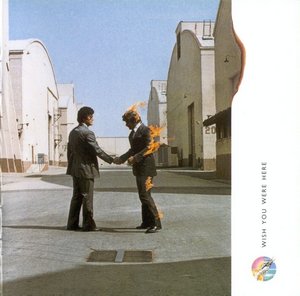
With Wish You Were Here, Pink Floyd faced the unenviable task of following-up the massively-successful The Dark Side of the Moon. The band were at a creative dead end. They had achieved all the success they had ever wanted, but the question became "now what?" They settled on two themes- the long-since departed Syd Barrett, and the music business. Shine On You Crazy Diamond is a nine-part song written by Roger Waters, David Gilmour and Richard Wright. It's about Syd Barrett. It was originally intended to take up an entire side like Echoes [Meddle] and Atom Heart Mother [Atom Heart Mother], but the band opted to split the song after the fifth part and insert three songs - Welcome to the Machine, Have a Cigar, and Wish You Were Here. Welcome to the Machine centers on a young musician who is signed to a record deal by a record executive, who had been "provided with toys" and "scouting for boys" for the record company. Once signed, the musician is told by the record company what to sing [it's all right we told you what to dream...], so "welcome to the machine" [the "Machine" being the music business]. Have a Cigar picks up the sleazy record company theme with the question Oh by the way, which one's Pink? The cluelesss record company executive then tells the band they're "fantastic," they've got to get another album out because they owe it to their fans and the record execs are having a hard time counting all their money. Things are going very well [everybody else is just green, have you seen the chart, it's a helluva start, it could be made into a monster if we all pull together as a team...]. Roy Harper does the vocals on Have a Cigar. He was in an adjoining Abbey Road studio recording his HQ album while Pink Floyd were doing Wish You Were Here. Roger Waters was having a hard time getting the vocals right, so the rest of the band suggested Roy Harper sing it. The song Wish You Were Here is another tribute to Syd Barrett. In my opinion it's one of the finest songs Pink Floyd ever did. It is the perfect combination of David Gilmour's music with Roger Waters' lyrics. The album closes with the remainder of Shine On You Crazy Diamond. It closes the album on what David Gilmour called a "funeral march."

I can summarize Animals as Orwell's Animal Farm set to music. Roger Waters breaks the human race in his Orwellian world into three kinds of people - Dogs, Sheep and Pigs. Dogs traces it's roots back to 1974, when it performed in concert with songs that became the album Wish You Were Here as You Gotta Be Crazy. That reference appears in the very first line of the song - You’ve gotta be crazy, you gotta have a real need./You gotta sleep on your toes, and when you’re on the street,/you gotta be able to pick out the easy meat with your eyes closed./And then moving in silently, down wind and out of sight,/You gotta strike when the moment is right without thinking. Dogs are depicted as the sort of people who will stab one in the back to get what they want. Dogs are cutthroats, opportunistic, but to survive in the capitalist Britain of the 1970s are "told what to do by the man" [who in this case are the Pigs], and are beaten into conformity of British society, "broken by trained personnel" and finally "dragged down by the stone." Pigs are at the top of the economic heap, those who think they're so morally superior they can tell the Dogs and the Sheep what they can and can't do. In Pigs [Three Different Ones] Roger refers to Mary Whitehouse, a British morals crusader [also immortalized in Deep Purple's Mary Long] as a "fucked-up old hag." There is another kind of "Pig" who is the greedy capitalist lording over the proletariat who are the mindless Sheep who do what they are told. Sheep began as Raving and Drooling, another song that traces its origins to the pre-Wish You Were Here days. The Sheep are "harmlessly passing the time in the grassland, clueless animals that have no idea about the "sudden unease in the air." But things aren't what they seem. The clue lies in a parody of Psalm 23:

The Lord is my shepherd, I shall not want He makes me down to lie Through pastures green He leadeth me the silent waters by. With bright knives He releaseth my soul. He maketh me to hang on hooks in high places. He converteth me to lamb cutlets, For lo, He hath great power, and great hunger. When cometh the day we lowly ones, Through quiet reflection, and great dedication Master the art of Karate, Lo, we shall rise up, And then we'll make the bugger's eyes water.

The Sheep rise up and slaughter the Dogs [Have you heard the news? The Dogs are dead...]

I have always considered both Wish You Were Here and Animals as being two sides of the same coin. The songs came from the same period, and to there ears they sound very similar. Not only do they sound like they were recorded at the same time and place, there's a bitterness to all the lyrics that suggest to me that once Roger Waters got on a roll, he couldn't stop. Here's how I've got things sequenced: Pigs on the Wing Part I/Have a Cigar/Wish You Were Here/Welcome to the Machine/Sheep/Shine On You Crazy Diamond Parts I-VII (from the Echoes "Best of" CD)/Dogs/Pigs [Three Different Ones]/Pigs on the Wing Part II.

Related link: http://elviejoloco-tonysrants.blogspot.com/2008/09/rick-wright-rip.html